صف السيارات أم المواقف الذاتية for Guest Arrival
A guest’s opinion of a property often begins before they reach the reception desk, restaurant table, or event hall. It begins at the curb. The question of صف السيارات أم المواقف الذاتية is therefore not simply about where vehicles are stored. It is a decision about traffic control, guest confidence, service standards, and the ability of a site to perform well when arrivals peak.
For a small office with predictable daytime traffic, self-parking may be entirely appropriate. For a hotel entrance during check-in, a busy hospital, or a wedding venue receiving hundreds of guests within a short window, the same approach can create queues, confusion, and an avoidable strain on the guest experience. The right choice depends on the operating reality of the location, not on a one-size-fits-all preference.
صف السيارات أم المواقف الذاتية: Start With the Arrival Pattern
The most useful question is not, “Which option costs less?” It is, “What happens during the busiest 15 minutes of the day?” That is when an arrival plan is tested.
Self-parking works best when a property has clear access routes, adequate available spaces, straightforward wayfinding, and guests who are comfortable walking from the parking area to the entrance. It can be efficient when arrivals are dispersed throughout the day and when visitors know the location well. Corporate campuses, retail centers, and some medical facilities may benefit from this model, especially if the parking inventory is generous and circulation lanes are clearly marked.
Valet parking becomes more valuable when the entrance is exposed to concentrated demand. Hotels experience it during check-in and dining hours. Restaurants face it immediately before reservations. Conferences and weddings may receive most guests within 30 to 45 minutes. In these situations, asking every driver to search for a space independently can slow the entire arrival sequence. A trained valet team receives vehicles at the curb, keeps the entrance moving, and directs cars into a planned parking flow.
The distinction is not merely convenience. It is control. A managed arrival lane helps prevent double parking, blocked drop-off areas, unnecessary idling, and the uncertainty that guests feel when they do not know where to go next.
The Guest Experience Is a Commercial Consideration
For hospitality-led businesses, parking is part of the service promise. A guest who arrives at a premium restaurant or hotel expects recognition, direction, and a calm handoff at the entrance. If the first interaction is a congested driveway or an unclear parking instruction, the property begins the visit by creating friction.
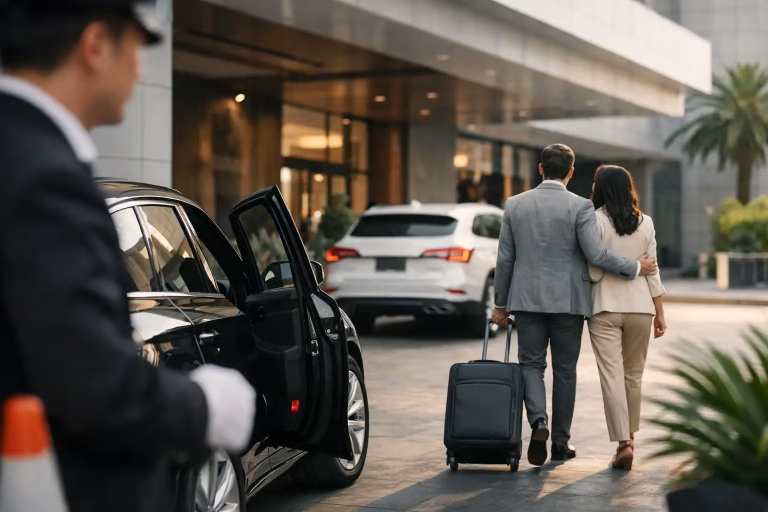
A valet service supports a more polished arrival by giving guests a direct point of contact. The attendant welcomes the driver, confirms the handover, and allows the guest to proceed without navigating an unfamiliar lot. This is especially meaningful for families with children, older guests, business travelers on a tight schedule, and attendees arriving in formal attire for an event.
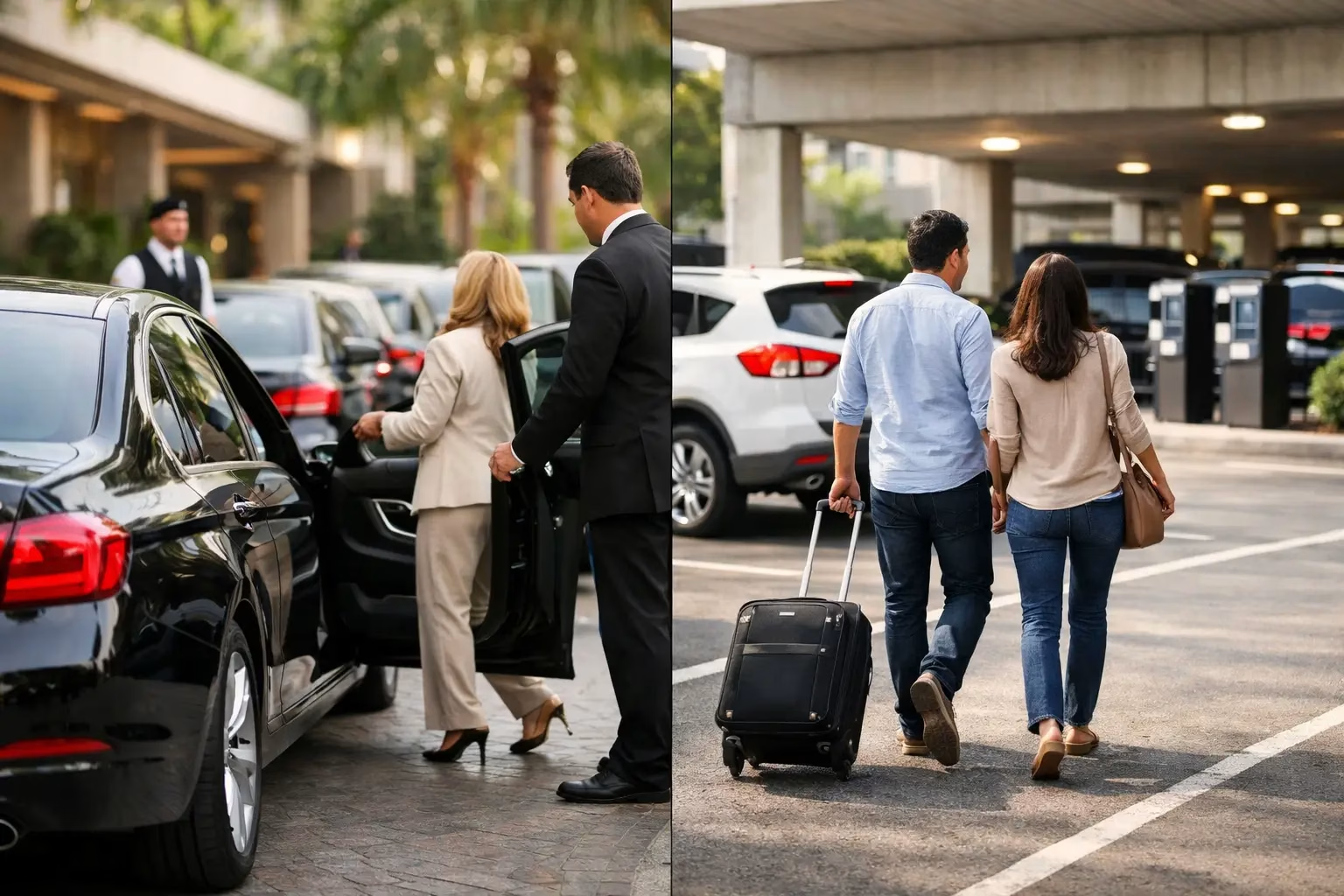
That does not mean self-parking creates a poor experience by default. A self-parking model can still feel professional when signage is clear, walking routes are safe, lighting is adequate, and guests understand where to enter and exit. The difference is that self-parking asks the guest to complete more of the arrival process independently. Valet parking transfers that responsibility to a trained operating team.
For properties where brand perception relies on attentive service, that transfer can be significant. It signals that the organization has considered the guest’s experience from the moment the vehicle reaches the gate.
Capacity Is More Than the Number of Spaces
A common planning error is to evaluate a parking program only by counting available spaces. Actual capacity also depends on how quickly vehicles enter, leave, turn, and are retrieved.
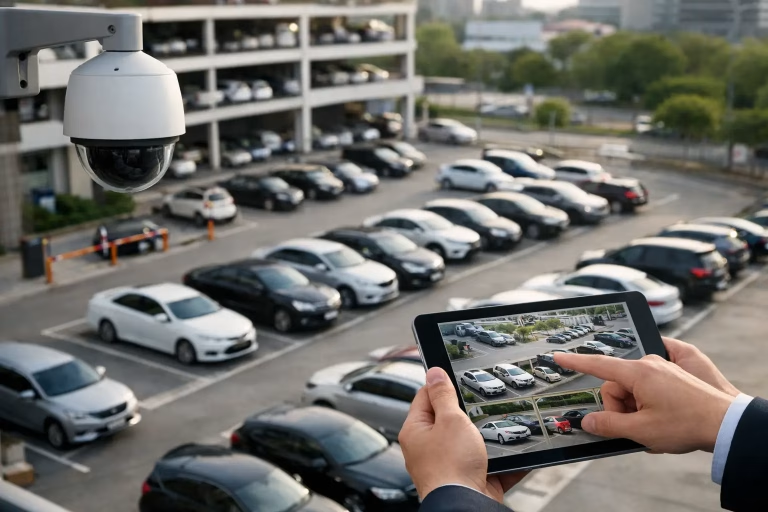
A self-parking lot can have many spaces and still perform poorly if drivers circulate repeatedly in search of an opening. During busy periods, that search adds traffic at the entrance, delays drop-offs, and may affect nearby roads. The result is a parking area that appears sufficient on paper but feels overwhelmed in practice.
A professional valet operation actively manages capacity. Attendants can assign vehicles according to expected departure time, vehicle size, accessible parking requirements, and the layout of the lot. They can use closer spaces for vehicles likely to be retrieved soon and organize overflow areas before the main facility reaches a critical point. This creates a more disciplined use of the same physical inventory.
For venues with limited on-site parking, valet is often paired with an overflow plan. Vehicles may be routed to approved nearby areas, while a designated retrieval process keeps guests informed and prevents disorder at departure. The value comes from planning the full vehicle journey, not simply adding staff at the curb.
Safety, Accountability, and Vehicle Care
When a guest hands over a vehicle, trust is nonnegotiable. A professional valet program must be built around trained personnel, clear vehicle handover procedures, controlled key management, and appropriate insurance coverage while vehicles are under the operator’s care.
This is where informal parking assistance creates risk. An untrained individual may be able to move a car, but that is not the same as managing vehicle intake, documenting concerns, protecting keys, observing site rules, and maintaining professional conduct under pressure. The operational standard matters as much as the physical act of parking.
Self-parking shifts most of the vehicle responsibility back to the driver, which some guests prefer. It also reduces the need for key custody and vehicle movement by staff. Yet the property still has responsibilities: safe pedestrian routes, visible markings, lighting, accessible spaces, security awareness, and an entrance that does not encourage unsafe stopping behavior.
The choice should reflect the risk profile of the site. A facility with frequent VIP arrivals, high-value vehicles, formal events, or dense curb activity benefits from a managed process with clear accountability. A lower-pressure property with a simple, well-designed lot may find that self-parking meets its needs effectively.
Staffing Should Match Demand, Not Appearances
Valet parking is sometimes viewed as a fixed luxury feature. In reality, it is an operating resource that should expand or contract according to demand. A restaurant may need a compact team for dinner service. A hotel may need broader coverage across check-in, dining, and event periods. A wedding venue may require a larger team for a short but intense arrival window, followed by an equally organized departure plan.
This flexibility is one reason outsourced valet management can be practical for commercial properties. Rather than building an internal parking operation from scratch, the venue can use a service model designed around expected volume, site restrictions, guest profile, and operating hours. At Wagifli, this approach includes tailored parking plans, trained teams, ticketing tools, and supervision that treats the arrival zone as part of the property’s hospitality standard.
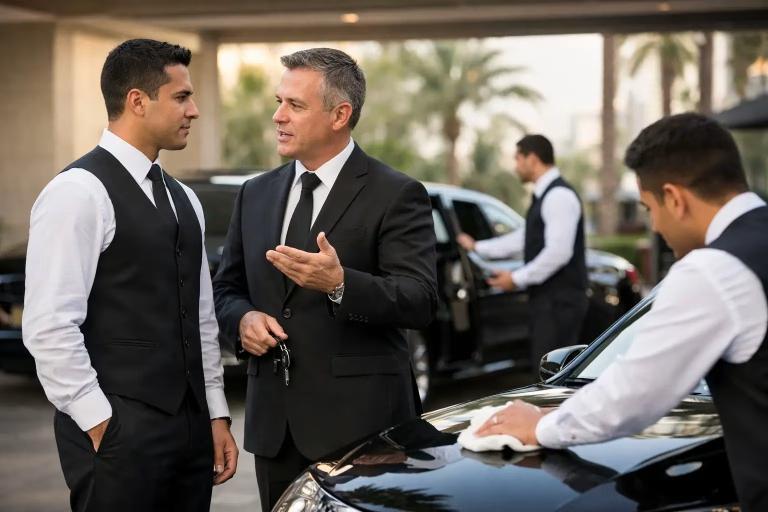
The objective is not to place as many attendants as possible at the entrance. It is to assign the right number of trained people to the right points in the process: greeting, vehicle intake, parking, traffic direction, key control, and retrieval. Understaffing creates delays. Overstaffing without a plan adds cost without improving performance.
When a Hybrid Model Makes More Sense
The best answer is often not valet or self-parking alone. A hybrid model can protect convenience while preserving capacity for the guests who need assistance most.
For example, a hotel may offer valet at the main entrance while directing long-stay visitors or staff to self-parking areas. A hospital can reserve valet support for patients, elderly visitors, and those arriving for urgent appointments, while using self-parking for routine traffic. An event venue may operate valet during the first arrival wave, then open guided self-parking once the curbside pressure decreases.
A hybrid plan needs clear communication. Guests should immediately understand which lane to use, whether valet is optional, where self-parking is located, and how vehicles will be retrieved. Ambiguity at the entrance defeats the purpose of offering multiple choices.
Evaluate the Decision Through Real Operating Data
Before selecting a model, review arrival and departure peaks, average dwell time, lot distance, vehicle turnover, guest demographics, and the width of the entrance lane. Observe the site during a busy period rather than relying on assumptions from a quiet weekday morning.
Also consider the cost of a poor arrival. Delayed reservations, guests arriving late to meetings, blocked emergency access, complaints about parking, and a crowded entrance all carry a commercial consequence. Valet parking has a direct service cost, but it can also reduce operational pressure and protect the image of a property where first impressions carry real value.
The right parking choice is the one that makes guests feel expected, guides vehicles with discipline, and allows the property team to focus on its core service. When the arrival is handled with care, the rest of the visit starts on stronger ground.