
متى تحتاج المستشفيات لخدمة فاليه في السعودية؟
A hospital entrance can become congested in minutes. A cluster of outpatient appointments, a family arriving for an emergency visit, discharge traffic, ride-share vehicles, and staff shift changes can all compete for the same curbside space. In that moment, the question is not whether parking is available somewhere on site. It is متى تحتاج المستشفيات لخدمة فاليه, and whether the arrival experience supports the level of care the hospital promises.
For hospitals, valet service is not simply a premium amenity. When designed correctly, it is an operational tool that protects access, organizes vehicle flow, supports patients with limited mobility, and gives visitors a calmer first interaction with the facility. The right decision depends on traffic patterns, patient needs, site layout, and the hospital’s ability to manage the curb without compromising safety.
When hospitals need valet service most
A hospital should consider valet service when parking and curbside activity begin affecting patient access or the quality of the visitor experience. The need is often visible before it appears in a formal report: vehicles double-park outside the entrance, patients walk long distances in difficult weather, staff members are repeatedly pulled away to direct traffic, or families arrive stressed before they enter the building.
High-volume outpatient departments are a common example. Specialty clinics, imaging centers, dialysis units, rehabilitation facilities, and maternity services often receive patients at predictable peak times. Many visitors may be elderly, recovering from treatment, accompanying children, or managing mobility limitations. Asking them to navigate a large parking area can add unnecessary difficulty to an already demanding visit.
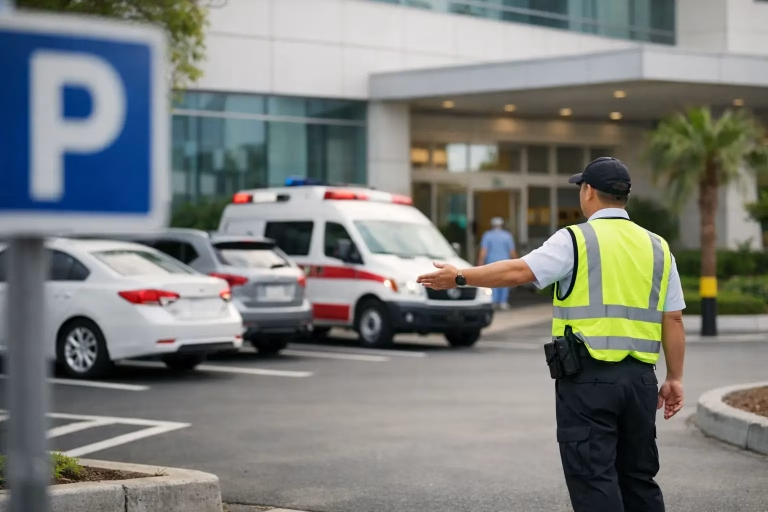
Emergency and urgent care entrances require a different level of judgment. A valet team should never interfere with ambulance access, emergency lanes, or clinical priorities. However, a properly planned operation can help keep non-emergency vehicles moving away from restricted areas, direct family members to the correct drop-off point, and prevent the curb from becoming blocked during busy periods.
Hospitals also benefit from valet service when the available parking supply is adequate but poorly connected to the entrance. A distant garage, a fragmented campus, or a parking lot with unclear pedestrian routes can create an experience that feels disorganized even if spaces are technically available. Valet service bridges the gap between parking capacity and accessible arrival.
The operational signals that should trigger action
Not every hospital needs a full-time valet team at every entrance. The best model is based on actual demand rather than assumptions. A site may need coverage only during clinic peaks, visiting hours, large events, or seasonal periods. Another may require a dedicated operation throughout the day because its patient profile and location create constant curbside pressure.
Several signals usually justify a closer review:
- Repeated queues at the main entrance or vehicles waiting in active traffic lanes
- Patient complaints about walking distance, parking confusion, or difficulty reaching the building
- Congestion caused by discharge pickups, ride-share vehicles, and family drop-offs
- Limited accessible parking near the entrance despite a high volume of mobility-sensitive visitors
- Staff spending substantial time managing curbside movement instead of their primary responsibilities
- Safety concerns involving pedestrians, wheelchairs, vehicles, or unclear drop-off zones
These symptoms do not always mean the hospital needs more parking. In many cases, the issue is how vehicles arrive, pause, unload, and leave. A trained valet operation brings order to that sequence while allowing the facility to use its existing parking inventory more effectively.
Valet service is part of the patient journey
Hospital leaders often evaluate valet service through the lens of convenience. Convenience matters, but the stronger case is patient support. A patient who is in pain, anxious about a diagnosis, carrying medical documents, or accompanying a loved one should not have to begin the visit by searching for a space or crossing a crowded lot.
The arrival process also shapes how families perceive the institution. Clear direction, a courteous greeting, assistance with the vehicle, and an orderly pickup process communicate attention before the patient reaches reception. For private hospitals, specialty centers, and facilities competing on patient experience, this can reinforce the care standard across the entire visit.
There is also a practical accessibility benefit. Valet staff can assist guests at the curb, coordinate wheelchair access where appropriate, and reduce the distance between vehicle and entrance. This is especially valuable for orthopedic, oncology, maternity, pediatric, and senior-care services, where the physical demands of parking may be disproportionate to the patient’s condition.
Safety and accountability cannot be secondary
A hospital valet program must be built around safety, not speed alone. The curbside area is shared by pedestrians, patients using mobility aids, service vehicles, security personnel, and sometimes emergency traffic. Without clear operating procedures, adding valet staff can simply shift congestion from one point to another.
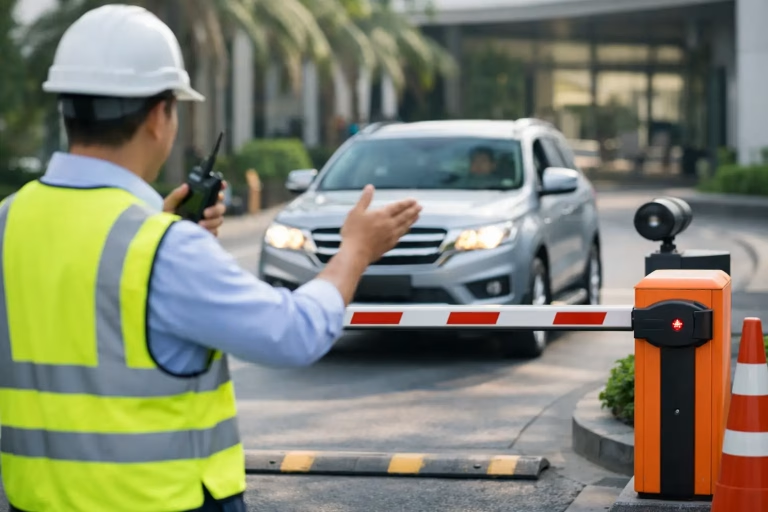
A professional provider begins with a site-specific operating plan. This includes defined vehicle routes, designated drop-off and pickup zones, parking inventory procedures, escalation paths for incidents, and coordination with hospital security and facilities teams. Staff should understand the difference between hospitality priorities and clinical access priorities. Emergency lanes remain protected at all times.
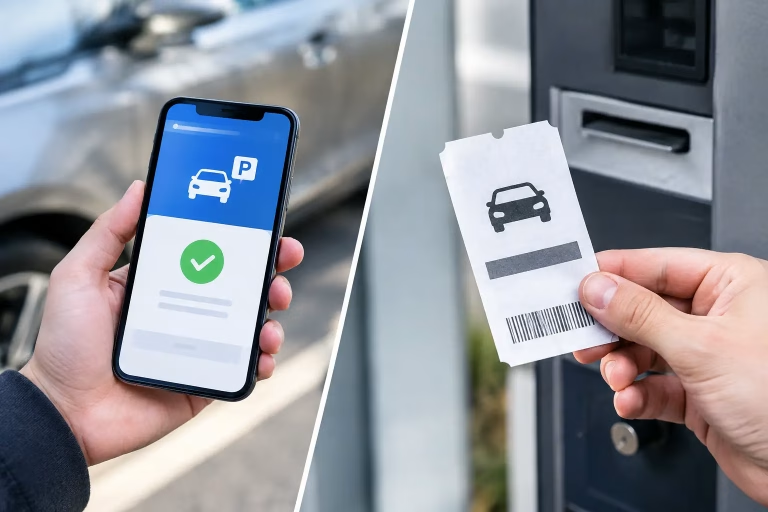
Vehicle custody is equally important. Hospitals should expect trained drivers, documented handover procedures, ticketing or digital tracking tools, and appropriate insurance coverage while vehicles are under the service’s care. These details protect both the hospital’s reputation and the trust of every visitor handing over a vehicle.
At Wagifli, valet operations are planned as part of the venue’s hospitality and traffic management system. That approach matters in a hospital setting, where polished guest service must work alongside strict operational discipline.
Choosing the right coverage model
The question of when hospitals need valet service also includes how much service they need. A full-service program at the main entrance may be appropriate for a large private hospital with continuous outpatient volume. A smaller clinic may benefit more from valet coverage during morning appointments, specialist consultation days, or periods when parking demand peaks.
Temporary valet service can also be useful during construction, parking garage closures, campus expansions, or major hospital events. These situations often disrupt familiar traffic patterns and create confusion for returning patients. A short-term operation can preserve orderly arrivals while the facility completes a larger infrastructure project.
For multi-entrance hospitals, coverage should not automatically be duplicated at every door. A traffic assessment may show that one entrance needs a dedicated valet team, another needs clear signage and a traffic marshal, and a third should remain reserved for emergency access. The most effective solution is tailored to each entrance’s purpose rather than applied uniformly.
What hospital leaders should expect from a valet partner
A valet provider should be able to explain how the service will work during peak demand, not just during quiet periods. Ask how the team will prevent queues from extending into public roads, how vehicles will be retrieved during a sudden surge, and who will coordinate with security if access conditions change.
The provider should also understand that hospital guests are not typical hospitality guests. Some may be distressed, unfamiliar with the facility, or unable to wait outdoors for long. Staff conduct, communication, appearance, and responsiveness are therefore central to the service. Professionalism is visible in the smallest details: greeting a visitor clearly, confirming vehicle information accurately, keeping the curb organized, and responding calmly when the environment becomes busy.
Technology can improve control as well. Ticketing systems and digital vehicle records reduce retrieval errors, support accountability, and provide a clearer view of vehicle status. Still, technology should support trained people and defined procedures, not replace them.
A better arrival is a practical care decision
Hospitals do not need valet service merely because it looks refined. They need it when curbside disorder creates friction for patients, families, staff, and emergency access. The strongest programs do more than park cars. They protect the entrance, improve accessibility, manage capacity, and make each arrival feel considered.
For a hospital evaluating its next operational improvement, the most useful starting point is a close look at the curb during its busiest hour. That is where the true patient experience begins.