
When a Business Needs Valet Service
A full parking lot rarely starts as a parking problem. It starts as a guest experience problem.
That is the real answer behind the question متى تحتاج المنشأة لخدمة فاليه – when does a business actually need valet service. In most cases, the need appears before management labels it that way. It shows up in cars stacking at the entrance, guests circling for spaces, delayed arrivals, confused traffic flow, and front-of-house teams trying to solve parking while also handling reception. By that point, valet is no longer a luxury add-on. It becomes an operating decision.
When a business needs valet service
A business needs valet service when parking begins to affect arrival quality, traffic control, or brand perception. That threshold looks different for a hotel than it does for a hospital, restaurant, corporate office, or event venue, but the pattern is consistent. If the first five minutes of arrival feel disorganized, slow, or stressful, the site is carrying hidden friction that guests notice immediately.
The strongest reason to introduce valet is not just convenience. It is control. A trained valet operation gives the property a structured arrival sequence, better use of available parking capacity, and a visible standard of hospitality. For some businesses, that translates into a premium guest experience. For others, it solves congestion, safety concerns, and staffing pressure at peak times.
Valet also makes sense when internal teams are absorbing parking responsibilities they were never built to manage. Reception staff, security personnel, and event coordinators often end up improvising traffic direction or assisting drivers. That arrangement may work on a quiet day. It usually breaks under volume.
The clearest signs your property has outgrown self-parking
The first sign is recurring congestion at the entrance, even if the lot still has spaces available. This usually means the issue is not inventory alone. It is flow. Drivers do not know where to stop, how long they can idle, or where the next decision point is. Without guided movement, a few seconds of hesitation at the curb can turn into a line of vehicles.
The second sign is that parking affects punctuality. In hospitality, this means guests arrive irritated before they even reach the desk or dining room. In healthcare, it can increase stress for patients and visitors who are already under pressure. In corporate settings, it creates a poor first impression for clients, executives, and VIP visitors.
A third sign is that your brand promises more than your arrival experience delivers. A refined restaurant, a premium hotel, or a well-produced event can lose impact if the entrance feels unmanaged. Guests usually do not separate parking from service. They experience the whole arrival as one sequence.
There is also a practical signal that many operators miss: underused parking capacity caused by poor allocation. Without active management, some spaces remain difficult to access, queue time rises, and turnover slows. Professional valet service often improves parking efficiency, not just curbside courtesy.
When valet is operationally necessary, not optional
Some sites reach a point where valet is less about enhancement and more about risk reduction.
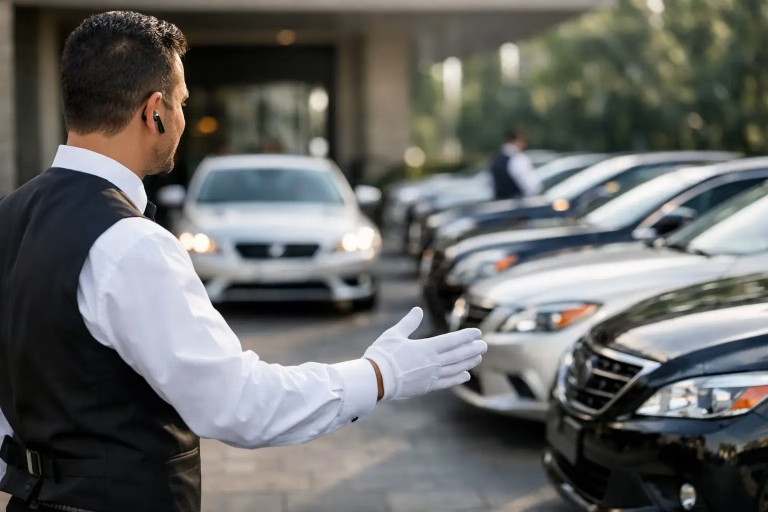
Properties with limited frontage are a common example. If the entrance sits on a narrow drive, near a main road, or in a mixed-use zone, unmanaged stopping can quickly interfere with traffic and safety. A valet team creates a controlled handoff point so vehicles are received, moved, and stored without leaving the curb exposed to backup.
Sites with remote, fragmented, or difficult parking layouts also benefit. When parking is split across multiple levels, adjacent lots, or overflow areas, guests lose time and confidence. A valet operation removes that complexity from the driver and returns order to the site.
This is especially relevant in high-density urban settings and busy destinations in Saudi Arabia, where evening peaks, weekend demand, and event overlap can put heavy strain on access roads and parking turnover. In those environments, disciplined vehicle handling is part of site management, not just guest service.
Industry by industry – where valet creates the most value
Hotels and serviced hospitality
Hotels feel the impact of arrival more than almost any other property type. Guests may arrive tired, late, or carrying luggage with family members in tow. Waiting to find parking after reaching the entrance creates friction at exactly the wrong moment.
Valet service helps hotels protect the check-in experience, manage peak arrival windows, and maintain a polished front entrance. It also supports VIP handling, group arrivals, and special events taking place on-site. For upscale hospitality, valet is often part of the service standard. For midscale properties, it may be most valuable during weekends, weddings, conferences, or high-occupancy periods.
Restaurants and fine dining venues
Restaurants usually see valet demand in compressed time windows. Guests tend to arrive close together, often during dinner service, and tolerance for delay is low. If drivers are circling nearby streets or blocking the drop-off zone, the guest experience starts poorly before the host even greets them.
Valet is particularly useful for fine dining, high-street locations, and venues with limited dedicated parking. It reduces late seating caused by parking friction and supports a more composed entry sequence. That matters when the brand depends on atmosphere and service from the first moment.
Hospitals and medical facilities
In healthcare, the value is different. Here, valet is often about accessibility, speed, and reducing stress for patients, elderly visitors, and families. A hospital may not need valet across every entrance or every hour. But specific departments, visiting periods, or peak outpatient windows can make the service highly practical.
The trade-off is that medical facilities need a valet model built around sensitivity, safety, and precise traffic discipline rather than luxury cues alone. That is why execution matters more than the label.
Corporate offices and headquarters
A corporate property may need valet when executive visits, client meetings, or high-profile events place pressure on the arrival zone. It can also be useful at headquarters where parking access is available but not intuitive for visitors.
For offices, the business case is often about professionalism. A managed arrival process removes confusion, protects schedules, and supports the company’s image during important meetings. It is not always a daily requirement. In many cases, it is most effective as a scheduled service for board meetings, launches, and hosted events.
Events, conferences, and weddings
This is where valet often moves from nice-to-have to essential. Event traffic is concentrated, arrival timing is compressed, and guests are less familiar with the site. Without managed parking, congestion builds fast and the entrance can lose order in minutes.
A professional valet team does more than park cars. It controls vehicle sequencing, protects the guest welcome, and helps the organizer avoid the visible disorder that can overshadow an otherwise well-run event. For weddings and private functions, valet also removes parking anxiety for guests who are dressed formally or arriving with families.
When valet may not be the right fit
Not every property needs full-time valet. If a site has abundant parking, low arrival pressure, and a simple access layout, self-parking may remain the better choice. The same applies when guest expectations are clearly transactional and speed of visit matters more than a hosted arrival.
There are also cases where the right answer is a hybrid model. Some businesses only need valet during peak hours, on weekends, or for specific entrances. Others benefit from event-only deployment or overflow support during seasonal demand. The point is not to force valet into every operation. It is to apply it where it improves flow, safety, and guest perception enough to justify the service.
How to assess whether your site needs it now
Start with the entrance, not the parking lot. Watch what happens during your busiest hour. How many cars queue at the curb? How often do guests hesitate or ask for directions? Does your team step in to manage traffic informally? Are guests arriving frustrated, late, or visibly unsure where to go?
Then look at staffing strain. If front-of-house personnel, security, or event staff are repeatedly pulled into parking tasks, the property already has an operational gap. That gap may be costing more than it seems in time, guest satisfaction, and brand consistency.
Finally, consider what your guests expect from your type of business. If the brand experience is meant to feel polished, calm, and well managed, the arrival process should match. A premium interior does not fully compensate for a chaotic curb.
The right valet partner should not just provide attendants. They should build a site-specific operating plan around traffic pattern, parking capacity, guest profile, peak periods, and handoff speed. That is where the service shifts from manpower to managed execution.
For many businesses, the question is not whether valet sounds attractive. It is whether the current arrival experience is carrying more operational risk and guest friction than the team can afford to ignore. Once that becomes visible, the next step is usually straightforward: treat the curb as part of the service, because your guests already do.