حلول مواقف تجارية That Protect Guest Experience
A guest may spend less than a minute at your entrance before forming an opinion about the entire property. A queue of vehicles, unclear drop-off points, or an unattended driveway can make even an exceptional hotel, restaurant, hospital, or event feel disorganized. That is why حلول مواقف تجارية should be treated as an operational and hospitality decision, not simply a parking arrangement.
For commercial properties, parking is the first physical touchpoint in the guest journey. It affects traffic flow, safety, punctuality, staff productivity, and the confidence visitors place in your brand. The right solution creates a controlled arrival experience: vehicles move with purpose, guests receive a professional welcome, and the property retains command of its entrance during both ordinary operations and peak demand.
Why commercial parking requires an operating plan
A parking lot can look adequate on paper and still fail during real operating hours. The challenge is rarely only the number of spaces available. It is the relationship between arrival patterns, vehicle turnover, entrance geometry, guest behavior, service expectations, and the speed at which cars can be received and returned.
A restaurant may experience its highest pressure within a short evening window. A hospital must accommodate patients, families, physicians, and emergency access without creating confusion at the curb. A hotel may have group arrivals, luggage handling, private transfers, and guests who expect immediate attention. At a wedding or conference, hundreds of vehicles can arrive within a limited period and leave almost at once.
These conditions require more than attendants directing traffic. They require a defined operating model with clear responsibilities, trained personnel, contingency procedures, and real-time coordination. When that model is absent, the result is often visible to every guest: blocked entrances, long waits, unsafe maneuvering, misplaced vehicles, and employees pulled away from their core duties to solve avoidable problems.
What effective حلول مواقف تجارية should include
A commercial parking solution should begin with an assessment of the site, not a generic staffing schedule. The goal is to understand how the location actually behaves under pressure. This includes the number and placement of entry and exit lanes, available parking capacity, peak arrival periods, pedestrian paths, accessibility requirements, delivery traffic, and any shared access with neighboring properties.
From there, the operation should define the right mix of valet service, self-parking guidance, traffic marshaling, overflow procedures, and vehicle retrieval processes. Not every property needs the same level of valet coverage. A corporate headquarters may need orderly morning and afternoon flow, while a luxury dining venue may place greater value on a polished curbside welcome. The appropriate model depends on the guest profile and the cost of delay at the entrance.
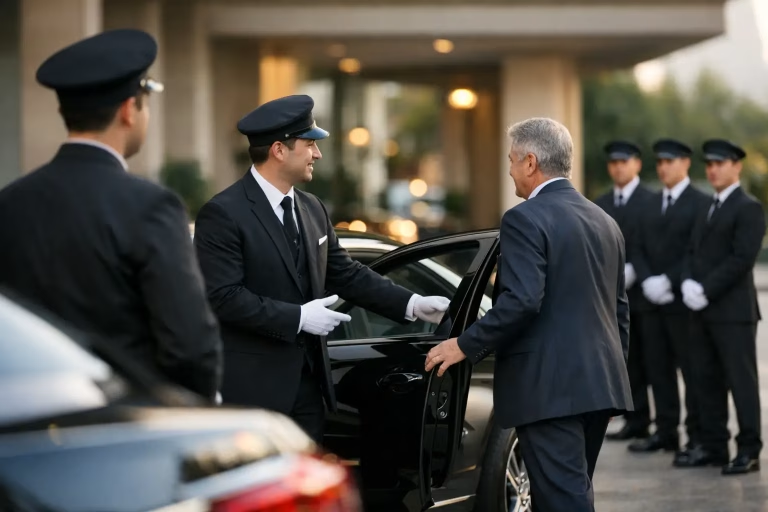
Professional valet service is particularly valuable when convenience and presentation matter as much as capacity. A trained team receives the vehicle, documents its handover, parks it according to a planned layout, and returns it efficiently when requested. This removes uncertainty for the guest while allowing the venue to use its available space more intelligently.
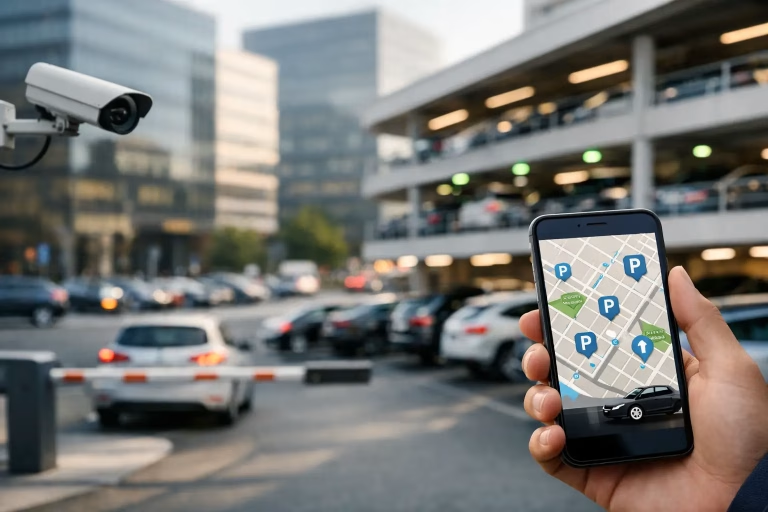
Digital ticketing and vehicle tracking can strengthen this process. They reduce reliance on handwritten records, help teams identify vehicle locations quickly, and provide a more controlled handover process. Technology, however, should support trained people and clear procedures. A digital system cannot compensate for poor site design, insufficient staffing, or unclear guest communication.
The business value goes beyond parking capacity
Decision-makers often evaluate parking through a simple question: do we have enough spaces? Capacity matters, but it is only one measure of performance. A well-managed operation can improve the use of existing capacity by reducing wasted movement, organizing overflow parking, and preventing vehicles from occupying circulation areas.
The larger value is commercial. A calm, well-managed arrival protects the atmosphere a venue has invested in creating. Guests are less likely to arrive frustrated. Reservations are less likely to be affected by parking delays. Front desk, host, security, and event teams can focus on their primary responsibilities instead of managing vehicle disputes outside.
There is also a direct safety benefit. Commercial parking areas bring together moving vehicles, pedestrians, service staff, and sometimes children, elderly guests, or patients with mobility needs. Defined routes, visible supervision, and disciplined vehicle handling reduce unnecessary risk. For the property operator, that means stronger operational control and clearer accountability.
Vehicle protection is equally central. Guests are handing over a valuable asset, and they expect careful handling from the moment they arrive. A credible provider should work with trained personnel, documented procedures, and insurance coverage for vehicles while they are under its care. These measures do not simply manage risk; they reinforce the trust behind the service.
Choosing the right model for your property
The strongest parking plan is tailored to the operating reality of the site. Before selecting a provider or building an internal process, property managers should define the experience they want guests to have and the operational issues they need solved.
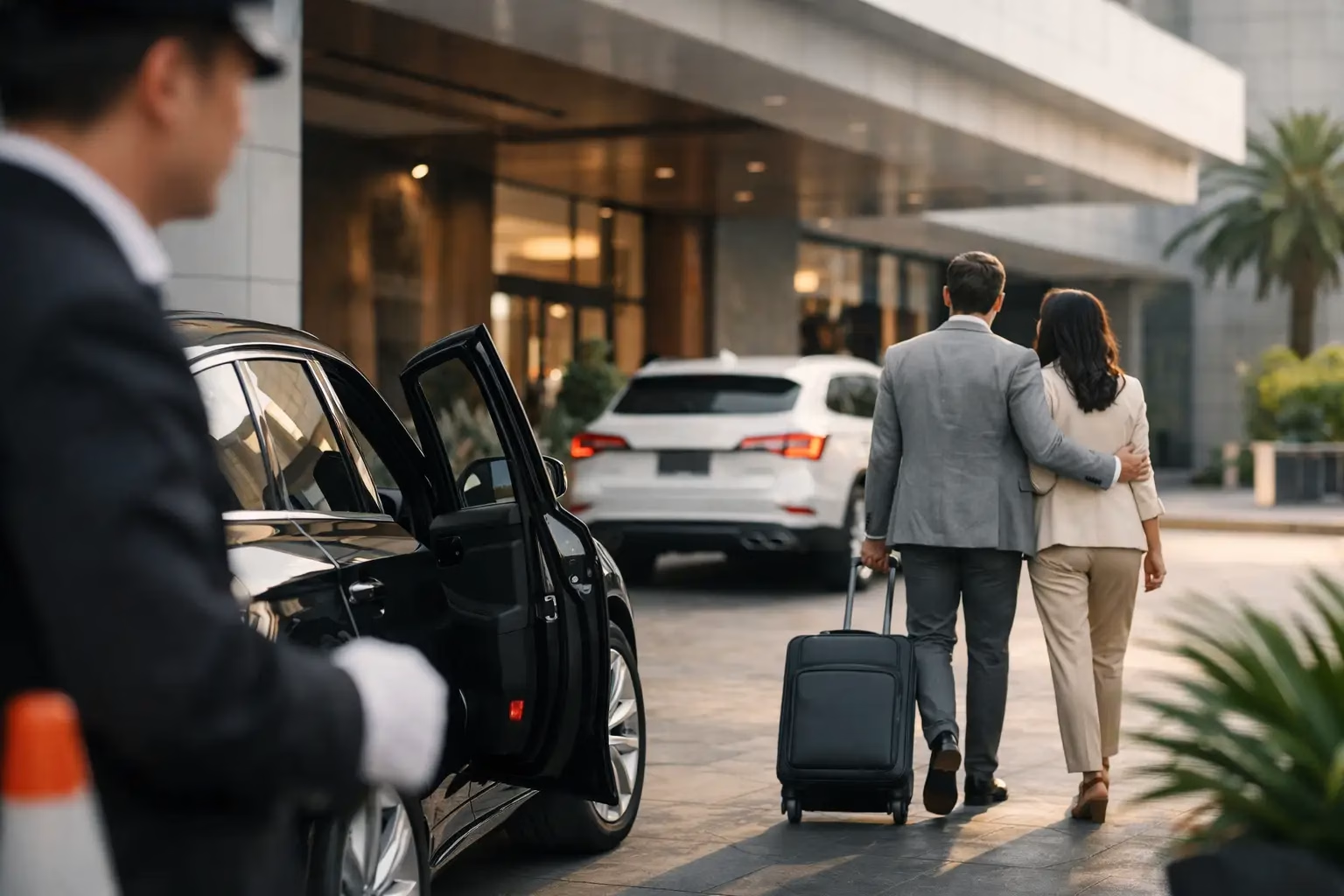
For hotels, the priority may be a refined welcome that coordinates valet, luggage, guest check-in, and transportation. For hospitals, the focus is often safe, rapid access and practical support for visitors who may already be under stress. For restaurants, the goal may be to protect the dining experience by removing the friction of searching for parking at peak hours.
Shopping centers and mixed-use properties need a broader traffic strategy because they manage multiple tenant needs, varying dwell times, and high pedestrian movement. Corporate sites may prioritize access control, employee parking allocation, executive arrivals, and visitor flow. Events require a flexible plan that can scale quickly, direct large volumes of cars, and manage a concentrated departure period without turning the exit into a bottleneck.
In Saudi Arabia, this planning becomes especially valuable for venues that experience seasonal demand, large family gatherings, conferences, and high-volume hospitality periods. A standard setup may work on a quiet weekday and become inadequate during a major event. The provider should be able to increase staffing, activate overflow areas, and adjust traffic routes without compromising service standards.
Questions to ask before outsourcing parking operations
The right partner should be able to explain how the operation will work at your location, not merely describe its general services. Ask how the team will assess traffic patterns and calculate staffing needs. Clarify who supervises the operation on site, how vehicle handovers are documented, and what process is followed if a guest needs a car quickly.
It is also wise to discuss peak-period planning. What happens when arrivals exceed forecasts? How will overflow parking be managed? How are VIP guests, accessibility needs, delivery vehicles, and emergency access handled? The quality of these answers often reveals whether a provider understands commercial operations or only supplies labor.
Training deserves close attention. Valet personnel represent your property at a highly visible moment. They need more than driving ability. They need professional communication, appearance standards, awareness of safety procedures, confidence in handling guest questions, and the discipline to follow the assigned parking plan under pressure.
Finally, evaluate reporting and accountability. A commercial parking operation should give management visibility into service performance, recurring congestion points, capacity pressures, and opportunities for improvement. The service should evolve as the property’s needs change.
Parking management as part of your guest promise
The entrance to a property is not a waiting area between the street and the service. It is part of the service itself. When parking operations are managed with the same care as reception, security, or guest relations, visitors feel the difference before they step inside.
Wagifli approaches valet and parking management as an extension of the client’s hospitality standard: trained teams, site-specific planning, orderly movement, and responsible vehicle care. The objective is not merely to park more cars. It is to give every guest a composed, respectful arrival while giving the property team greater control of a complex daily operation.
A well-run parking experience rarely demands attention from the guest. That is precisely its value: the arrival feels easy, the property feels prepared, and the first impression supports everything that follows.