
دليل تصميم تجربة وصول راقية للمواقع الفاخرة
The guest experience begins before reception, the host stand, or the event entrance. It begins at the curb. A blocked driveway, unclear drop-off point, or delayed vehicle handover can weaken an otherwise excellent operation in seconds. This دليل تصميم تجربة وصول راقية is built for decision-makers who view arrival management as part of hospitality, brand protection, and daily operational control.
A premium arrival experience is not defined by having more attendants at the entrance. It is defined by a well-designed sequence: the vehicle approaches safely, the guest knows where to go, the team responds with confidence, and the property maintains control of its traffic flow even during peak demand. For hotels, restaurants, hospitals, corporate facilities, and event venues, this sequence directly affects guest satisfaction and the perception of service quality.
What a Premium Arrival Experience Should Achieve
The purpose of arrival design is to reduce friction without making the process feel rushed. Guests should feel acknowledged quickly, while the operating team should have a clear view of vehicles, capacity, access routes, and priority cases.
A well-managed arrival zone delivers four outcomes at once: it protects pedestrian and vehicle safety, prevents congestion from reaching public roads, shortens the time between handover and entry, and gives the guest confidence that their vehicle is in professional care. These goals must work together. Speed without control creates risk; formality without speed creates queues.
For premium properties, the curb is also a visible expression of the brand. The uniforms, language, posture, signage, ticketing process, and vehicle handling standards should match the level of service promised inside the facility.
دليل تصميم تجربة وصول راقية يبدأ من حركة المركبات
The strongest arrival experiences are designed from the outside in. Before selecting a valet team, digital ticketing tool, or signage style, assess how vehicles physically move through the site.
Start with the approach route. Identify where vehicles enter from, whether drivers can recognize the entrance early enough, and what happens when several cars arrive at once. A luxury restaurant may see sharp peaks within a 30-minute dining window, while a hospital must accommodate a continuous mix of patients, visitors, ambulances, and accessible transport. A wedding venue may have a calm arrival period followed by a sudden surge immediately before the ceremony.
The right layout depends on these patterns. A narrow driveway may require a staged drop-off process and an off-site or remote parking strategy. A larger hotel forecourt may support separate lanes for valet arrivals, taxis, ride-share vehicles, and luggage handling. The goal is not to create complexity for its own sake. It is to ensure each vehicle has a defined path and each team member knows what to do when the expected flow changes.
Design the curb as a working zone
The drop-off area must give guests enough room to exit safely without forcing other vehicles into risky maneuvers. Pedestrian paths should remain clear, door-opening space should be protected, and the team needs a practical location to receive keys, issue tickets, and direct traffic.
This is where many properties make an expensive mistake: they treat the curb as unused space until an event or busy season exposes its limitations. A site plan should account for peak occupancy, not only average traffic. If the entrance works only when three cars arrive, it is not ready for a Friday evening, conference break, or major celebration.
Clear visual cues matter. Guests should immediately recognize where to stop, where valet service begins, and where self-parking or accessible drop-off is available. Signage should support staff direction, not replace it. A trained attendant who offers calm, precise guidance is more reassuring than a crowded entrance filled with signs.
Build Service Standards Around the Guest, Not Just the Vehicle
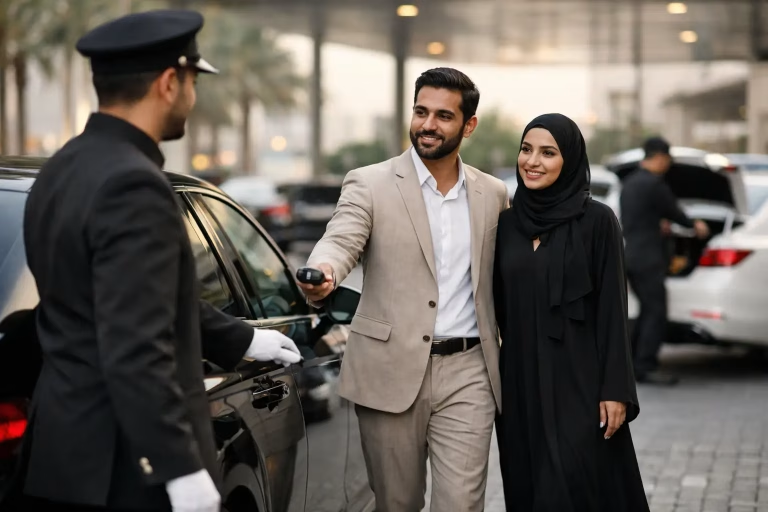
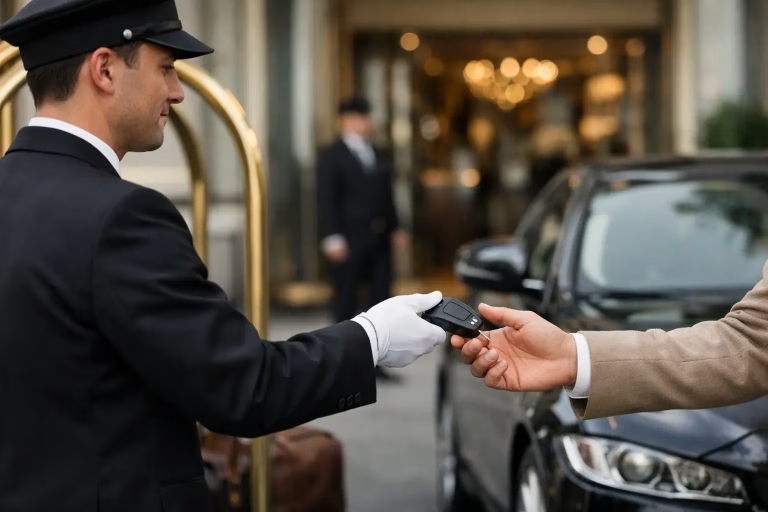
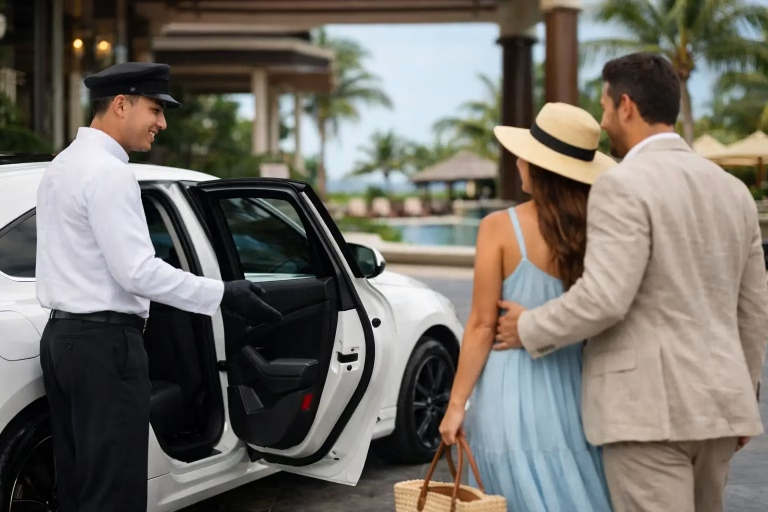
Valet parking is often judged by retrieval time, but the guest evaluates the entire interaction. The first greeting, the way luggage or mobility needs are handled, the clarity of the claim process, and the confidence of the attendant all shape the experience.
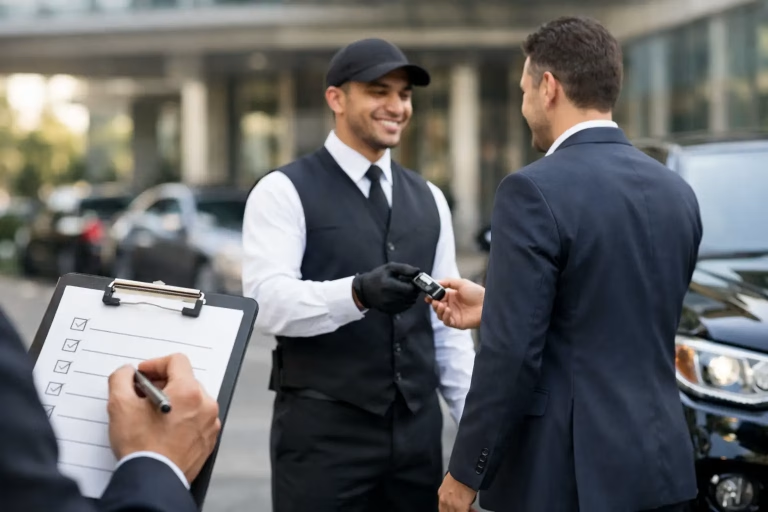
A premium operating standard should define how guests are welcomed, how vehicle condition is documented when appropriate, where keys are secured, and how exceptions are managed. Exceptions include guests with children, elderly visitors, VIP arrivals, accessible vehicles, lost tickets, early departures, and requests for a vehicle during a high-volume departure period.
The service should feel personal without becoming inconsistent. For example, an upscale restaurant may prioritize a discreet greeting and fast retrieval at the end of the meal. A hospital needs greater emphasis on courteous direction, accessibility, and reduced walking distance for patients and families. A corporate headquarters may require visitor verification and a formal handoff process alongside parking management.
The operating plan must reflect the property’s purpose. One model does not fit every location.
Make Safety and Accountability Visible
Trust is central to premium arrival management. Guests hand over a valuable asset, often in a public and busy environment. They need to see that the process is controlled.
That confidence comes from visible discipline: trained attendants, defined uniforms, secure key custody, documented vehicle handling procedures, and appropriate insurance coverage while vehicles are under the operator’s care. It also comes from thoughtful staffing. A team that is too small may appear efficient until the first rush creates delays and confusion. A team that is too large can make the entrance feel crowded and poorly coordinated.
Digital ticketing can improve both speed and accountability when it is used well. It helps the team record vehicle details, track location, organize retrieval requests, and reduce errors caused by handwritten records. However, technology should support hospitality rather than interrupt it. If the check-in process keeps an attendant focused on a screen while a guest waits without acknowledgment, the tool has been implemented poorly.
A practical system combines technology with clear human ownership. Every vehicle should have a traceable status, and every guest should know who can assist if a question arises.
Plan for Peaks Before They Become Queues
Most arrival problems are predictable. The challenge is that they are often addressed after guests have already experienced them.
Review traffic patterns by day, hour, season, and event type. Hotels may see departure pressure in the morning and dining arrivals in the evening. Restaurants often face compressed peaks around reservation times. Event venues need separate plans for guest arrival, vendor access, VIP movement, and final departure. Hospitals may require contingency procedures for visiting hours, emergency access, and high-demand clinics.
A peak plan should specify staffing levels, lane assignments, vehicle staging areas, escalation roles, and communication between the entrance team and the parking area. It should also identify the moment when the team changes its operating mode. Waiting until the driveway is full is too late.
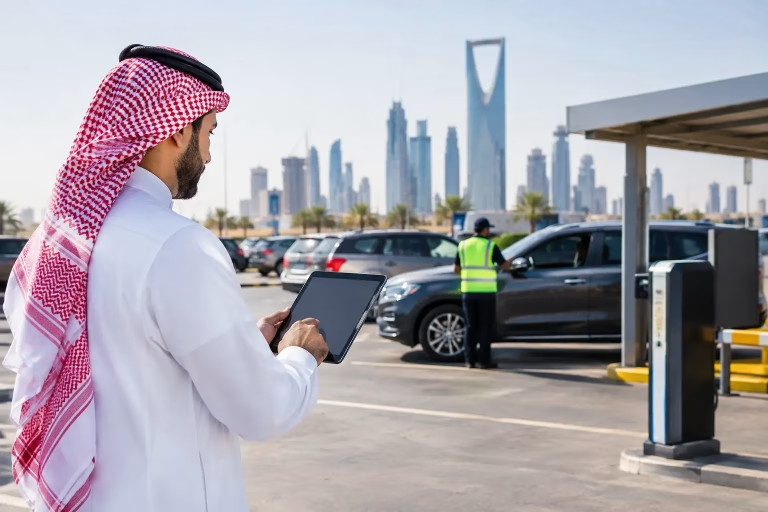
For major events in Saudi Arabia, where guest expectations and vehicle volumes can rise quickly, a site-specific plan is especially valuable. The best teams conduct a pre-event walkthrough, confirm routes and capacity, align with security and venue management, and prepare for changes in weather, timing, or attendance.
Measure the Experience Like an Operating System
A refined arrival experience should be managed with evidence, not assumptions. The most useful measures are simple: average vehicle handover time, retrieval time, number of vehicles processed during peak periods, guest complaints, vehicle incidents, and instances where traffic spills beyond the property boundary.
These figures do not tell the whole story, but they reveal where the operation needs attention. A fast average retrieval time can hide poor performance for guests leaving during the busiest 15 minutes. Likewise, low complaint numbers may reflect that guests have accepted delays rather than that the service is meeting the brand standard.
Regular observations add necessary context. Watch the entrance during real peak conditions. Are guests greeted before they search for help? Are attendants moving with purpose? Are drivers receiving clear instructions? Is the parking team receiving timely information from the curb? Small failures in communication often create the delays that guests remember.
Choose a Partner That Can Own the Detail
Premium arrival management requires more than staffing a curb. It requires operational planning, trained teams, traffic judgment, safety controls, and the ability to adapt service standards to the property. The provider should be able to explain how it will handle your specific site, not simply describe a generic valet offering.
Ask how the team will manage peak arrivals, secure keys, document handovers, respond to incidents, and communicate with your front office, security, or event management staff. Request clarity on staffing assumptions and insurance responsibilities. The right operating partner brings calm structure to moments that can otherwise become highly visible pressure points.
At Wagifli, valet service is approached as an extension of the client’s hospitality identity: professional at the curb, disciplined behind the scenes, and designed around the realities of each location.
A refined arrival experience is earned in the details guests may never consciously notice: the open lane, the timely greeting, the safe handoff, and the vehicle waiting when they are ready to leave. When those details are managed well, the property feels prepared before the guest has even stepped inside.