تشغيل مواقف المناسبات الخاصة for Better Guest Arrival
A wedding schedule can be perfect, the venue can be beautifully prepared, and the guest list can be carefully managed – yet the experience can still begin poorly if vehicles queue at the entrance. Private event parking operations, or تشغيل مواقف المناسبات الخاصة, shape the first real interaction guests have with the occasion. For organizers and venue managers, that makes parking an operational priority rather than a last-minute staffing need.
At private events, arrivals rarely happen at a constant pace. They come in waves: before the ceremony, just ahead of a keynote, or immediately after dinner when guests begin leaving together. A professional parking operation anticipates these peaks, directs vehicles with courtesy, protects access routes, and keeps the arrival experience aligned with the standard of the event itself.
Why private event parking needs a dedicated plan
A private event has different pressures than daily parking at a hotel or restaurant. The site may be used only once, the guest profile may include VIPs and families, and the available space may be limited or unfamiliar. There is little room to correct a weak plan once traffic has formed at the gate.
The operational objective is not simply to fit more cars into a lot. It is to create an orderly path from the public road to the drop-off point, from vehicle handover to secure parking, and from the exit request to prompt vehicle return. Each stage affects guest confidence, event timing, and the host’s reputation.
A trained valet team also provides a clearer point of control when circumstances change. A delayed arrival, an unexpected volume of vehicles, a blocked lane, or a guest requiring priority assistance should not force the event organizer to leave the program and manage traffic. The parking operator should already have the people, procedures, and decision-making structure in place.
تشغيل مواقف المناسبات الخاصة starts before guests arrive
Strong execution begins with a site assessment. Before an event, the operator should understand the entrance width, turning radius, drop-off zone, available parking capacity, pedestrian paths, service entrances, and emergency access requirements. A parking plan built only around the number of expected guests can fail because vehicle mix matters as much as attendance.
For example, a formal wedding may have a high number of family vehicles arriving within a narrow time window. A corporate reception may include executives who expect a direct drop-off and quick departure. A conference may need buses, supplier vehicles, and guest cars to use separate routes. These situations require different staffing levels, lane assignments, signage, and vehicle staging areas.
The plan should also identify the point at which the lot reaches practical capacity. Physical spaces are not always equal to usable spaces. Tight circulation, reserved areas, safety buffers, and access lanes reduce the number of cars that can be parked without creating delays later. Honest capacity management prevents the common mistake of accepting vehicles until the parking area becomes difficult to operate.
Arrival flow is part of the event design
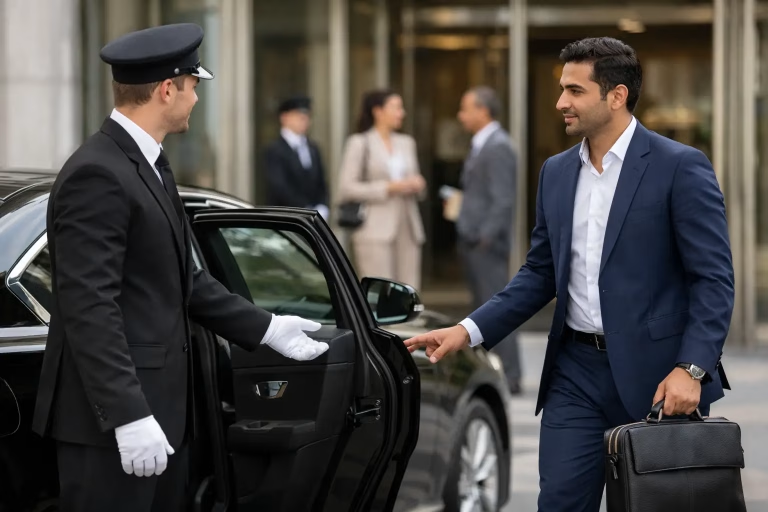
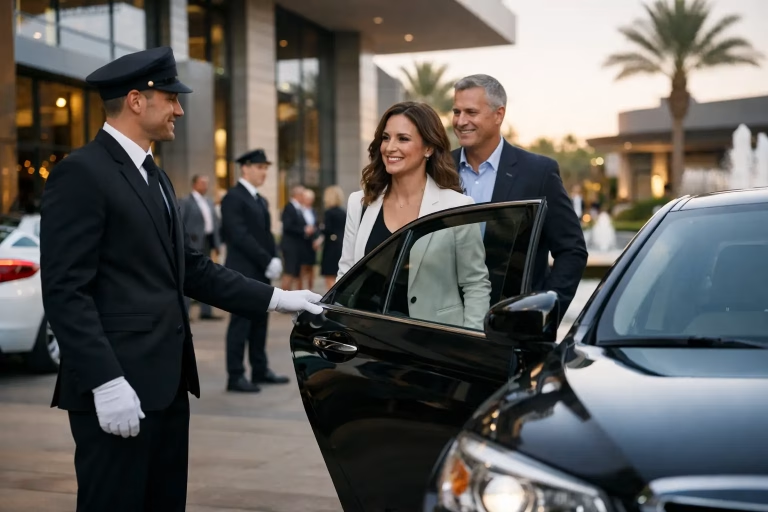
The drop-off zone should feel composed, even during peak arrival. That requires clear roles: one team member welcomes and receives the vehicle, another manages the queue and traffic movement, while drivers park cars according to a structured sequence. When every attendant performs the same task at once, the entrance becomes congested and communication breaks down.
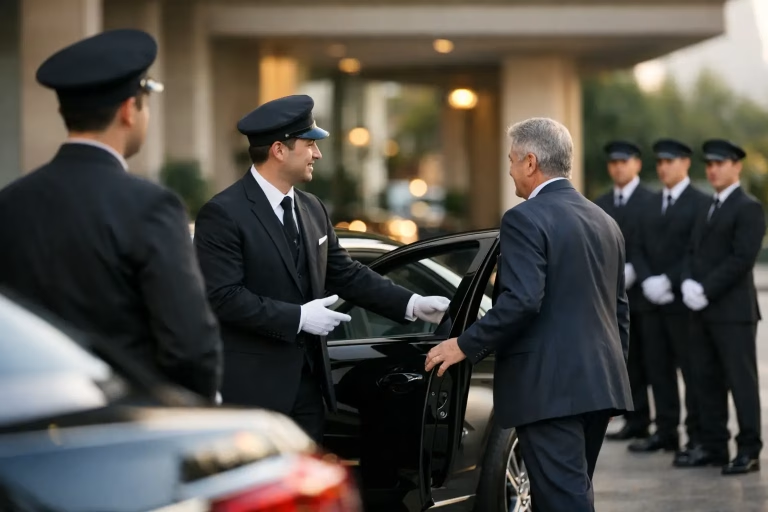
Guest-facing conduct matters just as much as vehicle movement. Attendants should be presentable, polite, and familiar with the event’s protocol. They should know where guests are expected to enter, how to guide elderly visitors or families, and when to escalate a request to the event contact. The right service style is discreet and attentive, never overly casual or rushed.
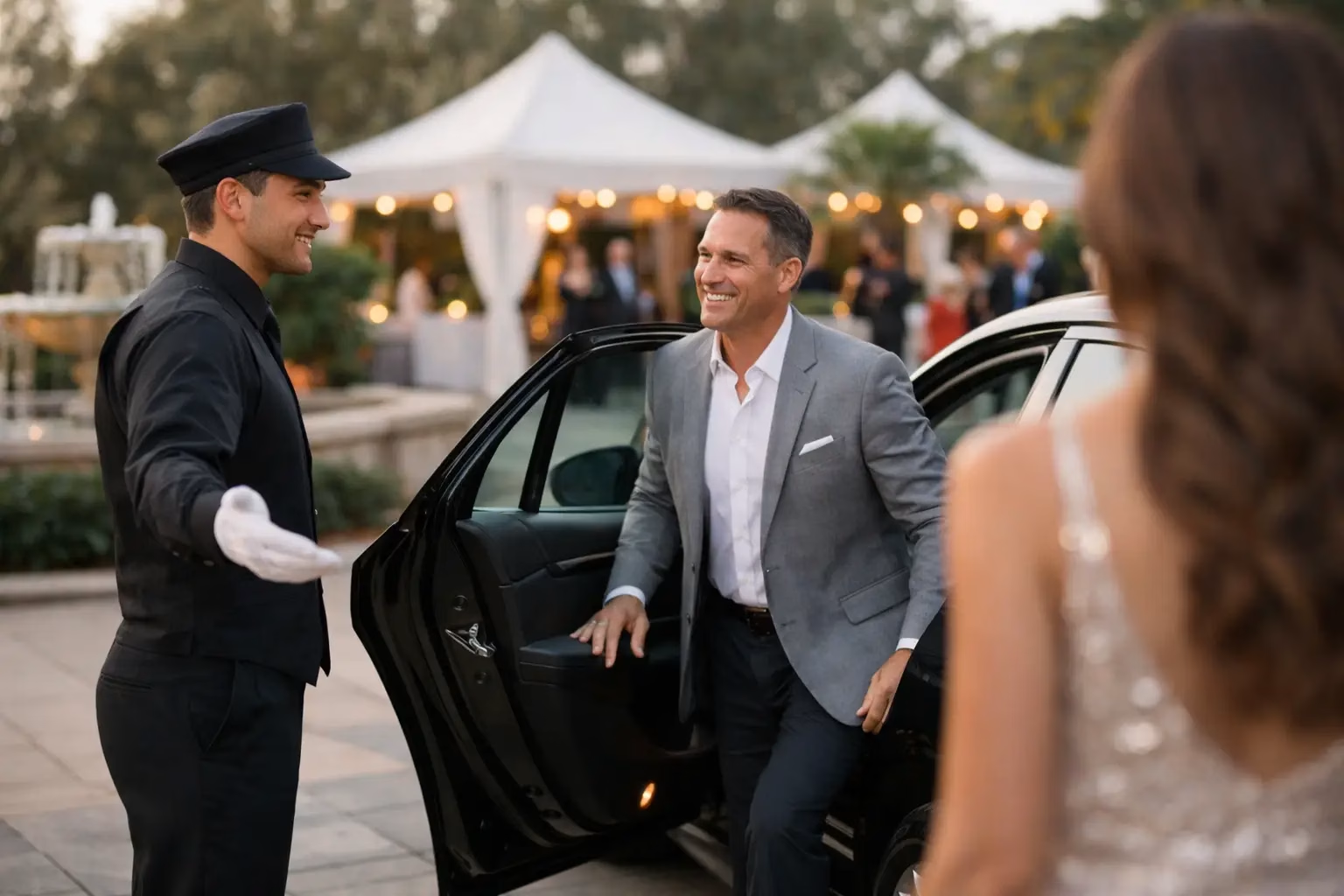
For premium occasions, the valet station is an extension of the host’s hospitality. Clean uniforms, organized ticket handling, and calm communication signal that the event has been considered in full, including the details guests may not see after they walk inside.
Safety, accountability, and vehicle care
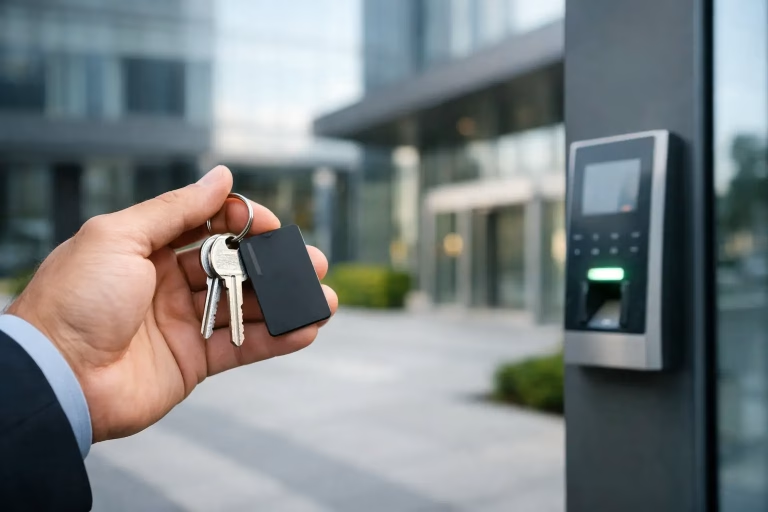
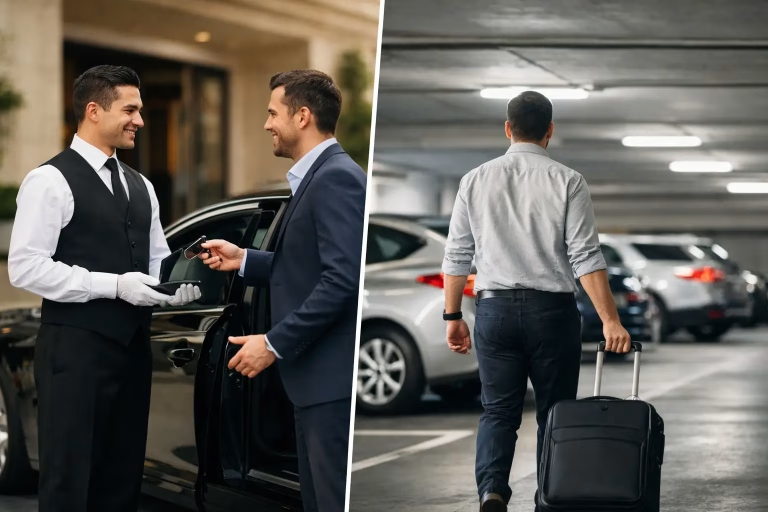
Guests hand over more than keys when they use valet service. They place their property in the care of the event operation. That responsibility requires trained drivers, controlled key custody, documented procedures, and appropriate insurance coverage while vehicles are under the operator’s care.
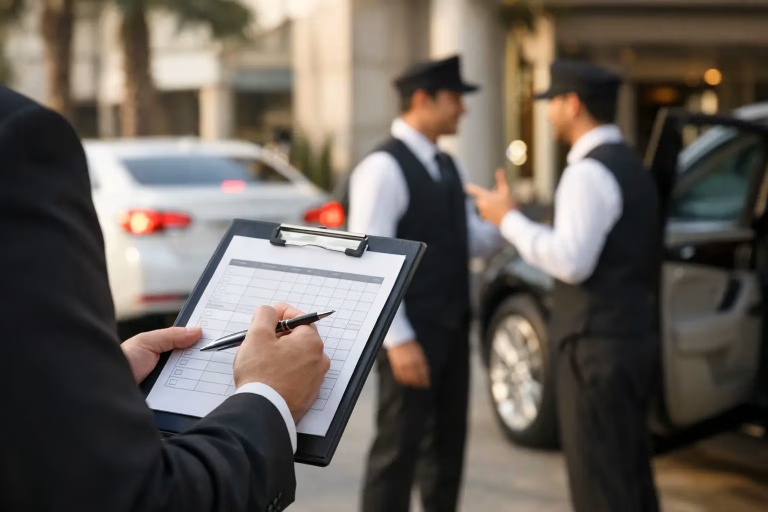
A professional team should follow clear standards for vehicle intake and return. Keys must be secured and traceable. Vehicles should be parked in assigned areas rather than wherever space appears available. Drivers need to respect speed controls, pedestrian movement, and the specific characteristics of the site. These practices reduce risk while allowing the team to locate vehicles quickly when requested.
Digital ticketing can improve both control and guest convenience. Instead of relying on memory or loosely organized paper slips, the operation can record vehicle details, parking location, and request status. The right system depends on the event size and format. A smaller private gathering may benefit from a simple, tightly managed process, while a large gala or conference often needs digital tracking to maintain speed and accuracy under pressure.
Technology supports good operations, but it does not replace them. A ticketing system is only effective when the team has a disciplined parking sequence, clear radio communication, and a supervisor who can adjust the plan as traffic conditions evolve.
Managing departures without creating a second bottleneck
Many event plans focus on arrival and underestimate departure. Yet the final guest impression is often formed when attendees request their vehicles at the same time. If cars are parked without a retrieval sequence, guests can wait too long, drivers can cross paths unnecessarily, and the exit lane can become blocked.
Departure planning begins during parking. Vehicles expected to leave earlier, such as VIP transport or family cars, may need priority positioning when practical. The team should also establish a staging area where requested vehicles can be brought forward safely without obstructing incoming traffic or pedestrian routes.
For events with a defined end time, pre-request options can reduce the last-minute rush. Guests can request their vehicles before leaving the venue, giving the valet team time to retrieve cars in a controlled order. This approach is especially valuable for large celebrations, award events, and evening functions where many guests depart within a short period.
Still, speed should not come at the expense of control. Bringing too many cars to the front at once can create the same congestion the operation is meant to prevent. The best approach balances retrieval time with available curb space, traffic conditions, and the number of active requests.
Choosing the right operating model for the event
Not every private occasion needs the same level of parking support. A small gathering with an accessible parking area may need a compact valet team and a clear guest arrival point. A high-profile event with restricted access, multiple entrances, and a large vehicle count requires a more detailed deployment that includes traffic marshals, supervisors, designated routes, and real-time capacity oversight.
The decision should be based on the event’s risk and guest expectations, not only on budget. Reducing staffing can appear efficient until a single delay at the entrance affects the ceremony start, creates a line visible from the street, or frustrates invited guests. Conversely, assigning more personnel than the site can support may complicate communication. The right model is tailored to the venue layout, attendance pattern, service standard, and parking inventory.
In Saudi Arabia, where weddings, corporate gatherings, and hospitality events often place strong value on guest reception, the quality of the arrival experience carries particular weight. A specialized operator such as Wagifli can build the parking operation around the event rather than forcing the event to adapt to a standard valet setup.
What to confirm before appointing a parking operator
Before finalizing a provider, event managers should ask practical questions about how the service will operate on site. The answers should be specific to the venue, not generic promises. Confirm who will assess the location, how many trained staff members will be assigned, what insurance arrangements apply, how keys and tickets will be controlled, and who serves as the on-site supervisor.
It is also useful to clarify contingency planning. What happens if guest vehicles exceed forecasts? How are emergency lanes protected? How will the team manage rain, restricted access, or an unexpected traffic surge? A reliable provider treats these questions as standard operating requirements, not exceptional scenarios.
The best private event parking operation is felt more than it is noticed. Guests arrive without confusion, hand over their keys with confidence, and leave with the same sense of care they experienced at the door. When that happens, parking has done its real job: protecting the host’s time, the venue’s image, and every guest’s first and last impression.