
أفضل حلول مواقف المؤتمرات for a Better Arrival
A conference can have a strong agenda, distinguished speakers, and a well-designed venue, yet still lose guest confidence before the first session begins. The reason is often outside the entrance: queued vehicles, unclear drop-off points, delayed arrivals, and guests searching for a place to park. أفضل حلول مواقف المؤتمرات treat this moment as part of the event experience, not as a last-minute logistics task.
For organizers, hotel teams, corporate hosts, and venue managers, parking management is a direct reflection of operational discipline. A controlled arrival protects the schedule, reduces pressure on security and reception teams, and gives every guest a welcome that feels organized, respectful, and professional.
Why conference parking requires its own operating plan
Conference parking is different from ordinary daily parking. Demand is concentrated into a narrow arrival window, often with multiple guest types arriving at once. VIPs, speakers, sponsors, exhibitors, staff, media teams, and general attendees may all require different access routes, timing, and levels of service.
Without a defined operating plan, small delays multiply quickly. One vehicle stopped at an unclear curbside point can block the next five. A guest who cannot find the designated entrance may make a late turn across traffic. A parking area that reaches capacity without a backup plan can send vehicles into surrounding streets and damage the first impression of the event.
The right solution is not simply adding more attendants. It is designing the arrival journey from the road entrance to the final handoff of the vehicle. That includes traffic flow, staffing, guest communication, parking capacity, safety controls, and accountability for every car under the operator’s care.
أفضل حلول مواقف المؤتمرات begin before event day
The strongest parking operation is planned during event preparation, not when the first guests arrive. Before assigning valet teams or opening a parking lot, the organizer and parking partner should assess the site as it will function during peak demand.
Map the guest journey, not just the parking spaces
A parking count alone does not show where congestion will occur. The plan should map vehicle entry, curbside drop-off, valet intake, pedestrian crossings, parking routes, vehicle retrieval, and exit lanes. It should also account for the location of registration desks, security checkpoints, and hotel entrances, because these touchpoints affect how long each vehicle remains at the curb.
For example, a conference hosted in a hotel may have an existing valet lane that works well for daily guests but becomes constrained when hundreds of attendees arrive within an hour. The appropriate response may be a separate conference arrival lane, a timed group drop-off area, or an off-site overflow plan with clearly managed transfers. The best choice depends on the site layout, attendee profile, and program schedule.
Forecast peak periods realistically
Most events do not experience steady parking demand. The largest surge may occur 30 to 45 minutes before the opening session, then repeat before lunch, after an afternoon break, and at the final departure. A plan that is staffed only for total attendance rather than peak volume will feel underprepared at the moments guests notice most.
Organizers should estimate expected vehicle volume, average occupancy per vehicle, arrival patterns, and the proportion of guests likely to use valet service. Speaker call times, sponsor access, prayer breaks, and VIP protocols can also affect traffic patterns, particularly for conferences in Saudi Arabia where hospitality expectations are high and timing matters.
Set clear responsibilities across teams
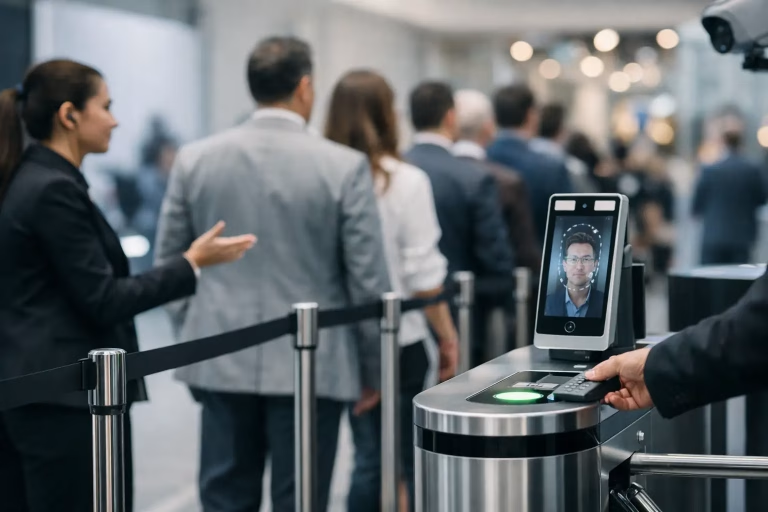
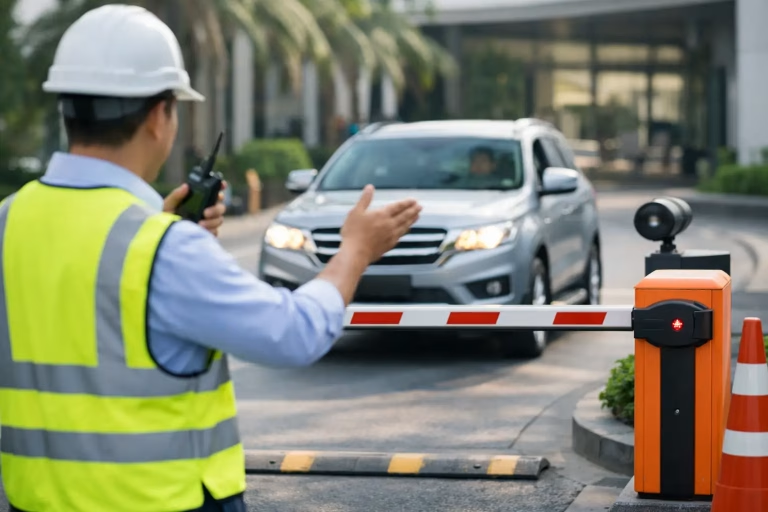
Parking is connected to more than one department. Security manages access. Event staff direct attendees. Front desk or registration teams answer questions. Facilities teams may control gates and loading areas. A professional parking operator coordinates these functions through one practical operating plan.
This prevents the common problem of guests receiving conflicting instructions. Every team should know where each vehicle category enters, where guests are dropped off, how exceptions are handled, and who makes real-time decisions when traffic conditions change.
Valet service is a hospitality function, not just vehicle movement
For conferences with executive guests, formal sponsors, or a premium venue experience, valet parking can reduce friction at the entrance and improve the tone of arrival. However, valet service only adds value when it is managed with care, trained personnel, and a clear chain of custody.
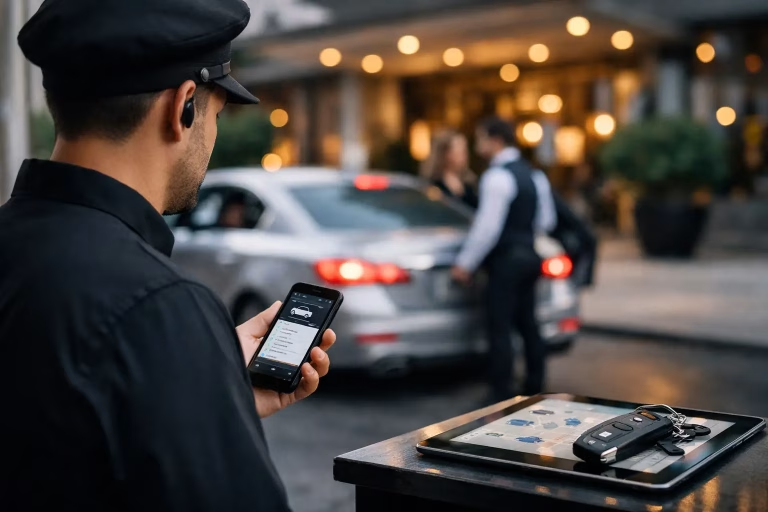
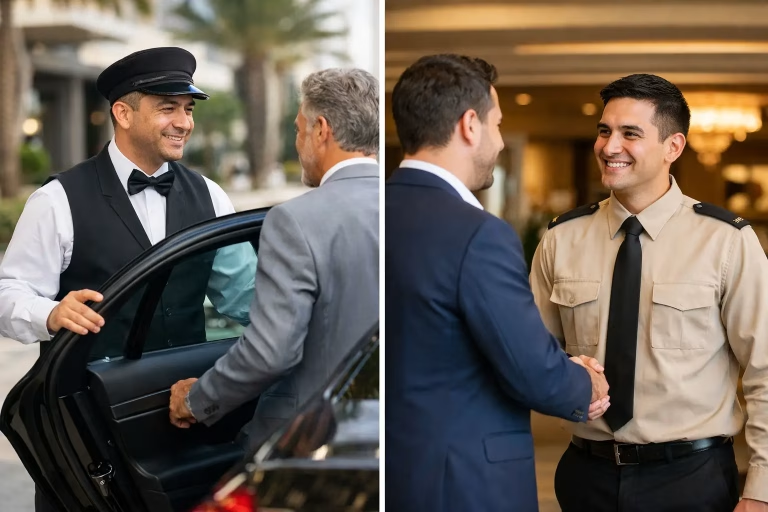
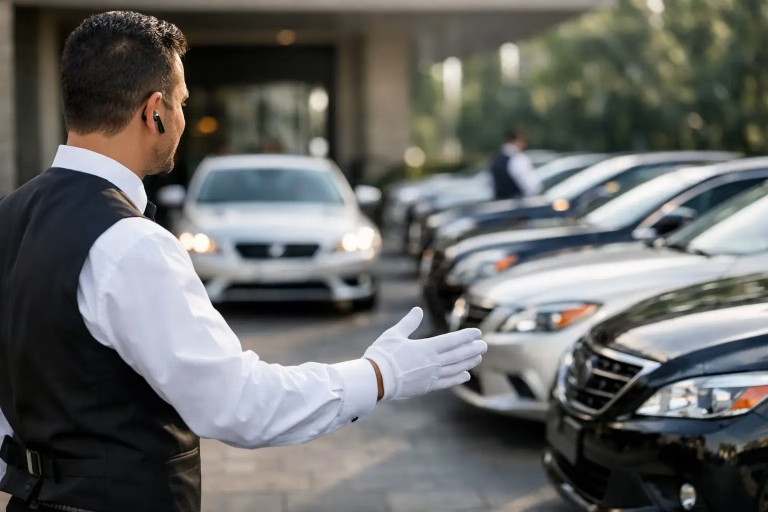
A professional valet team greets guests courteously, confirms the vehicle handoff, records the required details, parks safely, and retrieves vehicles in an organized sequence. Digital ticketing can speed up identification and retrieval while giving the operator greater visibility over vehicle location and status.
Safety and insurance coverage are equally central. Organizers should expect trained drivers, defined handoff procedures, documented vehicle accountability, and appropriate protection while vehicles are under the operator’s care. These are not extras for a high-profile event. They are part of protecting the guest relationship and the venue’s reputation.
There is also a practical trade-off. Valet is not always the best solution for every attendee group. If the venue has abundant self-parking close to the entrance and the conference audience prefers independence, a hybrid model may work better. Valet can be reserved for VIPs, speakers, elderly guests, and those requiring accessibility support, while clear signage guides other attendees to self-parking zones.
Design capacity for reality, including overflow
A conference parking plan must answer a simple question before invitations are finalized: what happens when the primary parking area is full? Relying on guests to find alternatives on their own creates unnecessary delays and weakens the event experience.
Capacity planning should distinguish between physical spaces and usable spaces. Some spaces may be reserved for hotel guests, employees, accessible parking, emergency routes, or vendors. Others may be technically available but too far away to support the expected arrival experience without a shuttle or guided walking route.
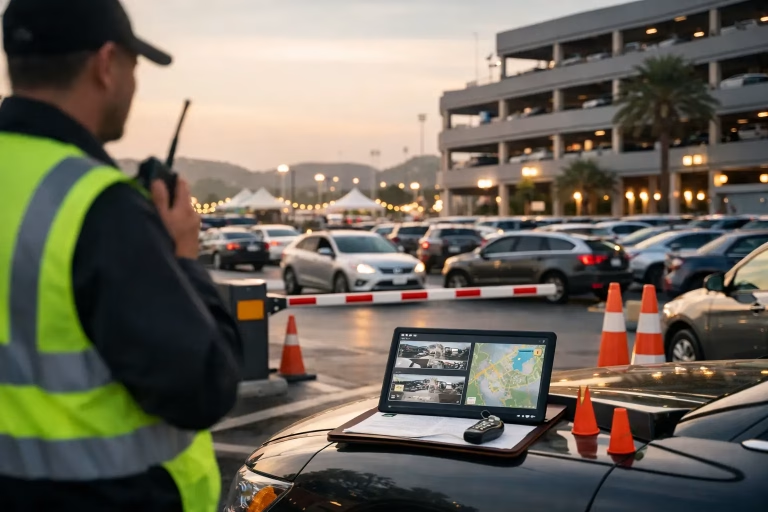
A credible overflow strategy identifies the alternate area in advance, assigns traffic direction staff, and communicates the route clearly. It also defines the threshold for activating overflow. Waiting until the main lot is already congested leaves teams reacting under pressure.
For large-scale conferences, vehicle staging can be as important as parking itself. Buses, ride-share vehicles, executive cars, and service vehicles should not compete for the same curb space. Separate zones and timed access windows keep the entrance controlled while preserving a respectful welcome for every guest.
Use technology to reduce waiting and uncertainty
Technology should support the operation rather than complicate it. For valet-managed events, digital ticket systems can reduce manual errors, improve retrieval coordination, and help teams track each vehicle from intake to return. A guest who requests a vehicle before leaving the venue can experience a faster departure, especially after a closing session when demand rises sharply.
Event communications can also reduce avoidable traffic. Parking instructions should be sent before the event in plain language: recommended arrival time, correct entrance, valet availability, self-parking locations, and any vehicle restrictions. On-site signage should repeat those instructions without forcing drivers to stop and ask for help.
Still, digital tools do not replace trained people at critical points. A clear sign cannot manage a driver who has missed a turn, and an automated ticket cannot calm a guest concerned about a delayed vehicle. The strongest model combines practical technology with visible, well-briefed teams who can respond quickly and courteously.
Measure the operation after the conference
A parking operation should be reviewed as carefully as registration, catering, and audiovisual production. Useful indicators include average valet intake time, vehicle retrieval time, peak queue length, overflow usage, incident reports, and guest feedback. These details help organizers improve future events and give venue operators a clearer view of where capacity or staffing needs adjustment.
It is also worth reviewing the moments that did not become complaints. If a large arrival surge was absorbed without visible congestion, that outcome usually came from good planning, clear roles, and a team that anticipated pressure before it reached the guest.
For organizers who want parking to reinforce rather than distract from their event, a specialized operating partner such as Wagifli can build a site-specific valet and traffic plan around the venue, audience, and expected volume. The goal is not simply to park more vehicles. It is to make the first and final moments of the conference feel as considered as the program inside.