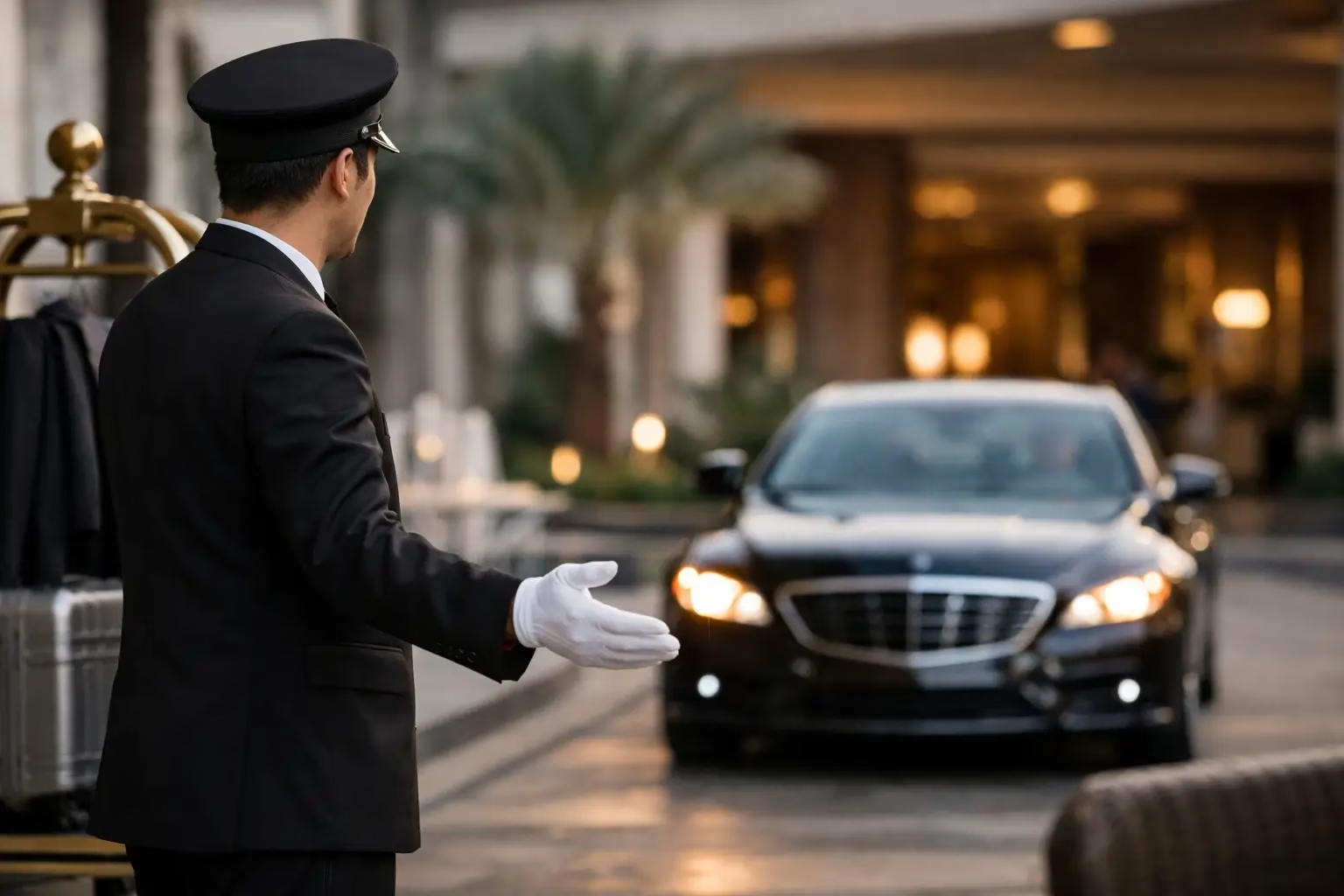
دليل تشغيل الفاليه للمنشآت الفاخرة باحتراف
The phrase دليل تشغيل الفاليه للمنشآت الفاخرة should never mean simply assigning attendants to collect keys. At a luxury hotel, premium restaurant, private event, or high-traffic medical facility, valet is the first physical interaction many guests have with the property. A delayed greeting, unclear vehicle handoff, or congested driveway can affect the guest’s perception before they enter the lobby.
For decision-makers, the objective is not to add another front-of-house service. It is to operate the arrival experience with the same discipline applied to reception, security, and guest relations. That requires a defined operating model, trained people, controlled traffic flow, clear accountability, and the flexibility to respond when demand changes by the minute.
What Luxury Valet Operations Must Control
A refined valet service is built around three connected moments: arrival, vehicle custody, and return. Each moment must feel calm to the guest while being precisely managed behind the scenes.
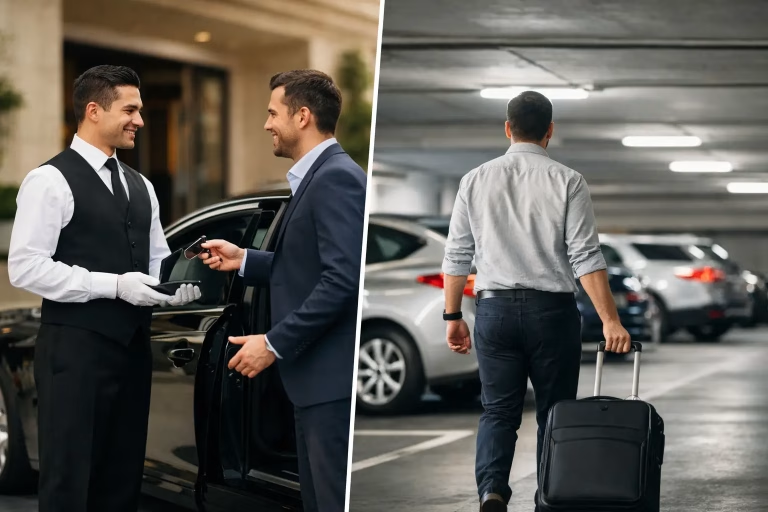
At arrival, the team must recognize where vehicles should stop, where pedestrians cross, how long each handoff may take, and when a vehicle needs to be moved before it creates a queue. During custody, the operation must document the vehicle condition, secure the keys, follow a defined parking route, and maintain full responsibility for the car. At return, the team needs accurate request handling, practical staging capacity, and communication that prevents guests from waiting without information.
Luxury does not mean excessive ceremony. It means confident service with no visible confusion. The guest should be welcomed promptly, receive clear assistance, and feel assured that their vehicle is in professional care.
Start With the Site, Not the Staffing Number
One of the most common operational mistakes is selecting a valet team based only on the number of expected guests. Headcount matters, but it does not tell the full story. A venue receiving 100 vehicles over four hours has a very different requirement from one receiving 100 vehicles in a 25-minute arrival peak.
A proper site assessment examines driveway width, entry and exit points, nearby road conditions, available parking inventory, walking distance to the parking area, pedestrian routes, accessibility requirements, and the location of event drop-off zones. It should also account for delivery vehicles, ride-hailing activity, VIP arrivals, and emergency access.
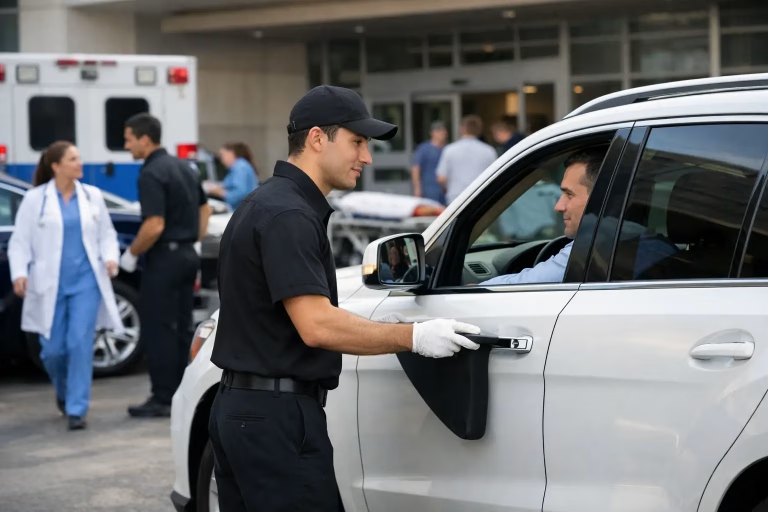
For example, a fine-dining restaurant may need its strongest coverage during a short evening arrival window, then prioritize quick vehicle retrieval as tables turn over. A hotel requires coverage across multiple shifts, with different patterns for check-in, check-out, weddings, and conference sessions. A hospital must balance guest hospitality with urgency, accessibility, and uninterrupted emergency routes.
The right plan is therefore tailored to the property. It defines where the valet podium sits, where cars are staged, how traffic is separated, who makes escalation decisions, and what happens when the primary lot reaches capacity.
Capacity Must Be Managed in Real Time
Parking capacity is not simply the number of spaces on paper. It is the number of spaces that can be used safely and efficiently at a given moment. Tight layouts, blocked access lanes, late vehicle retrieval, and poor key control can reduce usable capacity quickly.
A luxury operation needs a live view of occupancy and a planned overflow response. This may include secondary parking areas, designated staging spaces, or a controlled guest communication process during unusually high demand. The trade-off is clear: parking vehicles farther away can protect driveway flow, but it can also increase retrieval time. The correct decision depends on the service promise, guest profile, and peak-hour demand.
Set Service Standards Before Opening
The finest valet teams do not rely on individual personality alone. They operate against standards that make professional behavior consistent across every shift.
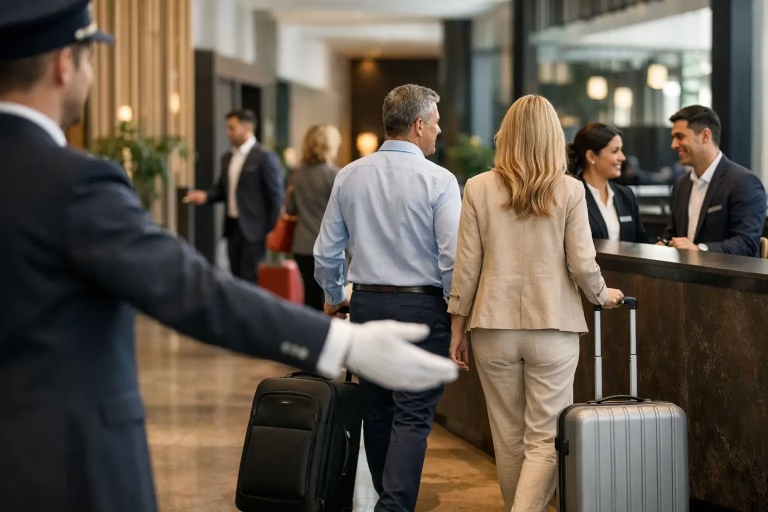
Guests should be acknowledged immediately, even when the team is managing multiple arrivals. The attendant should use clear, courteous language, confirm any relevant vehicle details, explain the ticket or digital receipt process, and provide practical support such as assistance with doors or luggage when appropriate to the venue. The tone should be polished without becoming intrusive.
Vehicle handling standards must be equally clear. Team members need authorization rules for vehicle movement, speed limits within the property, prohibited actions, key custody procedures, incident reporting, and rules for personal property found inside a vehicle. These controls protect the guest and protect the property’s reputation.
Uniform presentation also matters. It signals discipline before a word is spoken. However, appearance is only credible when supported by punctuality, calm communication, and consistent execution under pressure.
Train for Pressure, Not Only for Procedure
A valet attendant may know how to park a vehicle and still be unprepared for a luxury environment. Training should cover guest interaction, defensive driving, site-specific routing, vehicle inspection, ticketing systems, and safety protocols. It should also prepare the team for the moments that create reputational risk.
These moments include a guest arriving while the driveway is full, a vehicle request during an event departure surge, an unclaimed key, a parking-space shortage, or a guest who needs immediate accessibility support. In each case, staff need both a defined process and the judgment to respond respectfully.
Supervision is essential. A lead attendant or site supervisor should monitor queue length, vehicle staging, team positioning, guest concerns, and communication with the property’s management. Without visible operational leadership, even a skilled team can become reactive during peak periods.
Use Technology to Improve Control, Not Add Friction
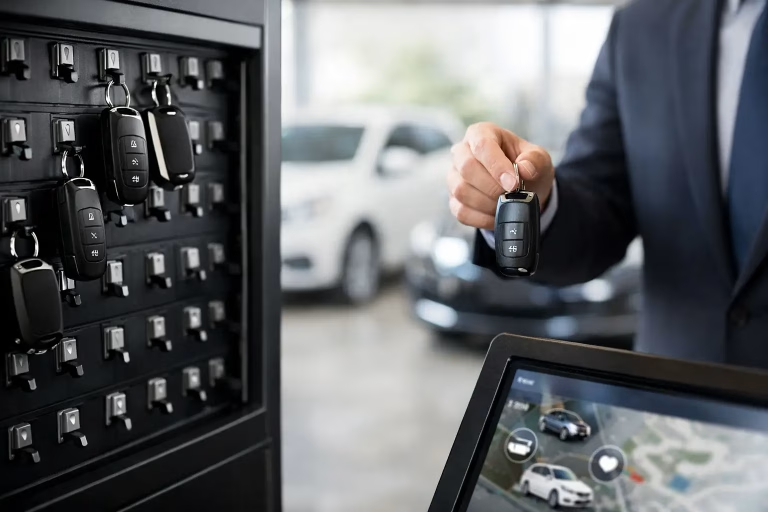
Digital ticketing and vehicle management tools can improve accuracy, speed, and accountability. They help record vehicle information, track retrieval requests, reduce the risk of misplaced keys, and provide useful operational data after the shift.
Technology should support the guest experience rather than complicate it. At some properties, a digital request process can shorten wait times and make handoff more convenient. At others, particularly formal events or guest segments that value direct assistance, the best approach may be a staff-led request process supported by digital tracking in the background.
The key question is whether the tool helps the operation make better decisions. If it gives the team visibility into arrival volume, retrieval patterns, and parking utilization, it becomes a practical management asset. If it creates extra steps without improving response time, it needs to be reconsidered.
Build Safety and Accountability Into Every Handoff
Premium valet service requires visible confidence, but confidence must rest on documented controls. A clear vehicle inspection process at handoff helps establish condition and reduces disagreement later. Key storage must be restricted, organized, and traceable. Parking areas should be selected and managed with safety, lighting, access control, and vehicle protection in mind.
Insurance coverage during vehicle custody is also part of the operating standard, not an afterthought. Property managers and event organizers should understand who is responsible for the vehicle at each stage, how incidents are documented, and how escalation is handled if a concern arises.
This level of accountability matters most when something goes wrong. A minor incident handled quickly, transparently, and professionally can preserve trust. A poorly documented handoff can turn a manageable issue into a guest-relations problem.
Measure the Experience as Well as the Movement
A valet operation should be reviewed through operational metrics and guest-facing outcomes. Useful measures include average arrival handling time, vehicle retrieval time, peak queue duration, parking utilization, incident records, and guest feedback. These indicators reveal whether the service is meeting its promise or merely keeping vehicles moving.
Numbers should be interpreted in context. Faster parking is not always better if it compromises safety. A low queue time may reflect underused capacity, or it may mean guests are being redirected before reaching the property. The most valuable reporting connects performance to the actual experience at the entrance.
For luxury properties, the strongest valet program becomes part of the brand standard. It gives the front-of-house team a more organized arrival area, gives management clearer control over parking pressure, and gives guests a welcome that feels deliberate from the first moment.
A specialist partner such as Wagifli can design the operating plan around the property’s traffic patterns, service expectations, and risk requirements. The best time to assess valet operations is before the next high-demand period, when there is room to refine the arrival experience rather than recover from it.