مستقبل مواقف الضيافة الذكية Starts at Arrival
A guest can form an opinion of a property before reaching the lobby, host stand, or registration desk. A blocked driveway, unclear drop-off point, or long wait to retrieve a vehicle can immediately weaken an otherwise premium experience. That is why مستقبل مواقف الضيافة الذكية is not simply about adding digital tools to parking operations. It is about managing the arrival experience with the same care given to reception, service standards, and guest communication.
For hotels, restaurants, hospitals, corporate facilities, and event venues, parking is becoming a visible operating function rather than a back-of-house task. The facilities that perform best will combine trained teams, real-time operational visibility, and a service model built around safety, speed, and accountability.
Why smart hospitality parking matters now
Vehicle traffic has become less predictable. Peak periods shift with reservation patterns, prayer times, event schedules, dining hours, visitor restrictions, and the volume of ride-hailing vehicles using the same entrance. A parking plan that works on an ordinary weekday may fail during a conference arrival, a wedding reception, or a high-demand weekend evening.
Traditional valet service can still provide a polished welcome, but it depends heavily on individual coordination when it lacks a clear operating system. Smart hospitality parking introduces structure around that work. It gives teams a clearer view of vehicle status, available capacity, queue pressure, designated loading areas, and the priority of each guest request.
The commercial value is direct. Better arrival management protects the property’s image, reduces congestion at the front entrance, supports faster table turns or guest check-in, and gives management more confidence during high-pressure periods. For a premium venue, the difference is often not whether valet parking exists. It is whether the service feels controlled, courteous, and reliable when demand rises.
مستقبل مواقف الضيافة الذكية: technology supports the team
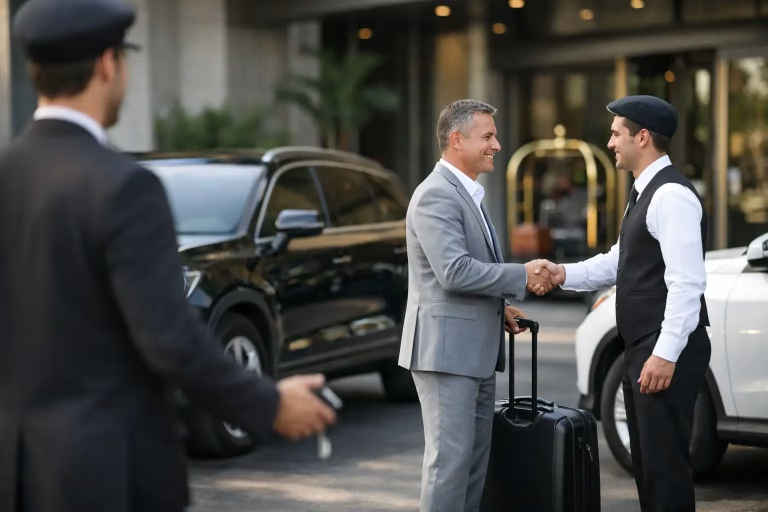
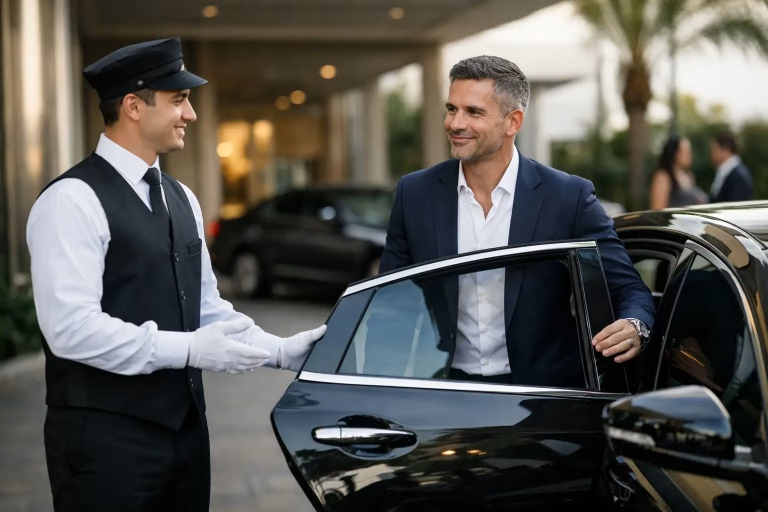
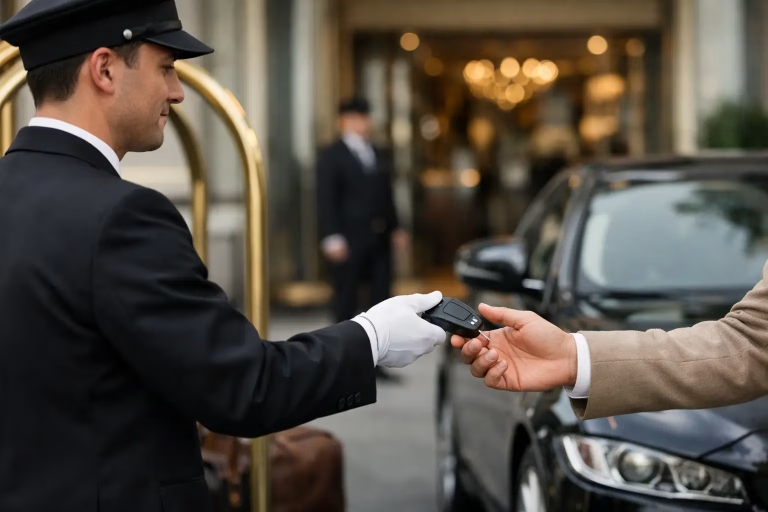
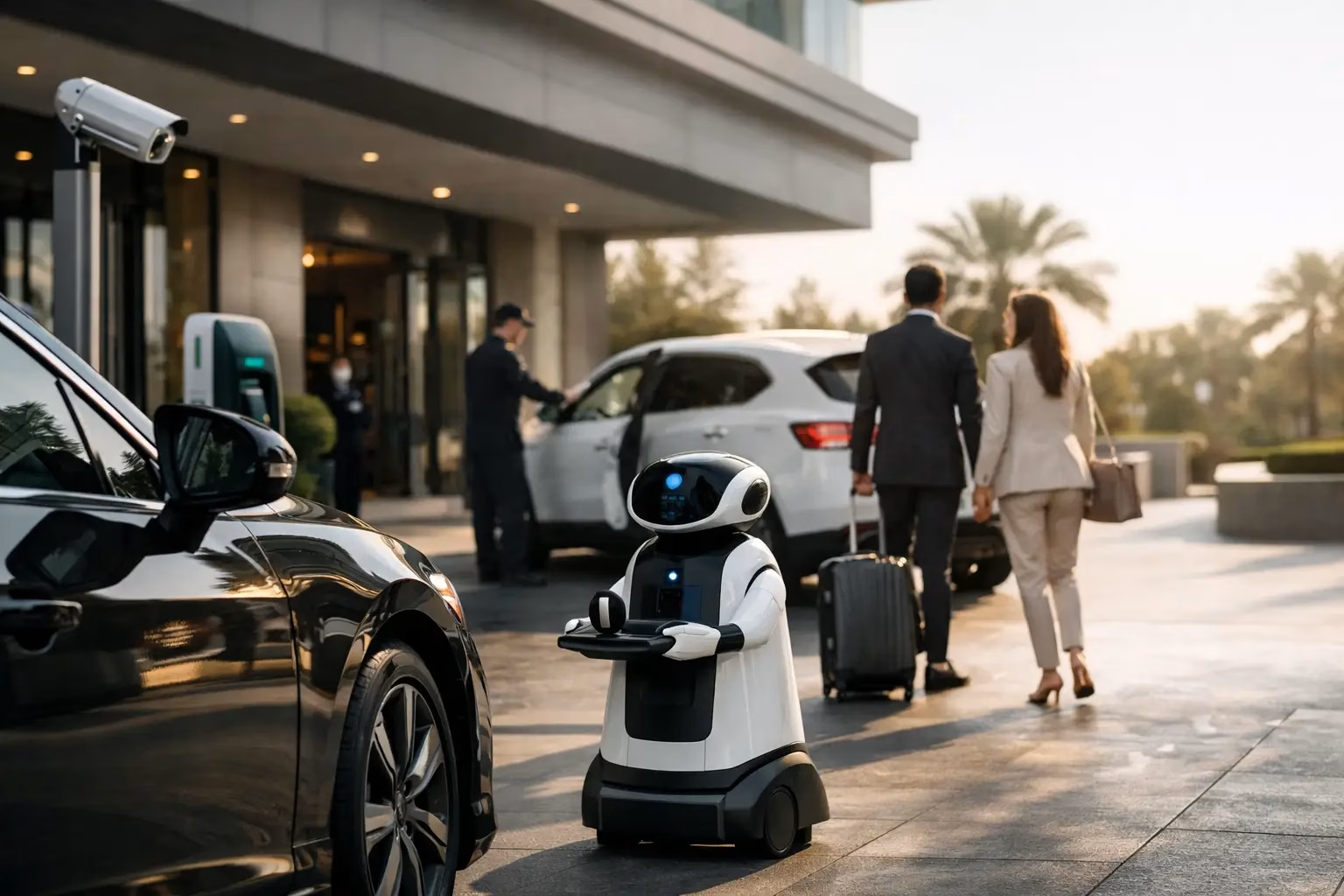
The most useful parking technology does not replace hospitality professionals. It helps them make better decisions faster. A guest still remembers the courtesy of the valet attendant, the care shown when handling the vehicle, and the confidence of receiving it promptly. Technology should strengthen those moments, not make them feel impersonal.
Digital ticketing is one practical example. Replacing handwritten tickets with a tracked digital process can reduce errors in vehicle identification and make retrieval requests easier to manage. It can also create a clearer record of custody, helping the venue maintain accountability from handoff to return.
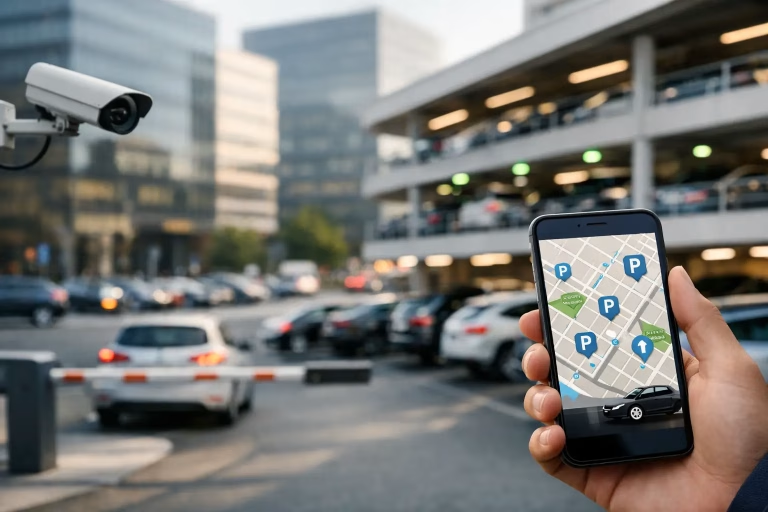
Real-time dashboards can give supervisors a more accurate picture of the operation. They can see whether the holding area is approaching capacity, whether retrieval times are rising, and whether a specific zone requires additional staff. In a busy hotel or event venue, this visibility allows a manager to respond before congestion reaches the entrance.
Guest messaging can also play a useful role, especially where vehicle retrieval takes place over a larger parking footprint. A notification that confirms a vehicle request has been received can reduce uncertainty. However, technology should match the setting. A luxury restaurant may prefer discreet, staff-led communication, while a conference venue may benefit from a more self-directed digital request process.
Capacity management will become a hospitality priority
A parking lot has a physical limit, but operational capacity is more complex than the number of marked spaces. It depends on how quickly vehicles are received, parked, retrieved, and moved through the entrance. It also depends on the availability of trained staff, the distance to overflow areas, and the mix of guest vehicles arriving at the same time.
Smart operations use that information to make practical choices. A venue may reserve closer spaces for VIP guests, patients with mobility needs, families, or short-stay visitors. It may direct event attendees toward an overflow area before the primary driveway becomes crowded. It may also designate separate lanes for valet arrivals, ride-hailing drop-offs, delivery vehicles, and private transportation.
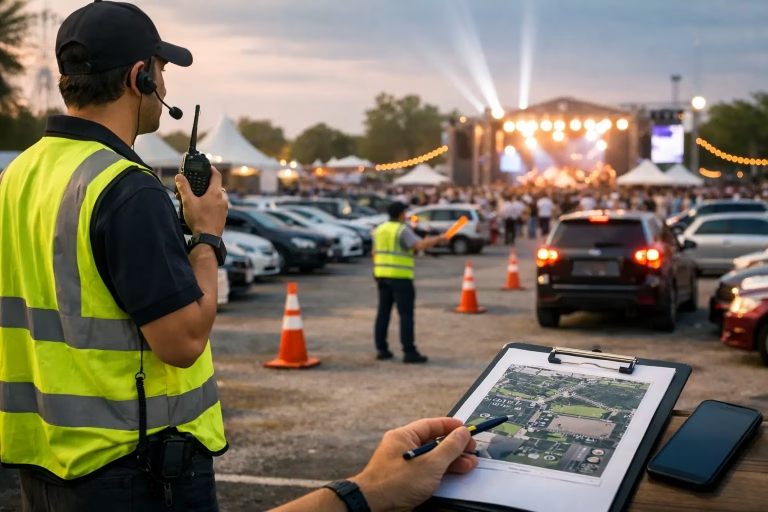
This is especially valuable in Saudi Arabia, where hospitality operations often face concentrated arrival periods and high guest expectations. For a major event, capacity planning should begin well before the first vehicle arrives. The plan should account for traffic flow outside the venue, entry control, pedestrian safety, staging areas, and the process for returning a large volume of cars at the end of the event.
Data should improve decisions, not complicate service
Parking data can be useful, but only when it answers an operational question. Management does not need a screen full of numbers that no one uses. It needs information that helps make the next shift more effective.
For example, retrieval time data can reveal whether staffing levels are sufficient at dinner rush or after a ballroom event. Entry-volume patterns can show when an additional reception lane is needed. Incident records can identify training needs or weak points in vehicle handoff procedures. Over time, these insights help create parking plans based on actual behavior rather than assumptions.
There is also a financial dimension. A more efficient operation may reduce unnecessary labor pressure, minimize guest complaints, and help a venue use limited parking inventory more effectively. Yet automation is not always the answer. A smaller restaurant with predictable evening demand may benefit more from a disciplined valet team and a clear site plan than from a complex technology investment. The right solution depends on the site, the guest profile, and the operational risk involved.
Safety, security, and insurance remain non-negotiable
As parking systems become more connected, the standard for responsibility becomes higher. Guests expect their vehicles and personal information to be handled with care. Management needs confidence that every vehicle is received, parked, and returned through a controlled process.
That starts with trained personnel. Valet professionals need more than driving ability. They need clear protocols for vehicle inspection, key handling, communication, defensive driving, incident escalation, and guest interaction. They must know how to protect the property’s standards while working efficiently in a live, often crowded environment.
Digital records can support this discipline by documenting vehicle handoffs and reducing uncertainty if a question arises. But the system must be backed by clear insurance coverage, supervisory oversight, and a team that understands the consequences of small errors. A fast service that compromises safety is not a premium service.
What venue leaders should prepare for
The future of parking will reward venues that treat it as an integrated part of guest operations. Before selecting a service model or technology platform, decision-makers should review the full guest journey from street approach to vehicle return. That includes signage, curbside space, lobby coordination, accessibility requirements, security procedures, and peak-period staffing.
It is also worth testing the operation under realistic pressure. A plan that looks efficient on paper should be assessed during a full arrival wave and a concentrated departure period. Can staff communicate without confusion? Is there a fallback process if digital systems are unavailable? Can the team handle an unexpected VIP arrival, a medical need, or a blocked access lane without disrupting every other guest?
A specialized operating partner can bring structure to these questions through site-specific plans, trained valet teams, capacity controls, and practical digital tools. At Wagifli, the focus is not merely on placing attendants at the entrance. It is on protecting the property’s first impression through professional execution, vehicle safety, and a parking experience that reflects the standard of the venue.
The strongest hospitality arrival is one guests barely have to think about. They feel welcomed, their vehicle is handled with confidence, and the entrance remains calm even when the operation behind it is working at full speed.