تنظيم وصول الزوار for High-Volume Guest Arrivals
A guest’s opinion of a property often begins before they reach the lobby, reception desk, or event hall. It begins at the curb. When vehicles queue without direction, drop-off lanes become blocked, and guests are unsure where to stop, even a well-run venue can appear unprepared. تنظيم وصول الزوار turns that first high-pressure moment into a controlled, welcoming experience that reflects the standards of the property.
For hotels, hospitals, restaurants, corporate headquarters, and event venues, visitor arrival is not simply a traffic concern. It is a service, safety, and reputation concern. The right operational plan protects access for emergency vehicles, reduces friction for guests, supports staff, and keeps the entrance looking as polished as the rest of the guest experience.
Why visitor arrival requires operational planning
Most arrival problems are predictable. A venue may receive a concentrated rush before a conference session, at restaurant peak hours, during hospital visiting windows, or shortly before a wedding begins. The issue is rarely the number of cars alone. It is the combination of limited curb space, unclear signage, mixed vehicle types, pedestrians crossing the drive lane, and staff trying to solve issues in real time.
Without a defined process, drivers make their own decisions. Some stop too long at the entrance. Others circle the property looking for parking. Ride-share vehicles wait in areas intended for private cars, while delivery vehicles or service contractors compete for the same access point. The result is congestion that can spread beyond the property line and affect the guest’s first impression before they have even parked.
A professional arrival plan gives every vehicle type a clear path. It establishes where guests stop, where vehicles wait, how cars enter and exit, and who is responsible for directing movement during peak periods. This reduces guesswork for both visitors and employees.
تنظيم وصول الزوار starts with the arrival journey
Effective visitor access organization is not created by placing one attendant near the door. It begins with a practical review of the full arrival journey, from the approach road to the final handoff of the vehicle.
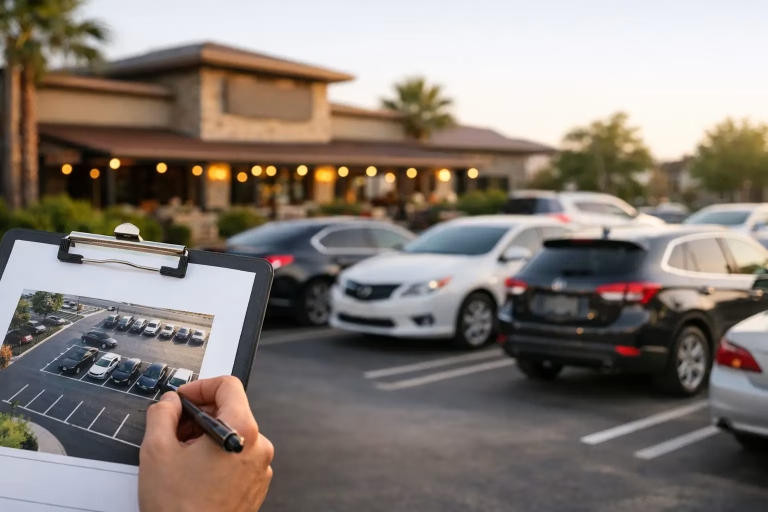
The first consideration is the property layout. A compact restaurant may need a short, actively managed drop-off zone and a valet handoff point. A large hotel may need separate lanes for taxis, private vehicles, coaches, and guests using valet parking. A hospital requires careful separation between emergency access, patient drop-off, staff access, and visitor parking. Each setting needs different priorities, but all benefit from clear movement and visible control.
Timing is equally important. A property with steady daily traffic needs a consistent operating model. A venue that hosts seasonal events may need an expandable plan with additional attendants, temporary traffic points, and designated overflow parking. The goal is not to overstaff every hour. It is to match the operating team and parking capacity to actual demand.
Define the moments that create pressure
A reliable plan identifies the points where arrivals become difficult. These may include a narrow driveway, a single entrance shared by guests and deliveries, limited elevator access from the parking area, or a gate that creates a queue during busy periods.
Once these pressure points are known, the solution becomes more precise. Staff can direct vehicles before congestion develops, rather than reacting after the driveway is blocked. Signage can support the route guests are expected to take. Parking teams can reserve high-demand spaces for the visitors who need them most, such as elderly guests, patients, VIP attendees, or families with children.
The curbside team represents the property
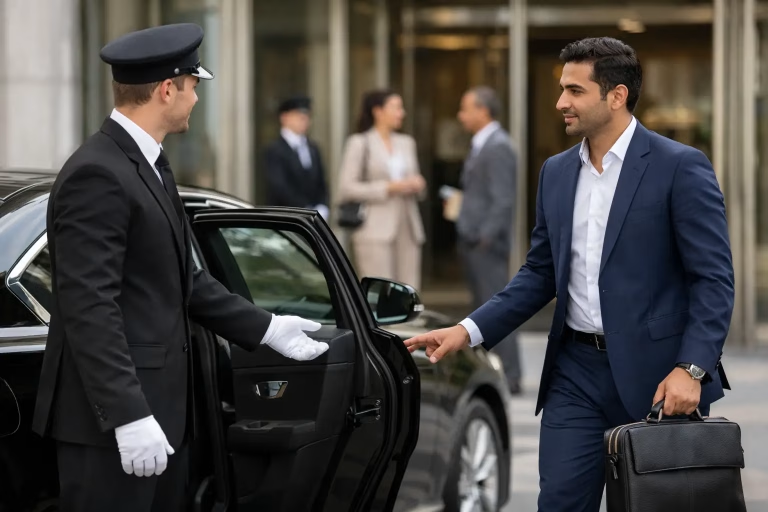
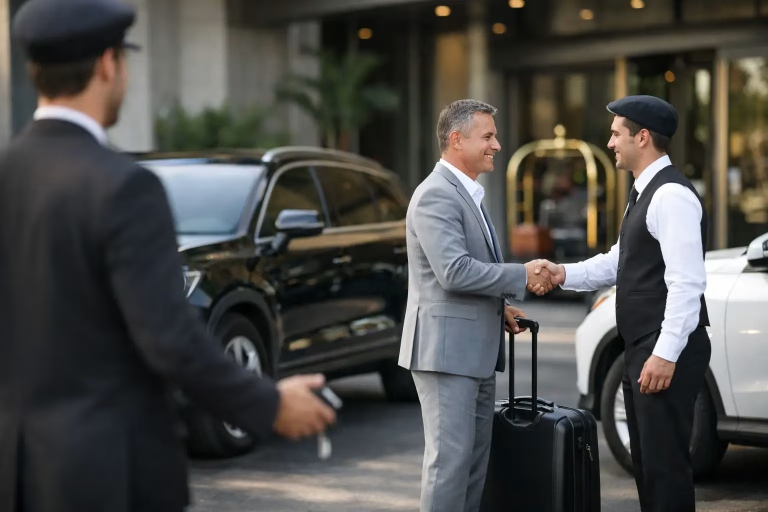
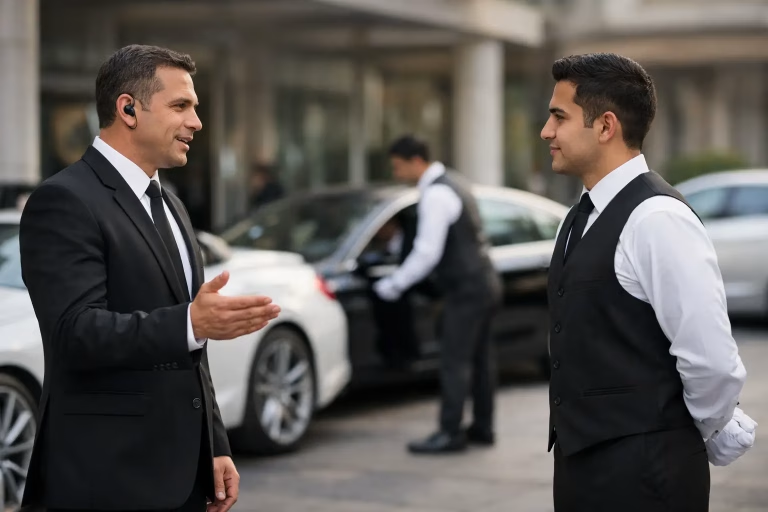
The arrival team is often the first human interaction a guest has with a venue. Their role goes beyond moving vehicles. They set the tone through clear communication, calm direction, professional appearance, and respectful handling of every guest.
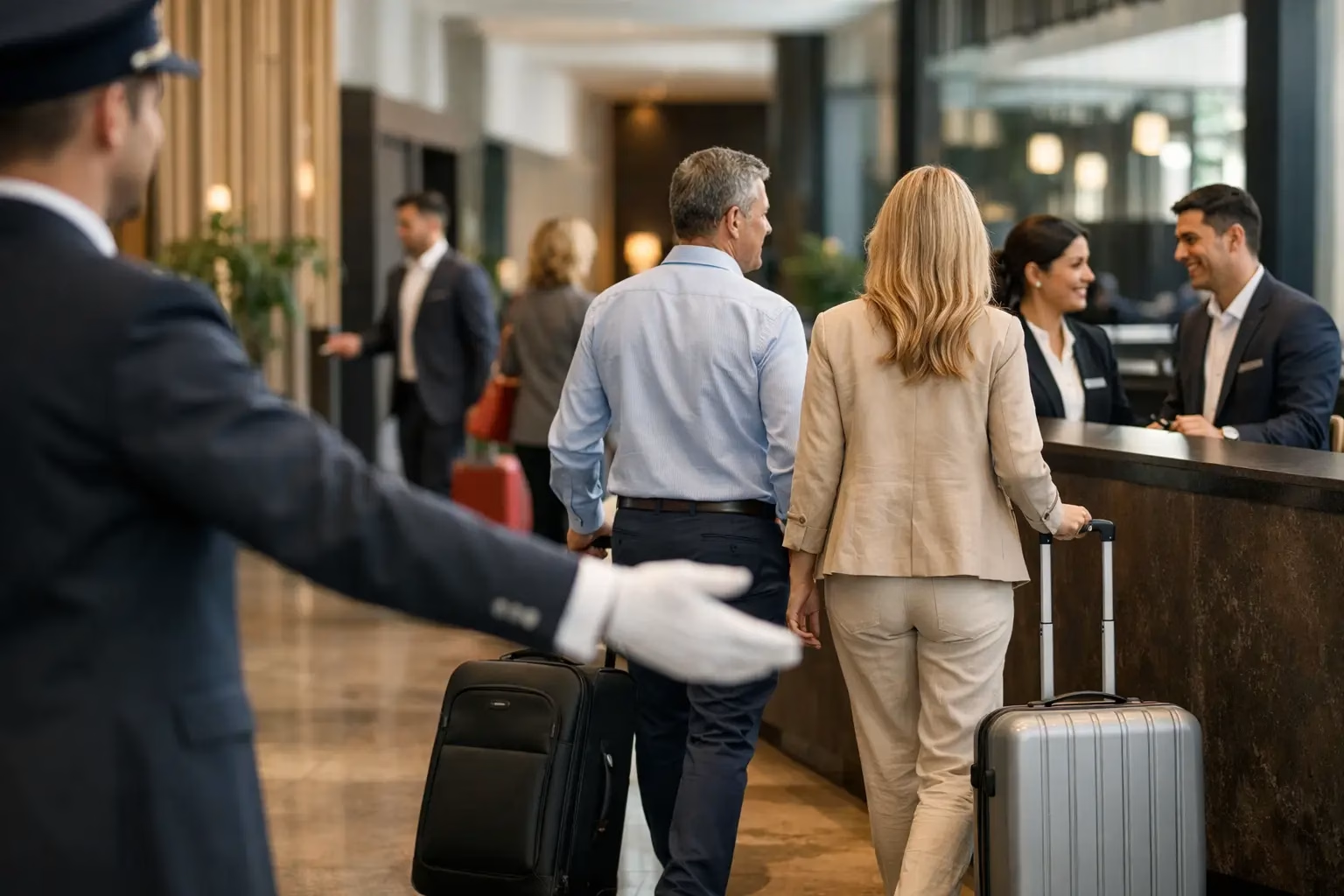
This matters most when the environment is busy. A guest arriving late for a meeting does not need vague instructions or visible confusion. They need a confident greeting, a clear place to stop, and an efficient next step. For a hotel guest with luggage, a patient accompanying a family member, or a wedding attendee unfamiliar with the venue, small moments of guidance can significantly improve the overall experience.
Professional training should cover traffic direction, guest communication, vehicle handling, safety procedures, and escalation protocols. Attendants must know how to respond when a guest needs accessibility support, when a driver refuses to move from a restricted area, or when a vehicle issue requires immediate attention. Courtesy matters, but operational judgment matters just as much.
Parking capacity must support the promise at the entrance
A well-managed drop-off point cannot solve a parking operation that has no capacity plan. If guests are welcomed quickly but then sent to search for an available space, the experience breaks down at the next stage.
Capacity management begins by understanding how spaces are used throughout the day. Some facilities have underused areas that can be assigned to staff or long-stay vehicles, preserving closer spaces for short-term visitors. Others need a valet operation to use parking inventory more efficiently, especially when layout constraints make self-parking slow or difficult.
There is always a trade-off between convenience, speed, and available space. For a premium restaurant or luxury event, valet service may be the most suitable way to protect the entrance experience and maximize parking capacity. For a corporate office with recurring visitors, pre-registration and designated visitor bays may be more effective. A hospital may prioritize rapid drop-off and accessible routes over maximizing every parking space. The operating plan should follow the purpose of the property, not a generic parking model.
Technology should remove friction, not add it
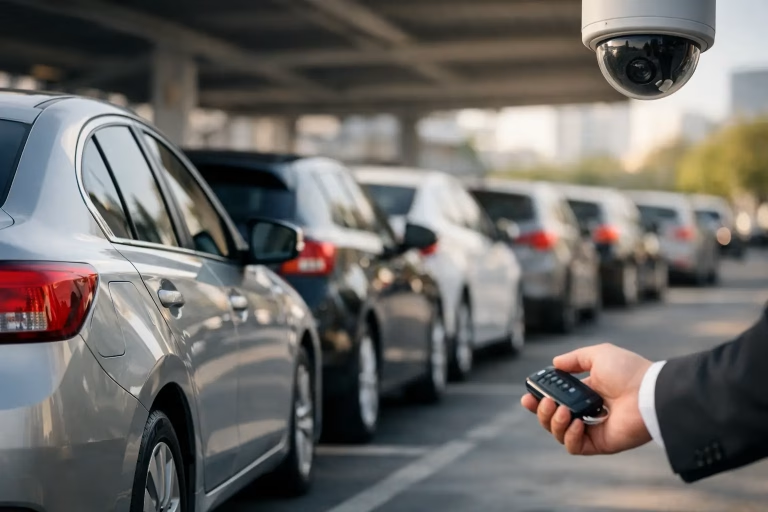
Digital ticketing, vehicle tracking, and communication tools can reduce wait times and improve accountability when they are used thoughtfully. A valet ticket system, for example, helps record vehicle details, support faster retrieval, and provide a documented handoff process. This is particularly valuable for properties that receive a high volume of guests in short windows.
However, technology does not replace trained people at the curb. A guest still needs to know where to go. A driver still needs a safe route. The strongest operations combine practical systems with attentive teams who can make quick decisions when conditions change.
Safety and accountability build confidence
Visitor arrival is a high-contact area. Vehicles, pedestrians, luggage, service staff, and guests may all share a small space at once. Clear operating procedures reduce the risk of collisions, blocked access routes, and unsafe crossings.
Safety measures should include visible pedestrian paths, clear stopping zones, controlled vehicle speeds, and defined responsibilities for attendants. Where valet service is provided, documented vehicle intake, trained drivers, and appropriate insurance coverage are essential. Guests and property managers should know that each vehicle is handled responsibly while under the operator’s care.
Accountability also protects the property’s reputation. When a team has established check-in procedures and escalation steps, issues can be addressed professionally rather than becoming public frustrations at the entrance. This level of control is especially important for high-profile events, executive offices, and hospitality properties where guest expectations are high.
What a customized visitor arrival plan should include
A useful plan is specific enough to guide daily action but flexible enough to respond to changing demand. It should define the arrival lanes, drop-off rules, parking zones, guest communication points, staffing schedule, and procedures for peak traffic. It should also account for weather conditions, VIP arrivals, accessibility needs, deliveries, and emergency access.
For an event, the plan may include staggered arrival windows, guest wayfinding, valet staging, and an exit strategy for the end of the program. For a hotel, it may focus on 24-hour curbside coverage, luggage coordination, taxi flow, and fast vehicle retrieval. For a healthcare facility, the priority may be preserving access and reducing stress for patients and visitors during sensitive moments.
The strongest operators review performance after busy periods. Were queues forming at a certain time? Did guests understand where to stop? Were vehicles retrieved within the expected timeframe? These observations allow the plan to improve with the property’s real traffic patterns.
At Wagifli, visitor arrival is treated as part of the property’s hospitality standard, not as an isolated parking task. The right team, layout, and operating process help a venue receive every guest with the confidence and care its reputation requires.
A well-managed entrance does more than keep cars moving. It gives guests an immediate sense that someone has anticipated their needs, respected their time, and prepared the space for their arrival.