
Hotel Valet Operations Case Study That Reduces Lines
A hotel driveway can lose control in less than ten minutes. A wedding arrival overlaps with check-in, taxis stop two cars deep, luggage blocks the curb, and guests begin forming opinions before they reach the lobby. This hotel valet operations case study examines how a structured valet model can turn that pressure point into an organized, polished arrival experience.
The scenario is representative of a full-service hotel managing high-volume periods, rather than a claim about one specific property. Its purpose is practical: to show hotel operators where valet performance is won or lost, what operational changes make a measurable difference, and why staffing alone is not a complete solution.
The Operational Challenge: A Busy Driveway, Not a Simple Parking Task
The hotel in this case had a strong guest proposition, but its arrival experience did not consistently reflect it. Peak demand occurred during late-afternoon check-in, evening dining, and private events. On the busiest nights, the entrance served overnight guests, restaurant visitors, event attendees, ride-share vehicles, delivery traffic, and VIP arrivals within the same limited curb space.
The immediate problem appeared to be congestion. The deeper problem was the absence of a defined operating system for arrivals. Valet attendants were working hard, but they were reacting to vehicle flow instead of directing it. Cars were accepted before available parking capacity was confirmed, retrieval requests arrived through informal channels, and the team had no shared escalation process when the driveway began to fill.
For hotel management, the consequences went beyond longer waits. Front desk teams had to answer complaints they did not cause. Security personnel were pulled into traffic management. Event hosts saw guests arrive frustrated. Most importantly, the property risked making its first guest interaction feel rushed and uncertain.
Hotel Valet Operations Case Study: The Starting Conditions
The assessment began with observation across several operating windows rather than a single peak period. This matters because a quiet weekday check-in and a Friday event arrival require different staffing levels, parking plans, and guest communication.
Three gaps became clear. First, the hotel had no dedicated arrival-zone ownership. Vehicles were being directed by whoever was available, which created mixed instructions at the curb. Second, the parking inventory was treated as one pool, despite different practical uses for guest vehicles, restaurant traffic, accessible spaces, and short-stay arrivals. Third, the handoff between vehicle acceptance, ticketing, key control, and parking was inconsistent.
None of these issues are unusual. Many hotels already have capable people at the entrance. What they need is a service design that gives those people clear roles, reliable tools, and a plan for pressure.
The Operating Plan: Design the Arrival Before the Guest Reaches It
The revised model did not begin by adding more attendants. It began with defining the driveway as a managed operating zone.
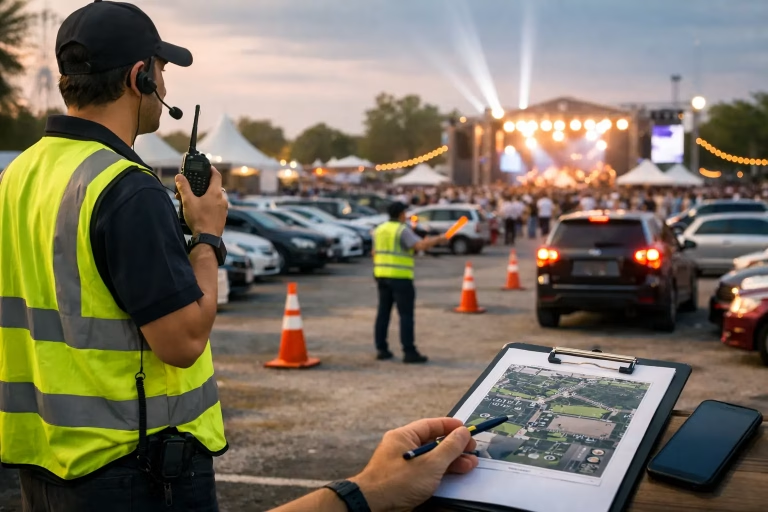
A valet captain was assigned to own the curb during every active shift. This person was responsible for vehicle sequencing, communication with the hotel team, and immediate decisions when demand changed. Attendants focused on guest greeting, vehicle intake, and parking execution. A separate retrieval role was activated during high-volume windows so requests could be coordinated without interrupting the arrival line.
This division of responsibility creates accountability without making service feel mechanical. Guests should see one calm, attentive team, not a group of employees deciding in public what to do next.
Capacity Was Managed in Real Time
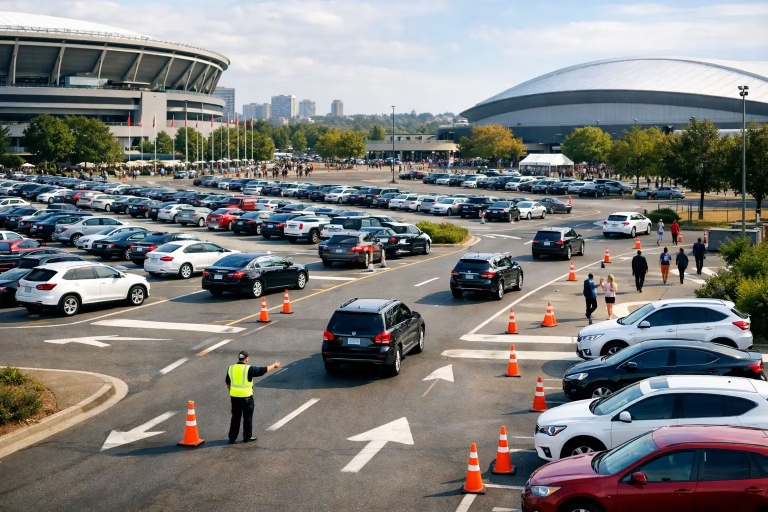
The team established usable parking capacity by category, not simply total spaces. For example, the operating plan distinguished between overnight inventory, fast-turn restaurant spaces, reserved event capacity, accessible parking, and contingency locations for overflow.
A simple live count allowed the captain to make better decisions early. When primary capacity began to tighten, the team could move to the next approved parking area before the curb was affected. If an event was about to release guests at the same time as restaurant reservations peaked, additional runners could be repositioned in advance.
The trade-off is clear: remote overflow parking can protect the driveway, but it may increase retrieval time. It should therefore be used with a defined retrieval standard, clear guest expectations, and sufficient runners during departure surges. Capacity planning is not about filling every available space. It is about protecting service quality while using the site intelligently.
Ticketing and Key Control Were Treated as Guest-Safety Processes
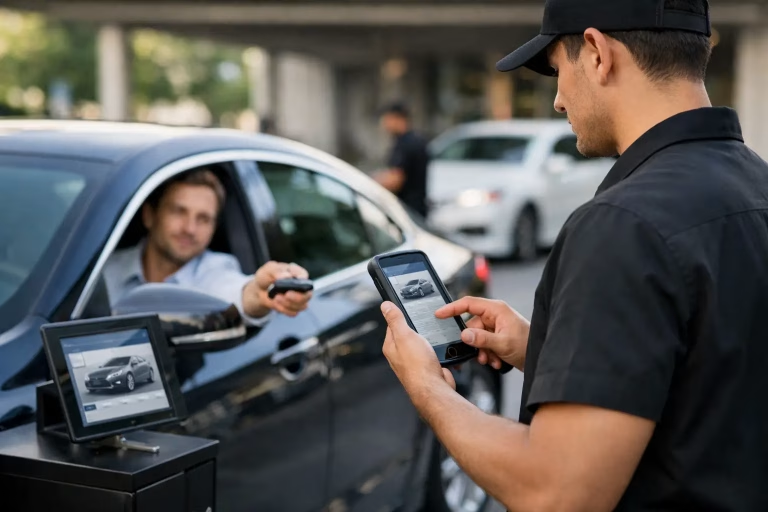
A valet ticket is not merely proof that a car was received. It connects the guest, vehicle, key, location, and retrieval request in one controlled record. In this case, the operating model introduced consistent vehicle-condition acknowledgment, key custody rules, and digital or structured ticketing workflows.
At intake, attendants confirmed the vehicle details, recorded special instructions where needed, and provided the guest with a clear retrieval method. Keys moved through a controlled process rather than remaining with individual attendants. The captain could verify the status of every active vehicle and quickly identify exceptions, such as a guest requesting a car earlier than expected or a vehicle that needed special handling.
For a hotel, this discipline supports confidence. It also reduces avoidable disputes, protects the vehicle while it is under the operator’s care, and gives management a clearer record when questions arise.
Training Changed the Guest Experience at the Curb
Technical driving ability matters, but it is only one part of valet service. The revised training program covered professional greeting standards, safe maneuvering, vehicle handling, radio etiquette, privacy, conflict de-escalation, and coordination with hotel security and front office teams.
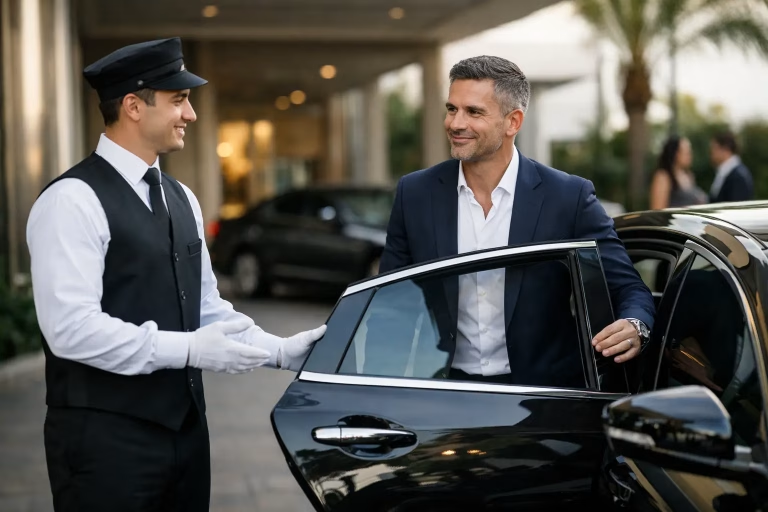
The most valuable training addressed the moments that cannot be scripted perfectly. An exhausted family arriving after a flight needs a different approach than a conference guest who is late for registration. A VIP arrival requires discretion, while a guest with mobility needs may require closer coordination with the entrance team. The attendant must respond with courtesy while the operation continues moving.
A well-trained valet team does not promise what it cannot deliver. If retrieval time will be longer because of an event departure, the guest receives a polite, accurate expectation. That honesty is often more valuable than an optimistic estimate that the team cannot meet.
What Success Looked Like
The hotel did not judge the new model by how quickly cars disappeared from the curb alone. It monitored the entire guest and operating journey: vehicle acceptance time, retrieval time, driveway queue length, parking capacity by zone, number of manual exceptions, guest complaints related to arrival, and coordination issues reported by hotel departments.
The initial goal was to create consistency before pursuing aggressive speed targets. Once roles and capacity controls were working, the team could identify the true bottlenecks. In some periods, the limiting factor was the distance to overflow parking. In others, it was the number of vehicles arriving at once for a function. Those are different problems and require different responses.
The operational improvement was most visible during overlapping demand. Rather than allowing every vehicle to approach the entrance at the same pace, the captain controlled the curb, moved vehicles through defined lanes, and communicated with event and hotel teams before congestion became visible to guests. The result was a calmer arrival environment and fewer interruptions to the front desk and security teams.
Lessons for Hotel Leaders
The central lesson is that valet should be managed as part of hotel operations and hospitality, not as an isolated parking function. A polished uniform and courteous greeting matter, but they cannot compensate for unclear capacity, uncontrolled keys, or a driveway without leadership.
Hotels should also avoid copying another property’s staffing plan without reviewing their own arrival patterns. A city hotel with heavy dining traffic has different needs from a resort with luggage-heavy check-ins. A property hosting frequent weddings needs a departure plan that is as deliberate as its arrival plan. The right model depends on curb layout, parking distance, event schedules, guest mix, and service expectations.
For hotels in Saudi Arabia, where hospitality standards and high-profile events can place intense pressure on arrival areas, a tailored valet operating plan is especially valuable. The objective is not simply to park more cars. It is to protect the guest’s first impression while giving the hotel team a dependable system behind it.
A Better Arrival Is Built Before Peak Hour
The strongest valet operation is rarely the one that looks busiest. It is the one where guests feel welcomed, vehicles move with purpose, and hotel staff trust that the entrance is under control. Before the next high-demand period, review the driveway from the guest’s point of view and the operator’s point of view. The gaps between those two views are where a better arrival experience begins.