Top Valet Safety Practices for Operators
The first vehicle at the curb often sets the tone for the entire guest experience. That is why the top valet safety practices for operators are not limited to careful driving. They shape how staff receive guests, protect vehicles, control traffic, respond under pressure, and represent the property from the first greeting to the final handoff.
For hotels, hospitals, restaurants, corporate facilities, and event venues, valet safety is a visible part of operational quality. A delayed pickup, a blocked entrance, or a preventable vehicle incident can affect more than one guest. It can disrupt traffic flow, burden front-desk teams, and weaken confidence in the property. A disciplined valet operation prevents these problems by treating safety as a daily operating standard rather than a checklist used only after an incident.
Top Valet Safety Practices for Operators Start Before the Shift
Safe service begins before the first vehicle arrives. Every shift should open with a clear briefing covering expected demand, reserved arrivals, weather conditions, access restrictions, construction activity, and any events that may alter vehicle flow. A wedding, a conference, or a busy restaurant service may require a different staging plan than a standard weekday.
The shift lead should confirm each team member’s role: curbside greeting, vehicle receiving, key control, parking, retrieval, traffic direction, and guest assistance. When responsibilities are unclear, staff can duplicate tasks or leave critical points unattended. Clear assignments make the operation faster while reducing rushed decisions.
Vehicle readiness matters as well. Operators should inspect radios or approved communication devices, ticketing equipment, cones, signage, lighting, and any designated key-storage system. If a device fails during peak arrival periods, teams may resort to verbal handoffs or informal key placement, both of which create avoidable risk.
Confirm Driver Readiness and Authorization
Only trained, authorized personnel should move guest vehicles. This standard sounds basic, but it requires consistent verification. Operators need documented processes for confirming valid driver credentials, training completion, and authorization for the vehicle types they are expected to handle.
Training should go beyond parking technique. Valets need to understand how to enter and exit vehicles safely, adjust seats and mirrors without distraction, recognize low-clearance concerns, identify electric vehicle charging requirements, and handle luxury or unfamiliar vehicles with care. For larger sites, matching drivers to vehicle categories can further reduce risk during high-volume periods.
Fatigue deserves attention. A team can be highly skilled and still make poor decisions after extended shifts, intense heat, or repeated peak-period pressure. Supervisors should monitor workload, rotate demanding curbside and driving roles when possible, and encourage staff to report when they are not fit to drive. Reliability is built through disciplined staffing, not by expecting individuals to absorb unlimited pressure.
Protect the Guest at the Curb
The curb is the most active and exposed part of a valet operation. Guests may be stepping out with children, luggage, mobility aids, formal attire, or limited awareness of moving traffic. Staff must manage the space with the same care they apply to the vehicle.
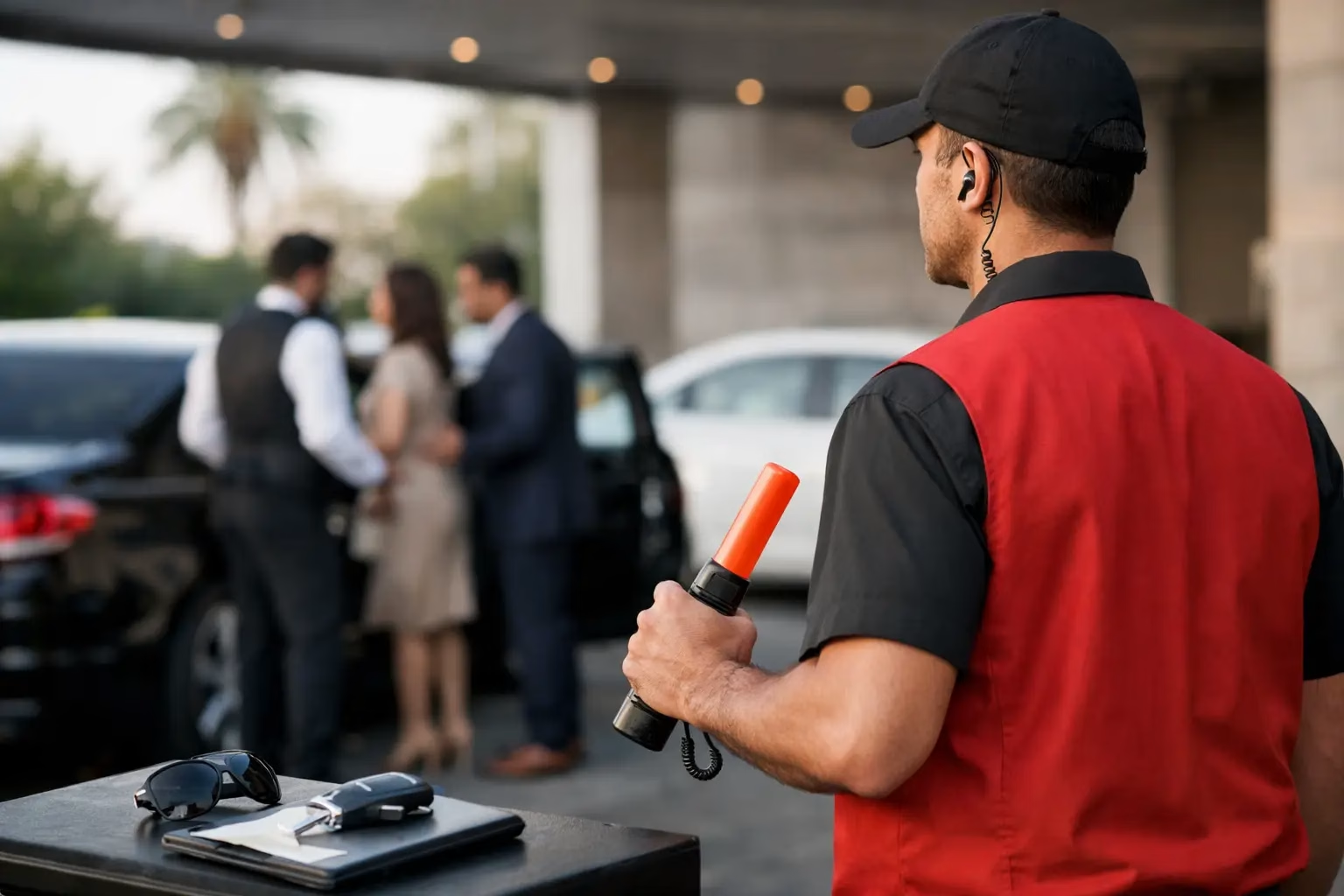
A trained attendant should guide arrivals into a defined unloading position, rather than allowing vehicles to stop wherever space appears available. The attendant should assess traffic before opening doors, offer assistance where appropriate, and keep pedestrians away from reversing vehicles and active drive lanes. At hospitals, this also means protecting access for ambulances and patients with urgent mobility needs.
Traffic flow needs visible boundaries. Cones, lane markings, signs, and designated waiting areas help drivers understand where to pull in and where not to stop. Physical controls are especially valuable at venues with heavy event traffic, where guests may follow the vehicle ahead without noticing changing instructions.
The appropriate layout depends on the site. A compact restaurant entrance may need a short, tightly managed drop-off zone, while a hotel or conference venue may require separate arrival, staging, and retrieval lanes. The objective is consistent: keep people, moving vehicles, and waiting vehicles from competing for the same space.
Use a Controlled Vehicle Intake Process
The most effective safety practices prevent disputes as well as collisions. A controlled intake process documents the vehicle’s condition, establishes custody, and gives guests confidence that their car is being handled professionally.
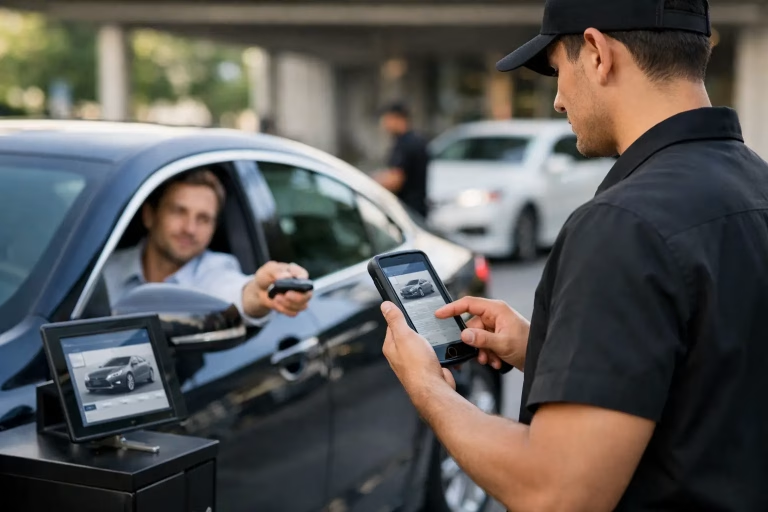
At intake, the valet should confirm the vehicle identifier, record the ticket information, and note visible pre-existing damage according to the property’s approved procedure. When a digital ticketing platform is used, the record should be entered immediately and accurately. If paper tickets are used, legibility and secure handling become even more important.
The guest should know how retrieval will work, including where to wait and whom to approach if plans change. This is a service detail, but it is also a safety measure. Clear instructions reduce curbside crowding, prevent guests from entering parking areas, and limit confusion around key handoffs.
Key control requires a chain of accountability. Keys should never be left inside vehicles, placed on open counters, or handed between staff without a recorded process. A secure, access-controlled storage point and a clear ticket-to-key match are essential. For larger operations, supervisors should perform periodic reconciliations during the shift, not only at closing time.
Drive for Control, Not Speed
Guests value quick retrieval, but speed should never be confused with haste. Valet drivers should follow property-specific speed limits, use designated routes, stop fully at blind corners, and remain alert for pedestrians, carts, delivery vehicles, and changing parking conditions.
Parking areas are often less predictable than the driveway. Narrow ramps, low ceilings, uneven surfaces, limited lighting, and mixed traffic can turn a simple maneuver into a risk point. Operators should establish routes that minimize unnecessary reversing and avoid crossing pedestrian paths whenever the site allows it.
Before moving a vehicle, drivers should check their surroundings, secure personal belongings left in view according to the operation’s policy, and avoid adjusting controls while the vehicle is in motion. Phones must remain out of use while driving, including for informal team communication. If the operation uses digital tools, they should support the driver before or after movement, not distract the driver during it.
Weather changes the standard of care. Rain, dust, heat, or reduced visibility may require slower movement, wider spacing, different parking allocations, and more frequent walk-throughs of the lot. A professional operation adjusts early instead of waiting for the first incident to reveal that conditions have changed.
Plan for Capacity Before It Becomes Congestion
Many valet safety failures begin as capacity failures. When a parking area is full and arrivals continue, attendants may be tempted to use informal spaces, double-park without a retrieval plan, or block access routes. These choices may solve a short-term problem while creating a much larger operational risk.
Operators should know the real capacity of every parking zone, including spaces reserved for accessibility, emergency access, staff, VIP arrivals, and vehicle staging. Capacity should be monitored in real time during peak periods, with clear escalation procedures when thresholds are reached.
A contingency plan can include overflow locations, adjusted arrival routing, staggered retrieval, or early communication with the property team. The right response depends on the venue and its guest profile. A medical facility, for example, cannot treat an emergency route as temporary overflow, while an event venue may be able to activate a pre-approved remote lot with shuttle support.
This is where valet service becomes a genuine extension of facility management. The team is not simply parking vehicles. It is protecting access, preserving order, and keeping the property prepared for the next arrival.
Prepare for Incidents With Calm and Precision
Even well-managed operations need an incident response plan. The goal is not to assume failure. It is to ensure that a minor issue is handled promptly, accurately, and respectfully if it occurs.
Staff should know who to contact, how to secure the area, what information to document, and when to involve property management, security, emergency services, or insurance representatives. Incident reports should be factual, timely, and complete, with no assumptions or informal explanations offered in the moment.
Guest communication matters. A professional team acknowledges the concern, protects the guest’s privacy, and follows the approved escalation process. The person handling the conversation should not be forced to investigate, direct traffic, and retrieve vehicles at the same time. Assigning clear incident leadership helps preserve both safety and hospitality during a difficult moment.
Make Safety Visible Through Consistent Supervision
Policies only protect the operation when they are actively observed. Supervisors should conduct regular curbside checks, review key-control discipline, monitor parking patterns, and coach staff in real time. Small corrections, made early and respectfully, prevent habits from becoming risks.
At Wagifli, valet service is approached as part of the property’s hospitality standard, with safety, trained personnel, and organized movement working together. The strongest operations do not make guests feel managed. They make guests feel welcomed, while the complex work of protecting people, vehicles, and access happens quietly in the background.
A safe valet program earns trust one arrival at a time. When the curb is organized, the team is prepared, and every vehicle is handled with accountability, guests notice the confidence even when they never see the systems behind it.