مثال تشغيل فاليه لمستشفى مزدحم تحت الضغط
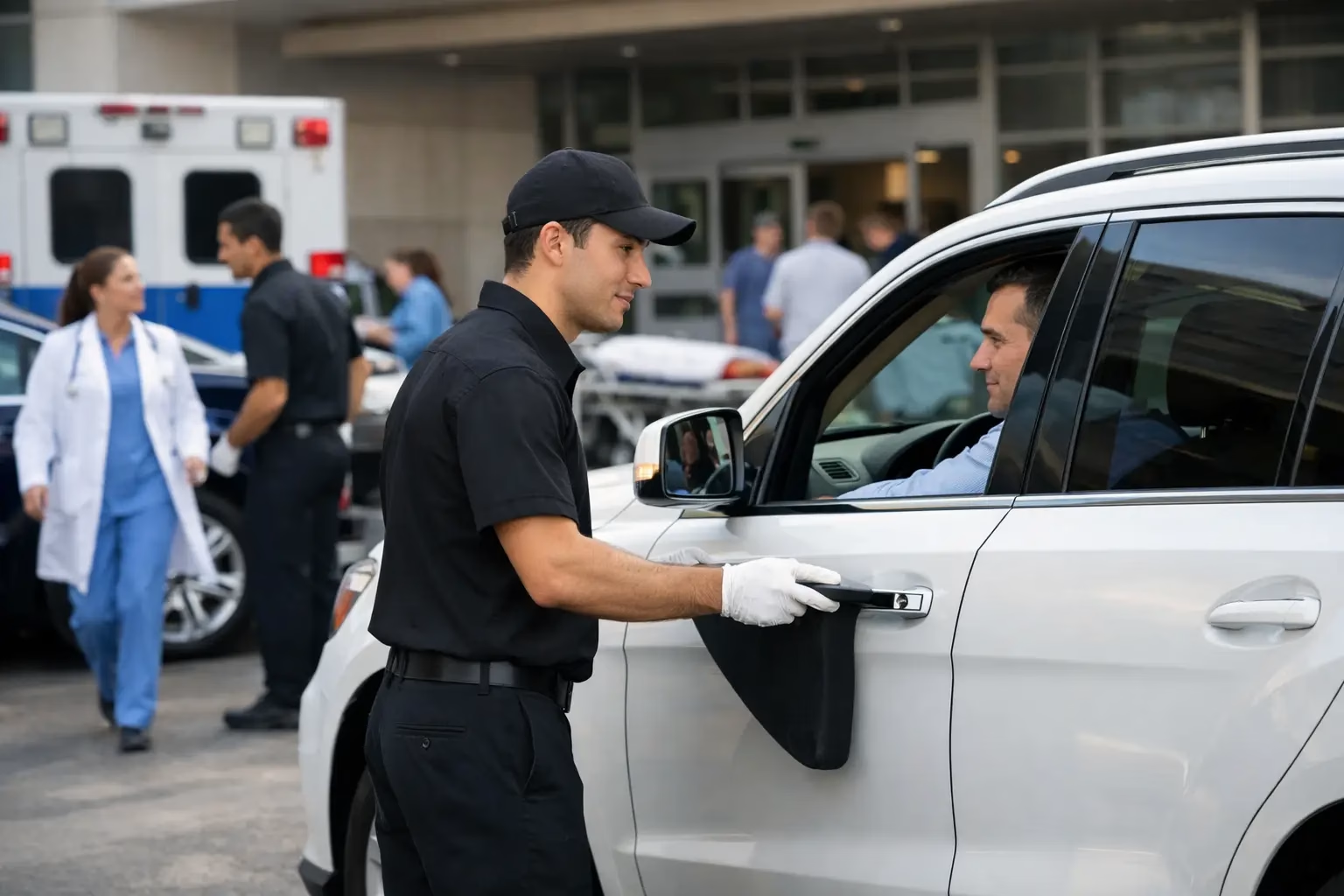
At 8:15 a.m., a busy hospital entrance can receive outpatient families, visitors, physicians, staff, ride-share vehicles, and patients with limited mobility at the same time. In this مثال تشغيل فاليه لمستشفى مزدحم, the goal is not simply to park more cars. It is to protect clinical access, reduce anxiety at arrival, and give every guest a clear, respectful path from curb to care.
For hospital leadership, valet service is an operational decision with a direct effect on patient experience, safety, and the facility’s public image. A poorly managed curb creates delays before a patient even reaches reception. A professionally managed valet operation turns that high-pressure moment into an orderly welcome.
The operating scenario: a high-volume hospital entrance
Consider a general hospital with a main entrance serving outpatient clinics, diagnostic services, visiting hours, and elective procedures. The site has limited curb space, a parking garage several minutes away on foot, and heavy traffic during morning appointments and late-afternoon visiting periods.
The hospital’s challenge is not a lack of parking alone. It is the overlap of very different needs. A patient arriving for treatment may need wheelchair assistance. A family member may be unfamiliar with the campus. A physician may need reliable access between appointments. Meanwhile, emergency lanes and ambulance access must remain completely clear without exception.
A valet plan for this setting begins with defining the curb as a controlled clinical-support zone, not an informal drop-off area. Every vehicle movement must have a purpose, an owner, and a safe next step.
How the valet flow works at peak hours
Before the first rush, the valet supervisor reviews appointment patterns, expected visitor volume, reserved spaces, garage capacity, weather conditions, and any scheduled events that could affect traffic. The team is positioned before congestion begins, rather than reacting after the entrance is already blocked.
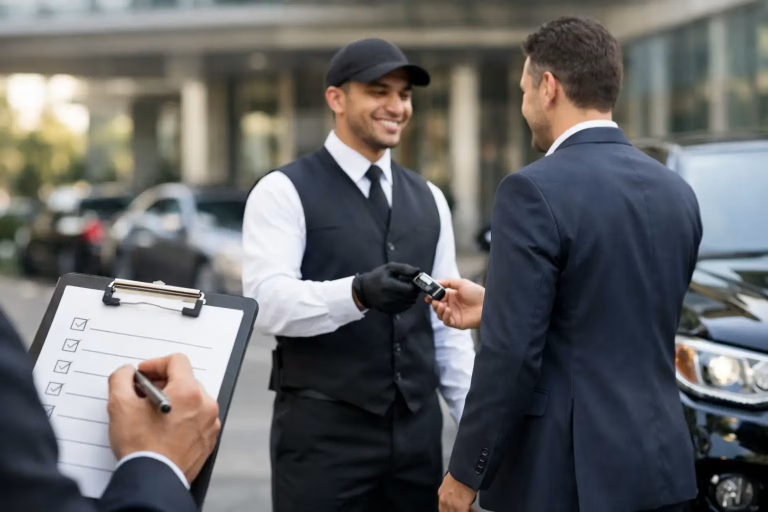
At the curb, a greeter welcomes the arriving guest, confirms whether the guest needs assistance, and records vehicle details through a ticketing process. The guest receives a clear claim ticket and, when appropriate, directions to the correct entrance, clinic, or reception desk. This first interaction should be warm and efficient. In a hospital environment, guests may be worried, tired, or in pain. They should never have to guess where to go next.
A trained driver then moves the vehicle to an assigned parking zone. The parking location is recorded immediately so the vehicle can be retrieved without a long search. A traffic coordinator remains focused on the curb itself, preventing vehicles from stopping in fire lanes, blocking pedestrian crossings, or forming a queue that spills into public roads.
The distinction between these roles matters. When one employee attempts to greet, ticket, direct traffic, park cars, and retrieve vehicles, service slows and safety gaps appear. In a busy hospital, clear role assignment is part of the safety standard.
A practical staffing model
The number of valet professionals depends on arrival volume, parking distance, vehicle retrieval expectations, and the layout of the property. During a typical peak period, a hospital may need a curbside greeter, a traffic coordinator, several drivers, and an on-site supervisor. If the remote parking area is large or spread across multiple levels, an additional runner or zone lead may be necessary.
Staffing should also change by time of day. Morning outpatient arrivals require faster intake capacity. Afternoon visiting hours may require more retrieval coverage. During a shift change, the plan may need additional traffic management to prevent staff vehicles from competing with patient access.
This is why a fixed headcount is rarely the right answer. The better approach is to build staffing around actual demand patterns and revise it as appointment volumes, construction activity, or seasonal pressures change.
Protecting emergency access is non-negotiable
A hospital valet operation must never interfere with emergency movement. Ambulance bays, fire lanes, accessible drop-off areas, service entrances, and designated clinical access routes require visible protection and constant oversight.
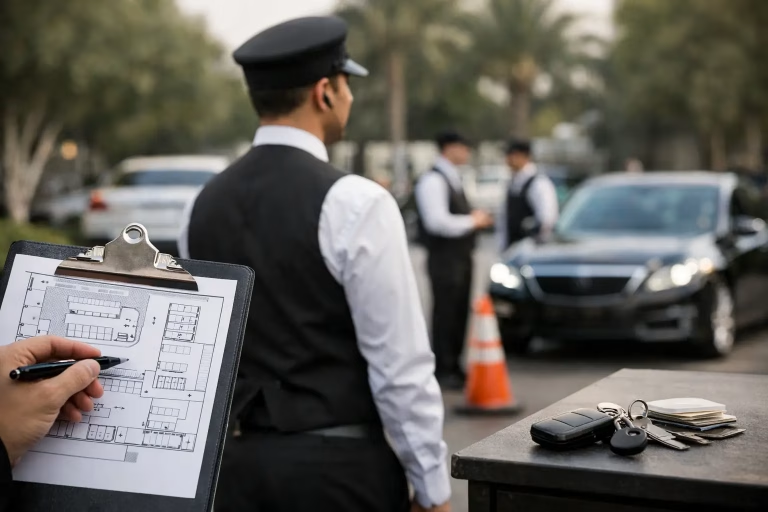
The valet team should work from an approved site map that identifies prohibited stopping areas, pedestrian routes, vehicle turning radii, temporary holding points, and the precise handoff location for guests. Cones, signs, and queue markers can help, but they do not replace active management. A trained coordinator must be authorized to redirect vehicles immediately when conditions change.
The team also needs a clear escalation procedure. If a vehicle is abandoned at the curb, a guest becomes unwell, a delivery truck obstructs access, or congestion reaches a critical level, the supervisor should know exactly who to contact and what action to take. Coordination with hospital security, facilities, and emergency departments should be established before service begins, not improvised during an incident.
The patient experience is part of the operation
Hospital valet differs from restaurant or hotel valet because the guest’s emotional state is often more sensitive. A guest may be arriving for a difficult diagnosis, a child’s appointment, surgery, or a visit to a loved one. Speed matters, but composure and courtesy matter just as much.
The right service standard avoids exaggerated hospitality while maintaining dignity. Team members should use clear language, offer assistance without assumption, and respect privacy. They should know how to direct guests to accessible entrances and when to request wheelchairs or support staff. They should also avoid discussing visible medical information or asking unnecessary questions.
For families, the service removes one immediate burden: finding a space while trying to arrive on time. For patients with mobility needs, it shortens the distance between vehicle and care. For hospital management, it creates an arrival experience that reflects attentiveness before the clinical interaction begins.
Technology should reduce waiting, not add complexity
A digital ticketing system can improve accountability and retrieval speed when it is designed around the hospital’s actual workflow. Vehicle information, parking location, arrival time, and retrieval status can be recorded in real time. This gives the supervisor visibility into queue length, parked inventory, and vehicles that have been waiting too long.
For a large site, text-based retrieval notifications or a staffed request desk may help prepare vehicles before guests return to the curb. However, technology should not create barriers for elderly visitors or guests who prefer a paper ticket. A strong operation provides a reliable manual alternative and trains staff to assist without slowing the line.
The most useful technology is often the least visible to the guest. It helps the team locate vehicles, monitor capacity, and document custody while allowing the visitor to focus on the hospital visit rather than the parking process.
Managing capacity before the lot fills
A common failure point is waiting until the valet lot is full before deciding what to do next. A mature plan includes capacity thresholds in advance. When the primary valet area reaches a defined limit, vehicles are directed to a secondary zone. When both areas approach capacity, the supervisor activates a contingency plan with hospital facilities or security.
That plan may include temporary overflow parking, adjusted staff parking rules, staggered arrival guidance for nonclinical events, or a designated off-site holding arrangement. The right option depends on the hospital’s location and available infrastructure. In dense urban areas, the practical solution may be an off-site lot with a controlled shuttle or vehicle transfer process. On a larger campus, it may be a clearly managed secondary garage.
Capacity planning also requires honest decisions. Valet service should prioritize patients, visitors with mobility needs, and clinical access when demand exceeds available spaces. Offering valet to every vehicle without a realistic capacity plan creates the very congestion the service is meant to solve.
Training, insurance, and accountability
Hospital leadership should expect more than drivers in uniforms. The team needs training in safe vehicle handling, customer interaction, site-specific traffic procedures, accessibility awareness, incident reporting, and emergency escalation. Supervisors need the authority to correct unsafe behavior immediately and document operational issues for follow-up.
Vehicle custody must also be clear. Guests should understand when their vehicle is under valet care, and the operator should maintain appropriate insurance coverage and documented procedures for handling claims or damage reports. These controls protect the guest, the hospital, and the reputation of everyone involved.
At Wagifli, this level of operational discipline is treated as part of the hospitality experience. The service is designed around the site’s traffic reality, guest profile, and safety requirements rather than a generic parking arrangement.
Measuring whether the service is working
A hospital valet program should be reviewed through operational data and direct observation. Useful measures include average vehicle intake time, retrieval time, curb queue duration, peak-period capacity, blocked-lane incidents, guest complaints, and reported vehicle issues.
Numbers alone do not tell the full story. Hospital leaders should also observe the entrance at different times: early morning, visiting hours, shift changes, and periods of bad weather. If guests appear confused, if wheelchairs cannot move freely, or if vehicles are idling in active lanes, the plan needs adjustment even if ticket counts look acceptable.
A well-run valet operation gives a busy hospital something valuable: a calmer front door. When the curb is organized, emergency access stays protected, and guests are treated with care, the arrival experience supports the standard of service the hospital works hard to provide inside.