
كيف ترفع المنشأة مستوى الترحيب عند الوصول
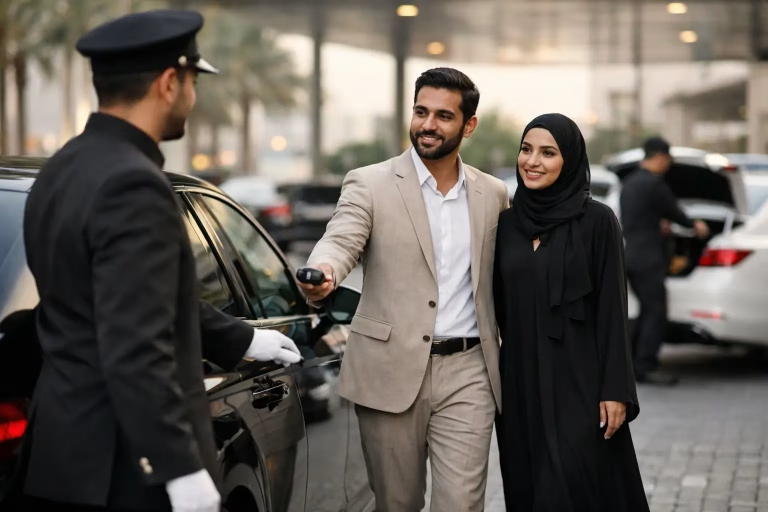
The welcome begins before a guest reaches the reception desk, host stand, or event entrance. It begins at the curb, in the first few seconds after the vehicle arrives. For decision-makers asking كيف ترفع المنشأة مستوى الترحيب, the practical answer is not limited to warmer greetings or better signage. It requires a controlled arrival experience where guests feel expected, their time is respected, and the movement around the entrance is managed with confidence.
A crowded drop-off lane, an unclear parking route, or a delayed vehicle handoff can weaken even the most carefully designed guest experience. By contrast, a trained valet team and a clear arrival plan turn a potentially stressful moment into a polished extension of the facility’s hospitality.
Why Arrival Sets the Standard for the Entire Visit
Guests form an opinion quickly. At a hotel, they may be carrying luggage after a long journey. At a hospital, they may be worried about a patient or pressed for time. At a restaurant, they expect the service to match the quality of the reservation. At a wedding or conference, they often arrive alongside many other guests within a short window.
In each case, parking is not merely a logistical matter. It affects the guest’s emotional state before they enter the building. When vehicles queue without direction, guests begin their visit with uncertainty. When the entrance is orderly, staff are attentive, and the handoff is quick, the facility communicates care before a word is spoken.
This is why arrival operations should be treated as part of the customer journey, not as a separate support task. The best setup reflects the identity of the establishment while solving the practical demands of traffic, capacity, safety, and timing.
كيف ترفع المنشأة مستوى الترحيب من بوابة الدخول؟
Raising the welcome level starts by designing the entrance around the guest rather than around parked vehicles. That means assigning clear roles, anticipating peak periods, and giving every arriving driver an obvious next step.
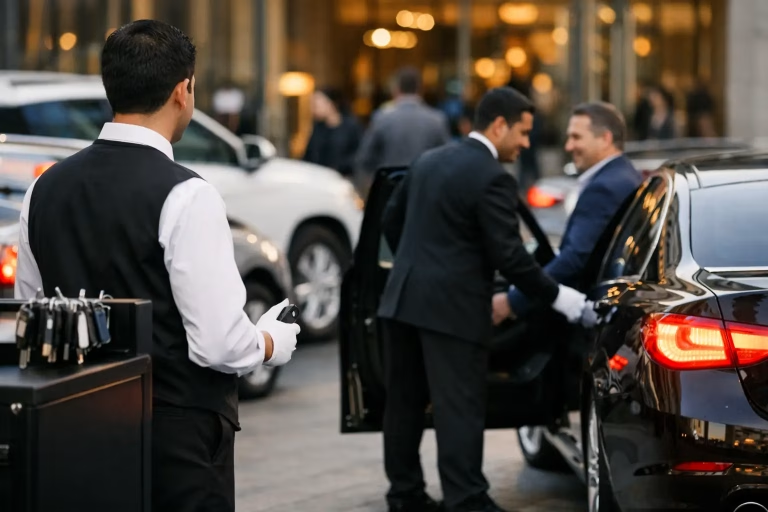
A professional valet operation provides more than someone to take keys. It creates a managed sequence: greeting the driver, confirming the handoff, handling the vehicle carefully, recording its location, and returning it promptly when requested. Each stage should be consistent, even when traffic is high.
The right approach depends on the site. A boutique restaurant may need a compact curbside team that protects a refined arrival experience without blocking nearby traffic. A hospital may need designated priority access for elderly visitors, patients, and emergency movement. A large event venue may require multiple arrival zones, queue management, and a traffic plan coordinated with security and organizers.
The common principle is simple: the guest should never have to guess where to stop, whom to speak with, or what will happen to their vehicle.
Build a Welcome Experience Around Four Operational Priorities
1. Make the first interaction courteous and clear
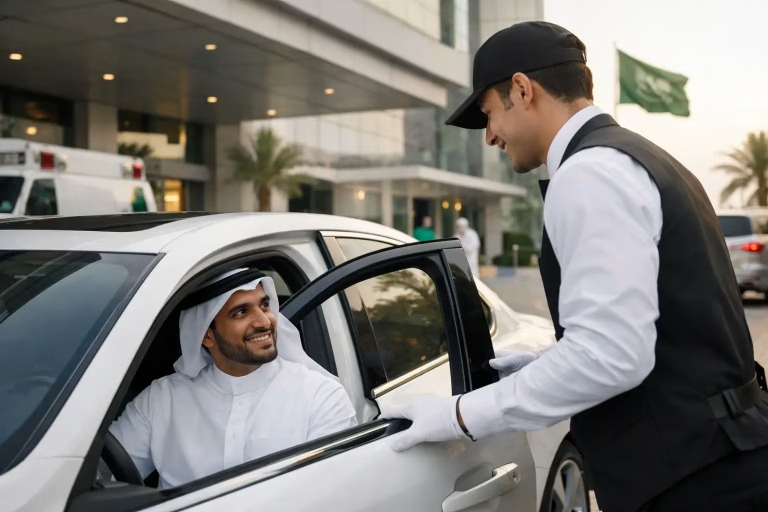
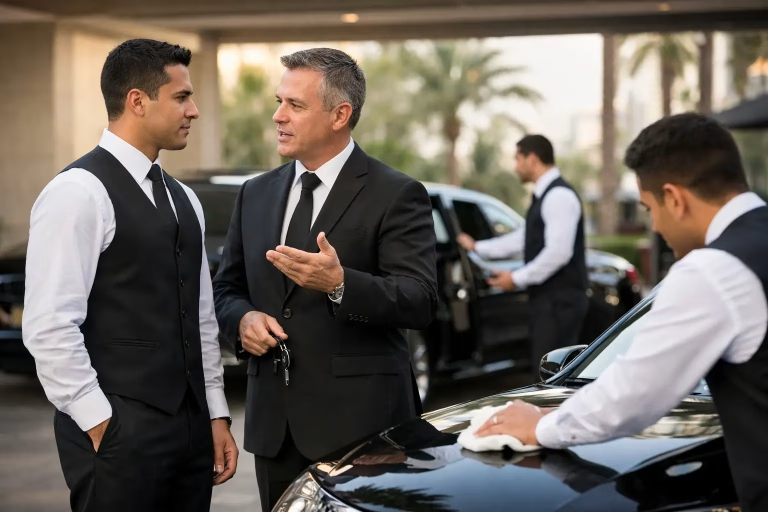
The valet attendant is often the first person a guest meets. Courtesy matters, but clarity matters just as much. A professional greeting should be accompanied by a confident instruction: where to stop, how the handoff works, and how the guest will retrieve the vehicle.
Training should cover greeting standards, appearance, communication, safe driving practices, and how to respond calmly to questions. Teams also need to understand the character of the facility. A luxury hotel, medical center, corporate headquarters, and private celebration each require a different pace and tone, even when the operational discipline remains the same.
2. Protect the entrance from congestion
A welcome can feel premium only when the entrance remains accessible. Poorly managed vehicle buildup causes frustration for guests, blocks pedestrian paths, and creates pressure on front-of-house staff. It can also affect neighboring businesses and public road access.
The solution is not always a larger team. Sometimes the better answer is a revised traffic pattern, staggered arrival instructions, a dedicated drop-off lane, or a temporary holding area during peak demand. A site assessment should identify turning space, entry and exit points, pedestrian crossings, parking capacity, and the times when arrival volume changes most sharply.
For recurring high-traffic periods, the operation should be planned in advance rather than improvised at the curb. This is particularly valuable for Friday gatherings, seasonal hospitality demand, conferences, and large family events across Saudi Arabia.
3. Give guests confidence that their vehicle is protected
Trust is central to valet service. Guests are handing over a valuable personal asset, and the facility’s reputation is tied to how that responsibility is handled. A casual process can create concern even if no issue occurs.
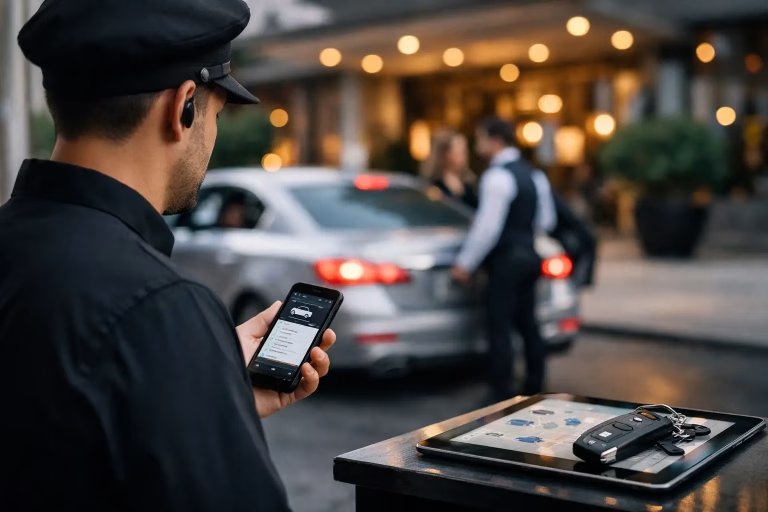
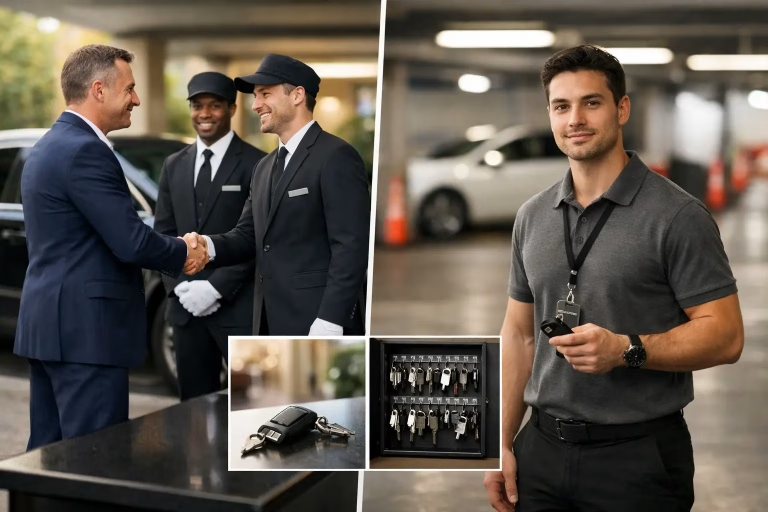
Professional operations reduce that concern through trained drivers, documented handoffs, secure key handling, controlled parking procedures, and appropriate insurance coverage while vehicles are under the operator’s care. Digital ticketing can also improve accuracy by recording vehicle details and supporting faster retrieval.
The purpose of these systems is not to make the interaction feel bureaucratic. It is to make the service feel dependable. Guests should experience a quick handoff while the operation maintains the records and controls needed to protect both the vehicle and the facility.
4. Return the vehicle with the same standard of care
The departure experience is often overlooked, yet it is the final memory the guest takes away. Long waits, misplaced keys, or confusion at pickup can undo the positive impression created at arrival.
A well-run service anticipates requests, tracks vehicle locations accurately, and positions staff according to demand. Digital ticket systems are especially helpful at busy venues because they reduce manual searching and help teams prepare vehicles before the guest reaches the curb.
Speed should never replace safety. The objective is a timely, orderly return that allows guests to leave feeling valued rather than rushed. For facilities that host repeat visitors, this consistency becomes a reason guests choose to return.
Match the Valet Plan to the Type of Facility
A standardized valet service may appear efficient, but it rarely performs well across every setting. The more specific the plan, the stronger the guest experience and the better the control over costs and staffing.
Hotels benefit from an operation that coordinates with bell staff, concierge, and reception. The valet team needs to account for luggage handling, guest check-in patterns, VIP arrivals, and varying lengths of stay. The curb should feel composed at all hours, not only during peak check-in.
Restaurants need fast turnover and careful curb management. Guests often arrive within a narrow reservation window, so a minor delay can quickly become visible outside the venue. The valet plan should prevent crowding while maintaining the personal attention expected from an upscale dining experience.
Hospitals require a more sensitive model. Accessibility, patient mobility, family stress, and emergency routes must all be considered. Here, courteous assistance and traffic discipline carry equal weight. The service must support the facility’s care mission without interfering with urgent access.
For conferences, weddings, and private events, demand is concentrated. The plan should account for guest arrival waves, designated access points, vendor vehicles, security requirements, and the departure rush at the end of the event. Temporary operations need the same attention to training, ticketing, insurance, and supervision as a permanent valet station.
Measure What Guests Actually Feel
Operational quality is easier to improve when it is measured. Facility managers should look beyond the number of vehicles parked and consider indicators that reflect the arrival experience: average handoff time, vehicle retrieval time, queue length, peak-hour capacity, incident reports, and guest feedback.
These measures reveal where the operation needs adjustment. A slow retrieval time may point to parking layout issues rather than staffing shortages. Repeated curbside congestion may require a revised traffic flow. Guest complaints about uncertainty may indicate that signage or greeting procedures need improvement.
There is also a business case for tracking these details. Better arrival flow can support table turnover, event schedules, patient access, hotel satisfaction scores, and the overall perception of service quality. The value is not simply that vehicles are parked. It is that the facility presents itself as organized, attentive, and prepared.
Choose a Partner That Takes Responsibility for the Experience
When outsourcing valet operations, the decision should not be based only on the number of attendants offered. Ask how the provider assesses the site, trains its team, manages keys and tickets, handles insurance, supervises peak periods, and reports on performance.
A reliable operator should be able to adapt staffing and processes to the site’s actual conditions. A small entrance with limited curb space needs a different plan from a major hotel driveway or a high-volume event venue. The provider should also understand that its staff represent the establishment in every guest interaction.
Wagifli approaches valet parking as a hospitality and operational responsibility. The goal is to give each facility a service model that supports its image, protects its guests’ vehicles, and keeps arrival and departure moving with discipline.
The strongest welcome is rarely loud or elaborate. It is the quiet confidence a guest feels when the entrance is ready, the team is attentive, and every detail of the arrival has already been considered.