كيفية تشغيل خدمة فاليه للفنادق باحترافية
A hotel’s valet operation is tested in the first five minutes of a guest’s stay. A delayed greeting, an unclear drop-off lane, or a misplaced key can undermine even the most polished lobby experience. For hotel operators asking كيفية تشغيل خدمة فاليه للفنادق, the practical answer is not simply hiring attendants. It is building a controlled arrival operation that protects vehicles, keeps traffic moving, and makes every guest feel expected.
A successful valet service sits at the intersection of hospitality, safety, and site logistics. It must reflect the hotel’s service standard while handling changing occupancy, peak check-in periods, VIP arrivals, events, and limited parking capacity without placing extra pressure on the front desk or security team.
Start with the hotel’s arrival reality
No two hotel entrances operate the same way. A business hotel may experience concentrated arrivals before evening meetings, while a luxury property may see more luggage handling, family groups, and guest requests at the curb. A resort may have high weekend volumes, and a hotel hosting weddings or conferences may need to process a large number of cars in a short window.
Before launching valet, assess the physical and operational conditions around the property. This includes the length and width of the drop-off area, nearby streets, available parking inventory, distance to overflow parking, elevator and lobby access, and the role of security personnel. The goal is to define exactly where cars stop, where guests are greeted, where luggage is transferred, and how vehicles exit the arrival lane.
This initial assessment also identifies constraints. A hotel with a narrow porte cochere cannot operate with the same queue model as a property with a broad circular driveway. If off-site parking is required, retrieval times must be communicated honestly and managed through staffing and dispatch procedures. Promising an unrealistic retrieval time creates avoidable guest dissatisfaction.
How to operate hotel valet service with clear roles
Hotel valet works best when every person understands both their service responsibility and their operational boundary. The valet team should not function as an isolated group of drivers. It needs defined coordination with the front office, bell desk, concierge, security, and event team.
At minimum, the operation needs a supervisor who owns the flow of vehicles, staffing decisions, incident escalation, key control, and communication with hotel management. Attendants greet guests, document vehicle condition when required, issue or confirm tickets, park and retrieve vehicles, and maintain professional curbside presence. During peak periods, a dedicated dispatcher can manage retrieval requests and prevent attendants from leaving the arrival area unattended.
The handoff between valet and front desk matters as much as the parking itself. When a guest arrives for check-in, the valet team should confirm the guest name when appropriate, handle baggage according to hotel procedure, and communicate any relevant arrival detail without repeating unnecessary questions. For returning guests, VIPs, guests requiring accessibility assistance, or event hosts, the team should follow pre-established service notes rather than relying on memory.
Design the guest journey, not just the parking route
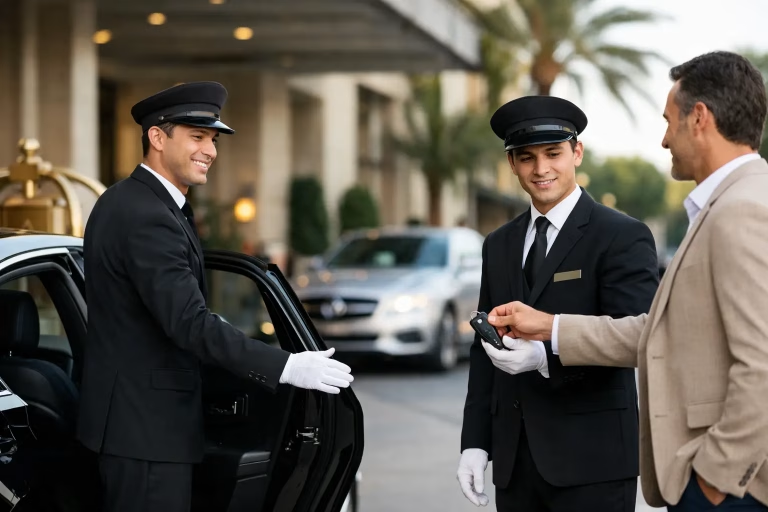
A professional valet service has a visible guest journey and an invisible vehicle journey. The visible journey begins with a prompt greeting, clear eye contact, courteous language, and an orderly explanation of the process. Guests should know what will happen with their vehicle, how they will request it later, and whether there are parking charges or estimated retrieval times.
The invisible journey covers ticketing, key custody, parking allocation, vehicle movement, and return dispatch. This side requires discipline because guests may not see it, but they immediately notice its failures. A missing key, an incorrect vehicle location, or an unexplained delay affects trust in the entire hotel.
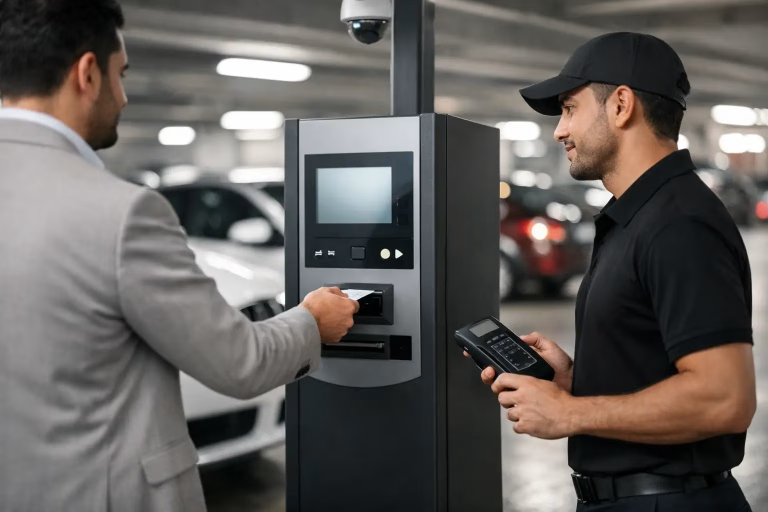
Digital ticketing tools can reduce manual errors by recording vehicle details, arrival time, parking location, and retrieval status. They can also create a more organized process for guests who request their cars before leaving their rooms or approaching the lobby. Technology supports the team, but it does not replace professional judgment. A trained attendant still needs to recognize when traffic is building, when a guest requires assistance, or when a vehicle should be parked in a location that allows faster retrieval.
Build staffing around demand, not fixed headcount
One of the most common operational mistakes is assigning the same number of attendants throughout the day. Hotel traffic rarely follows a flat pattern. Demand changes with check-in and check-out windows, meal periods, prayer times, flights, local events, weddings, conferences, and seasonal travel.
A staffing plan should be based on expected vehicle volume, average parking and retrieval distance, number of active arrival lanes, and the service level the hotel promises. A property with a compact parking structure may need fewer drivers than one using remote overflow parking, even if both receive the same number of vehicles.
Supervisors should review historical patterns weekly and adjust the schedule before high-demand dates. For major functions, valet planning should begin with the event organizer and hotel banquet team. Confirm guest count, arrival timing, VIP list, vendor access, parking reservations, and the exit pattern. The end of an event can be more demanding than the arrival if dozens of guests request vehicles at once.
Put safety and accountability into every handoff
Vehicle protection is central to a hotel valet operation. Guests are entrusting the property with valuable assets, and the hotel’s reputation depends on how that responsibility is handled. Every attendant must be properly licensed, trained to operate a range of vehicle types, and instructed on safe driving standards within and outside the property.
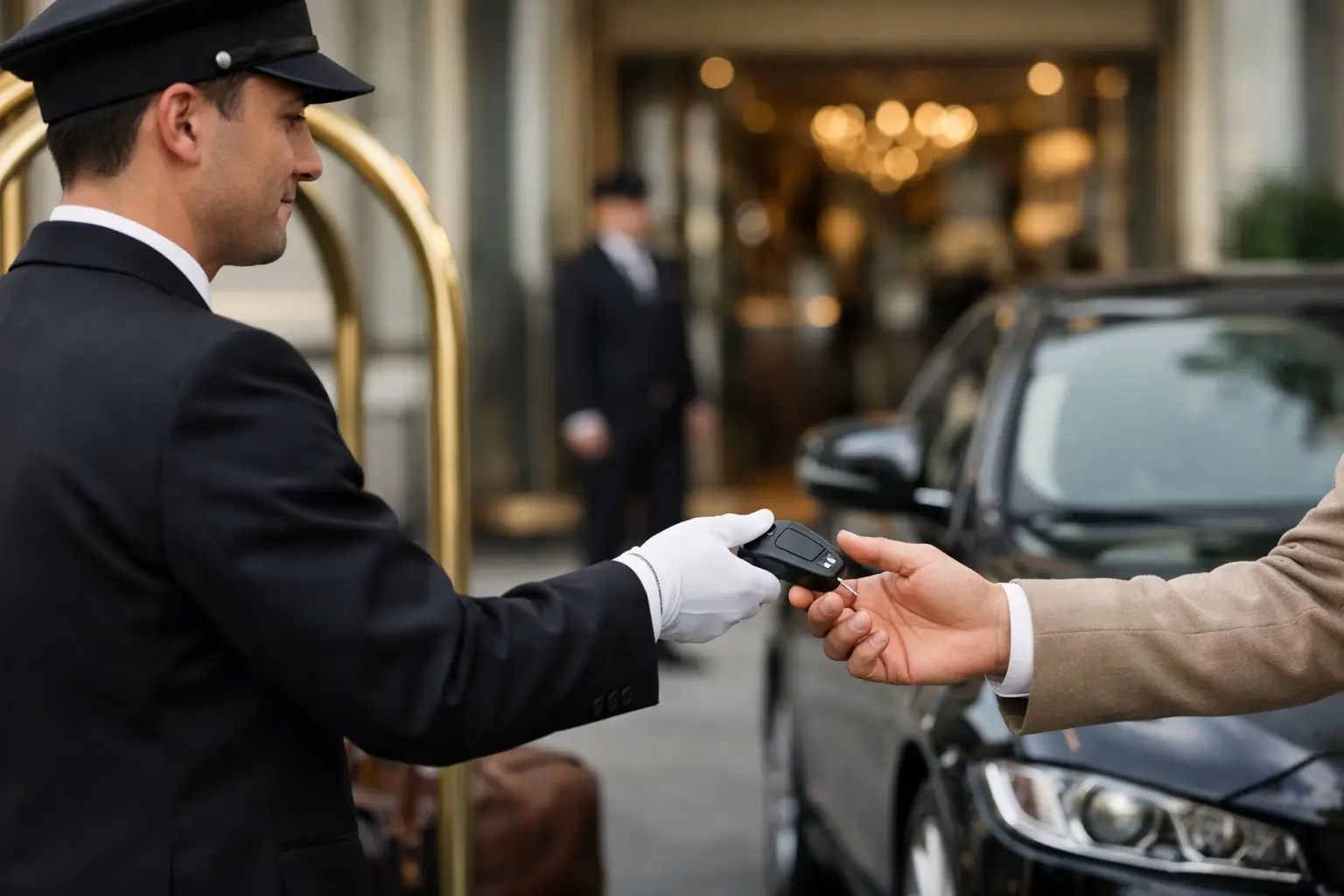
Key custody should follow a controlled process with limited access and clear tracking. Vehicles should be parked only in approved areas, and attendants should never leave keys inside a vehicle or place them in unsecured locations. When local conditions and hotel policy require it, the team should document existing vehicle damage at arrival to avoid later disputes.
Insurance coverage is also a business requirement, not a detail to address after an incident. Hotel management should confirm that the valet provider carries appropriate coverage for vehicles under its care and has a documented process for reporting, investigating, and resolving incidents. The most reliable partner is one that treats prevention, documentation, and transparent communication as standard operating practice.
Keep the curb organized under pressure
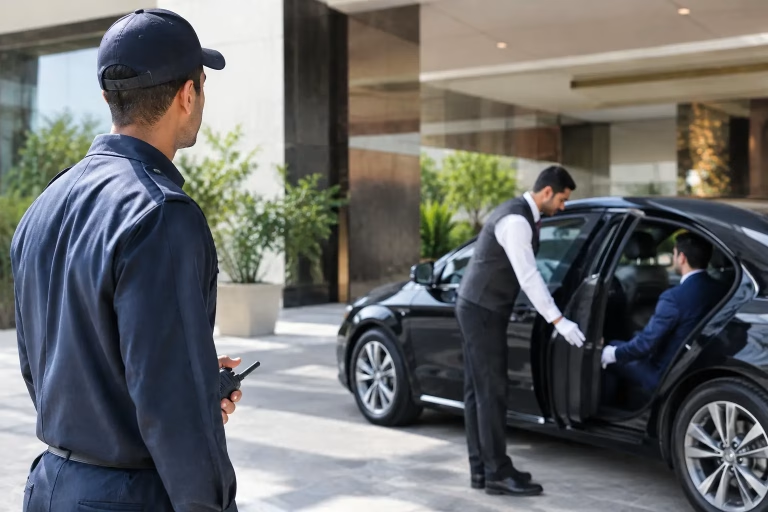
The curb is where a hotel’s operational pressure becomes visible. When several cars arrive at once, the team must prioritize safety and order without making guests feel rushed. Clear signage, designated stopping points, and traffic direction are useful, but they only work when staff apply them consistently.
The valet supervisor should monitor the arrival lane continuously and make quick decisions about vehicle staging, overflow instructions, and extra support. If the lane is approaching capacity, the team may need to direct arriving cars to a temporary holding point, accelerate parking runs, or coordinate with security to manage street-side traffic. These actions should be planned in advance, not improvised in front of guests.
Communication is especially important during high-profile arrivals. A VIP guest should not arrive to confusion because the team did not receive an updated itinerary. Likewise, large group arrivals require a designated coordinator who can align valet, bell services, reception, and security around the same schedule.
Measure service quality beyond retrieval time
Retrieval time is an important valet metric, but it is not the only one. A fast return does not compensate for an impolite greeting, an unsafe maneuver, or a guest left without information. Hotel management should review performance through both operational data and guest-facing observations.
Useful measures include average vehicle retrieval time, peak-period queue length, number of incidents or claims, ticketing accuracy, curb congestion events, and guest comments. The supervisor should also report recurring causes of delay, such as insufficient parking inventory, a blocked driveway, long walking distances, or staffing gaps during event departures.
These insights allow the hotel to improve the operation before a small issue becomes a pattern. A good valet partner does not merely report that a peak period was difficult. It explains why it happened and recommends a practical adjustment to staffing, traffic flow, parking allocation, or guest communication.
Choose a valet partner that operates as part of the hotel
Outsourcing valet can reduce the management burden, but only when the provider operates with the same care the hotel expects from its own teams. The right partner brings trained staff, defined procedures, insurance protection, supervision, and technology while adapting the operation to the hotel’s brand and site conditions.
For properties in Saudi Arabia, Wagifli approaches valet as an extension of hospitality rather than a basic parking task. That means designing an operating plan around guest arrival patterns, traffic conditions, parking capacity, and the service character of the property.
The strongest hotel valet operation is rarely the one guests talk about because of a problem. It is the one they remember as an easy, courteous arrival. When every curbside handoff is controlled, every vehicle is tracked, and every team member knows the standard, valet becomes a quiet but valuable expression of the hotel’s commitment to its guests.