
When Should a Venue Add Valet Parking Service?
A guest’s opinion of a venue often begins before they reach the entrance. A crowded driveway, unclear parking directions, or a long walk from an unmarked lot can undermine even an exceptional hotel stay, restaurant meal, or event program. When should a venue add valet parking? Usually, it is when the arrival experience has become a visible operational pressure point rather than a simple parking inconvenience.
Valet is not reserved for properties with large luxury footprints. It is a practical service for any venue where vehicle flow, guest expectations, and limited parking capacity must be managed with care. The right decision comes from recognizing the signs early, then building an operating plan that protects safety, speed, and the character of the guest experience.
When Should a Venue Add Valet Parking?
The clearest signal is recurring congestion at the point of arrival. If cars queue at the entrance during lunch and dinner, hotel check-in periods, hospital visiting hours, conference registration, or wedding arrivals, the venue has a traffic management issue that affects every guest. Drivers may stop in active lanes, guests may be dropped off without assistance, and staff may be pulled away from their primary responsibilities to direct cars.
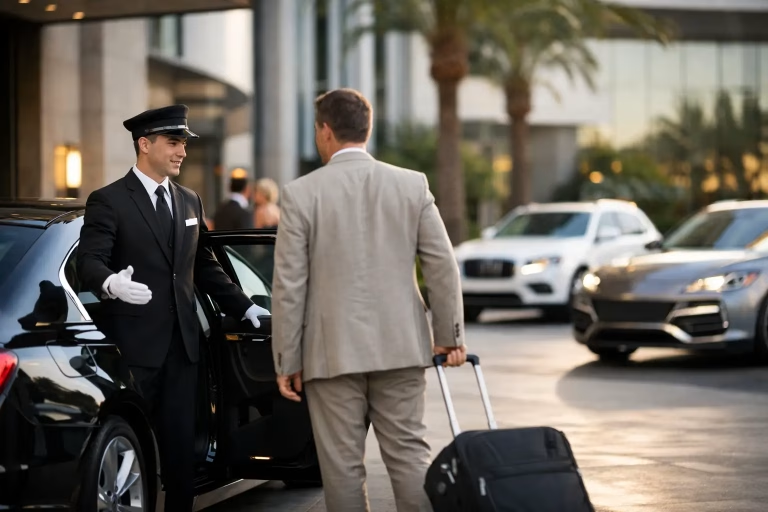
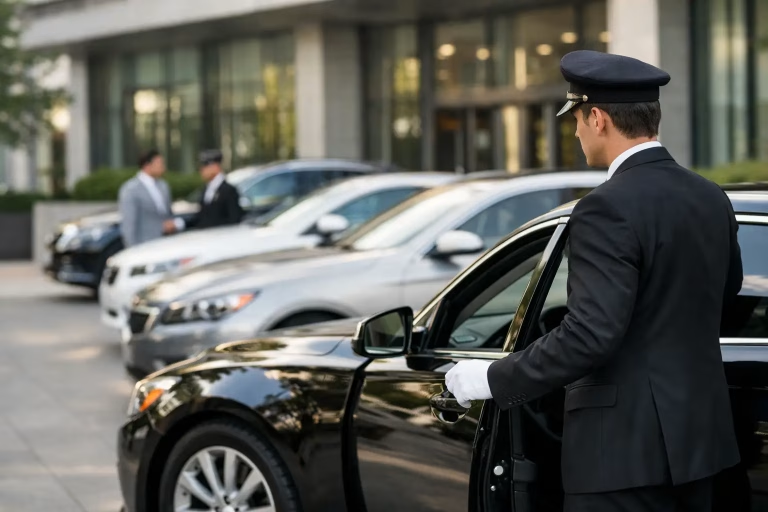
A professional valet operation turns that uncontrolled moment into an organized process. Trained attendants receive vehicles, guide traffic, document vehicle condition when required, and coordinate retrieval through a controlled ticketing process. This gives the entrance a defined rhythm instead of leaving each guest to navigate a busy curb on their own.
A venue should also consider valet when available parking exists but is difficult to use. This is common at sites with remote lots, narrow driveways, several parking zones, or spaces that guests cannot easily identify. The problem is not always a lack of parking. It may be that the parking inventory is poorly connected to the arrival journey. Valet helps venues use their existing capacity more effectively while giving guests a direct and welcoming path to the door.
Peak periods are affecting service quality
Many properties function well for most of the day but struggle during predictable surges. A restaurant may have adequate parking on weekday afternoons but face a crowded entrance every Thursday and Friday evening. A hotel may see its greatest pressure during event arrivals, weekend check-ins, or group departures. A hospital may need extra control around visiting hours, outpatient appointments, and emergency access points.
These patterns do not always require a full-time operation. Valet can be designed around the hours, days, seasons, and event schedules that create pressure. A flexible service model allows the venue to protect its busiest periods without building an unnecessary permanent staffing structure.
Guests are showing signs of friction
Guest complaints about parking are often treated as isolated feedback, but repeated comments reveal a broader experience issue. Late arrivals caused by parking searches, confusion over where to stop, concerns about walking distance, and frustration at departure can all reduce satisfaction before guests evaluate the main service offering.
For hospitality venues, this matters because the arrival is part of the promise. For medical facilities, it can affect comfort for elderly visitors, patients with limited mobility, and families under stress. For corporate offices and conference venues, an unorganized arrival can make an otherwise polished organization feel unprepared. Valet is most valuable when it removes friction that guests should not have to manage themselves.
Valet Is an Operational Decision, Not Just a Luxury Feature
A refined arrival experience is a meaningful benefit, but the strongest case for valet is operational. A structured team can manage curbside behavior, keep emergency and service access clear, reduce unauthorized stopping, and direct vehicles toward the most appropriate parking areas. The result is not simply a better greeting. It is a safer, more controlled site.
This distinction is especially relevant in high-traffic markets such as Jeddah, Makkah, and Madina, where hotels, dining destinations, and major events may experience concentrated vehicle demand. A generic approach will not solve those pressures. The operating plan must account for street access, entrance layout, parking distance, guest volume, local traffic conditions, and the times when arrivals and departures overlap.
A valet service also gives venue leadership clearer accountability. Rather than asking front desk staff, security personnel, or event coordinators to handle parking concerns informally, the venue has a dedicated team with defined responsibilities. That team can be trained in guest interaction, traffic control, vehicle safety, escalation procedures, and communication with site management.
Assess the Bottleneck Before Adding Staff
Not every crowded entrance needs the same solution. Before launching valet, a venue should identify exactly where the guest journey breaks down. The bottleneck may be curbside space, slow vehicle retrieval, insufficient directional signage, an unclear drop-off point, or poor coordination between security and reception. Adding attendants without resolving the underlying flow can move the problem rather than fix it.
A proper site assessment considers the number of arriving vehicles at peak times, average parking and retrieval distance, usable parking capacity, driveway turning space, pedestrian routes, and access requirements for deliveries or emergency vehicles. It should also examine the guest profile. A fine-dining restaurant, a large-scale wedding, and an outpatient clinic may all benefit from valet, but the service standard and staffing model will be different.
For example, an event venue may need a rapid intake line and preplanned retrieval waves at closing. A hotel may require continuous coverage, guest name coordination, and support for luggage handling. A restaurant may need a small, highly visible team that keeps the entrance moving during two focused service periods. The service should follow the venue’s actual pattern of demand.
Capacity Management Determines Whether Valet Will Work
Valet does not create parking spaces, but it can significantly improve how available spaces are used. Self-parking guests tend to choose the most convenient visible spaces first, leave uneven gaps, and spend time circulating when they cannot find a spot. A trained valet team can park vehicles more efficiently, direct overflow to designated areas, and track vehicle locations for faster retrieval.
That benefit depends on disciplined capacity planning. The operator needs to know the real number of usable spaces, the distance to each parking zone, the expected vehicle turnover, and the point at which overflow procedures should begin. Without this information, even a well-staffed curb can become congested once the lot approaches capacity.
Technology and ticketing tools support this discipline. Digital records can help teams track vehicle locations, manage keys responsibly, and communicate retrieval requests quickly. However, technology should support trained people and a clear process, not replace them. Guests notice the difference between a team that is prepared and one that is searching for answers at the curb.
The Right Service Protects Safety and Reputation
Handing over a vehicle requires trust. Venue operators should expect clear standards for driver training, professional presentation, vehicle handling, key control, insurance coverage, and incident reporting. These are not secondary details. They are central to the venue’s reputation and to the confidence a guest feels when leaving a vehicle in someone else’s care.
The best valet programs also maintain a consistent hospitality standard. Attendants should be courteous without being intrusive, alert to guests who need assistance, and able to communicate calmly during busy periods. They represent the venue at a highly visible moment, often before the guest interacts with reception, security, or service staff.
A service partner such as Wagifli can build the operation around the site rather than forcing the site into a standard template. That includes staffing levels, arrival lanes, parking-zone assignments, guest communication, ticketing procedures, and escalation plans for peak demand. Customization matters because every entrance has different physical limits and every audience has different expectations.
Consider the Commercial Return, Not Only the Service Cost
The decision to add valet should be measured against the operational and commercial impact of unmanaged parking. Long queues can discourage walk-in business. Late guests can miss reservations or event start times. Congested entrances can create safety concerns and place additional stress on reception, security, and management teams. In premium hospitality settings, a weak first impression can affect repeat visits and recommendations.
Valet may be offered as a complimentary amenity, included in an event package, funded through a parking fee, or deployed only during selected high-demand periods. The appropriate model depends on the venue’s positioning and audience. A property should not add valet simply because competitors offer it. It should add it because the service improves a defined operational outcome or protects a guest experience that matters to the business.
The most useful first step is a focused review of the arrival experience during the busiest hour, not the quietest one. Watch where cars stop, how long guests wait, which employees are pulled into parking duties, and what happens when several vehicles need to leave at once. Those observations will show whether valet is an added luxury or the missing operating layer that allows the venue to welcome every guest with confidence.