
What Makes a Valet Provider Reliable for Guests?
A guest may never see the parking plan behind a busy hotel entrance, restaurant driveway, or event venue. They will notice, however, if cars queue at the curb, if no one greets them promptly, or if they wait too long for their vehicle at departure. What makes a valet provider reliable is its ability to manage those moments with consistency, care, and clear operational control.
For a property manager or event organizer, valet service is not simply about having attendants available. It is a front-of-house operation that affects traffic flow, guest satisfaction, safety, and the reputation of the venue. Reliability comes from the systems behind the greeting as much as the greeting itself.
What Makes a Valet Provider Reliable in Practice?
A reliable valet provider delivers a polished guest experience because it has planned for the realities of the site. This includes peak arrival periods, limited curb space, different vehicle types, changing weather, VIP arrivals, and the inevitable pressure of a full parking area.
The strongest providers do not apply the same staffing model to every location. A hospital requires fast, considerate support for patients and visitors, while a fine-dining restaurant may need careful management of concentrated evening arrivals. A conference venue must be ready for waves of guests arriving within minutes. Reliability means building the operation around those conditions rather than reacting after congestion has already formed.
Professional attendants are trained for more than driving
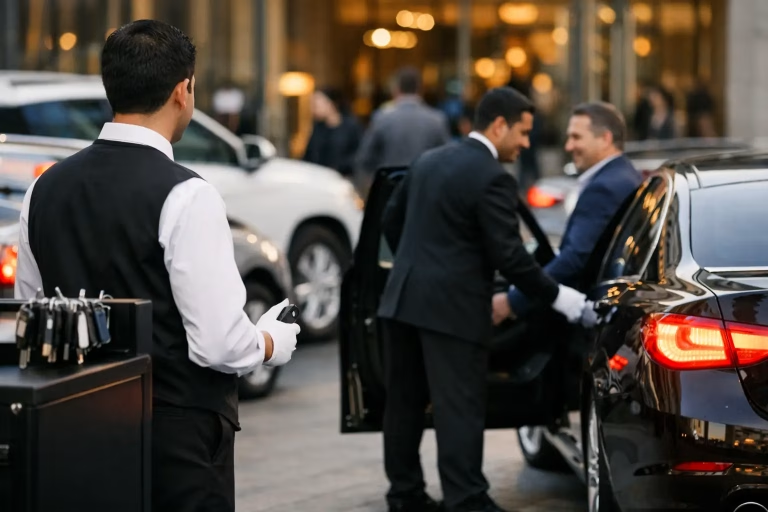
The valet attendant represents the venue from the first interaction. Professional appearance, courteous communication, and attention to the guest matter, but they must be backed by practical training. Attendants should understand safe vehicle handling, parking procedures, key control, ticketing, guest handoff, and escalation protocols.
Training also needs to cover judgment. An experienced valet team knows how to keep the entrance clear without making guests feel rushed, how to communicate a delay honestly, and when to involve a supervisor. These are small decisions in the moment, yet they shape whether the operation feels organized or uncertain.
A provider should be able to explain how its team members are selected, trained, supervised, and scheduled. High turnover without consistent onboarding can quickly affect service standards, especially during high-demand periods.
A site-specific traffic plan prevents avoidable delays
Reliability starts before the first vehicle arrives. A provider should assess the site, identify entry and exit routes, determine where vehicles can queue safely, and establish a practical parking capacity plan. It should also account for pedestrian crossings, delivery access, emergency routes, and local property rules.
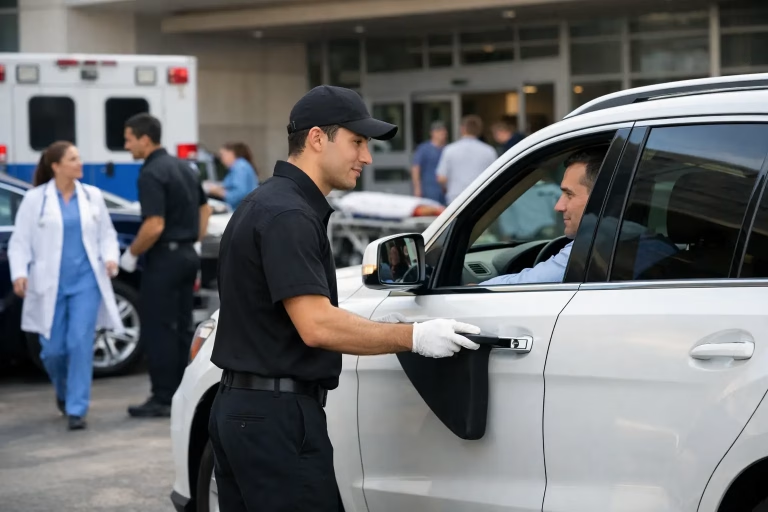
The details vary by location. A compact urban restaurant may need a carefully timed vehicle rotation because off-site parking is limited. A large wedding venue may need separate arrival lanes for guests, vendors, and VIPs. A medical facility may need priority handling for patients with mobility needs. One generic procedure cannot serve all of these environments well.
The plan should include clear roles during peak demand. Who directs arriving vehicles? Who parks? Who retrieves? Who monitors capacity? Who communicates with venue management when conditions change? When these responsibilities are defined, the team can keep moving even under pressure.
Safety, Insurance, and Accountability Protect the Venue
Guests trust a valet provider with a valuable asset. That trust must be protected through clear responsibility, disciplined processes, and appropriate insurance coverage while vehicles are in the provider’s care.
A reliable operator has documented procedures for receiving and returning vehicles. This typically includes verifying the vehicle, securing keys, using a traceable ticketing process, parking only in authorized areas, and recording any incident promptly. The objective is not to create unnecessary friction for guests. It is to make every vehicle accountable from handoff to return.
Insurance should be discussed directly, not treated as fine print. Decision-makers should understand what coverage applies, how incidents are reported, and who serves as the point of contact if a concern arises. A provider that communicates clearly about liability and incident handling demonstrates operational maturity.
Safety also extends beyond the vehicle itself. A well-run valet operation protects pedestrians at the entrance, avoids obstructing access routes, and keeps the pickup area controlled after dark or during crowded events. For hotels, hospitals, and high-traffic commercial properties, this is a core part of risk management.
Technology Should Support Service, Not Complicate It
Digital ticketing and vehicle tracking can significantly improve valet operations when they are implemented with the guest journey in mind. The best systems reduce confusion, improve retrieval accuracy, and give supervisors visibility into vehicle status and wait times.
For example, a digital ticket can help confirm where a vehicle is parked and alert the team when a guest requests retrieval. This can shorten handoff time during busy departures and reduce the risk of misplaced paper tickets or unclear key records. It can also create useful operational data, such as arrival patterns and peak retrieval times.
Technology alone does not make a provider dependable. A complicated process can frustrate both attendants and guests. The right approach is simple: use tools that make service faster, records clearer, and management more informed, while preserving a warm and personal arrival experience.
Reliability Is Proven During Peak Demand
Most valet operations can appear efficient during a quiet afternoon. The real test comes when a restaurant reaches full capacity, a wedding ceremony ends, or several flights arrive at a hotel within the same hour.
A dependable provider prepares for those moments through staffing flexibility, active supervision, and contingency planning. It should know when to add attendants, how to open overflow parking, and how to communicate realistic wait times without leaving guests uncertain. It should also have a clear response for unexpected disruptions, such as road closures, heavy rain, a vehicle issue, or a sudden surge in arrivals.
Supervision is especially important. A lead attendant or site supervisor can monitor the entrance, reassign staff, coordinate with security or venue personnel, and keep the client informed. Without visible leadership, teams may work hard but still lose control of priorities during a rush.
This is why the lowest-priced proposal is not always the lowest operational cost. Understaffing may reduce the monthly service fee, but it can create long queues, guest complaints, staff stress, and a weaker impression of the property. The right staffing level depends on vehicle volume, site layout, service expectations, and the cost of a poor arrival experience.
Questions to Ask Before Choosing a Valet Provider
Before appointing a provider, decision-makers should look beyond the number of attendants offered. A productive discussion should establish whether the operator can take ownership of the full arrival and parking experience.
Ask how the provider will assess the property and build the parking plan. Confirm how attendants are trained and whether a supervisor will be assigned to the site. Review insurance coverage and incident procedures in clear terms. Also ask how the provider handles peak periods, overflow capacity, VIP guests, accessibility needs, and coordination with on-site security or management.
It is useful to request a practical walkthrough of a likely busy scenario. For instance, ask what the team would do if 30 vehicles arrive in 15 minutes while the primary parking area is nearly full. The response should be specific to your location, not a broad promise of excellent service.
For venues across Saudi Arabia, where hospitality expectations are high and major events can create intense arrival peaks, local operational familiarity adds value. A provider that understands the pace of hotels, dining destinations, medical facilities, and private events can adapt the service without losing discipline or guest courtesy.
The Right Standard Depends on Your Property
Not every venue needs the same valet model. A corporate office may prioritize efficient morning arrivals and secure key management. A luxury hotel may place greater emphasis on greeting standards, luggage coordination, and fast retrieval. A hospital may value patience, accessibility, and calm support above all else.
The reliable provider is the one that recognizes those priorities and converts them into a measurable operating plan. At Wagifli, valet is treated as an extension of hospitality and the client’s operating identity, with trained teams, tailored site planning, insurance protection, and disciplined vehicle control working together.
Before making a decision, walk through the guest journey from curbside arrival to vehicle return. The provider that can protect each step with clear processes and gracious service is the one most likely to protect your reputation when the entrance is at its busiest.