Paper Tickets vs Digital Valet for Your Property
A valet operation is judged in seconds: the greeting at the curb, the confidence of the attendant, and how quickly a guest’s vehicle is returned. The choice between paper tickets vs digital valet affects all three. It also shapes accountability behind the scenes, from vehicle identification and key custody to peak-hour traffic flow and management reporting.
For a hotel, hospital, restaurant, corporate facility, or event venue, the question is not whether technology looks more modern. The real question is whether the system supports a controlled, hospitable, and reliable operation under the conditions your property faces every day.
Paper Tickets vs Digital Valet: The Operational Difference
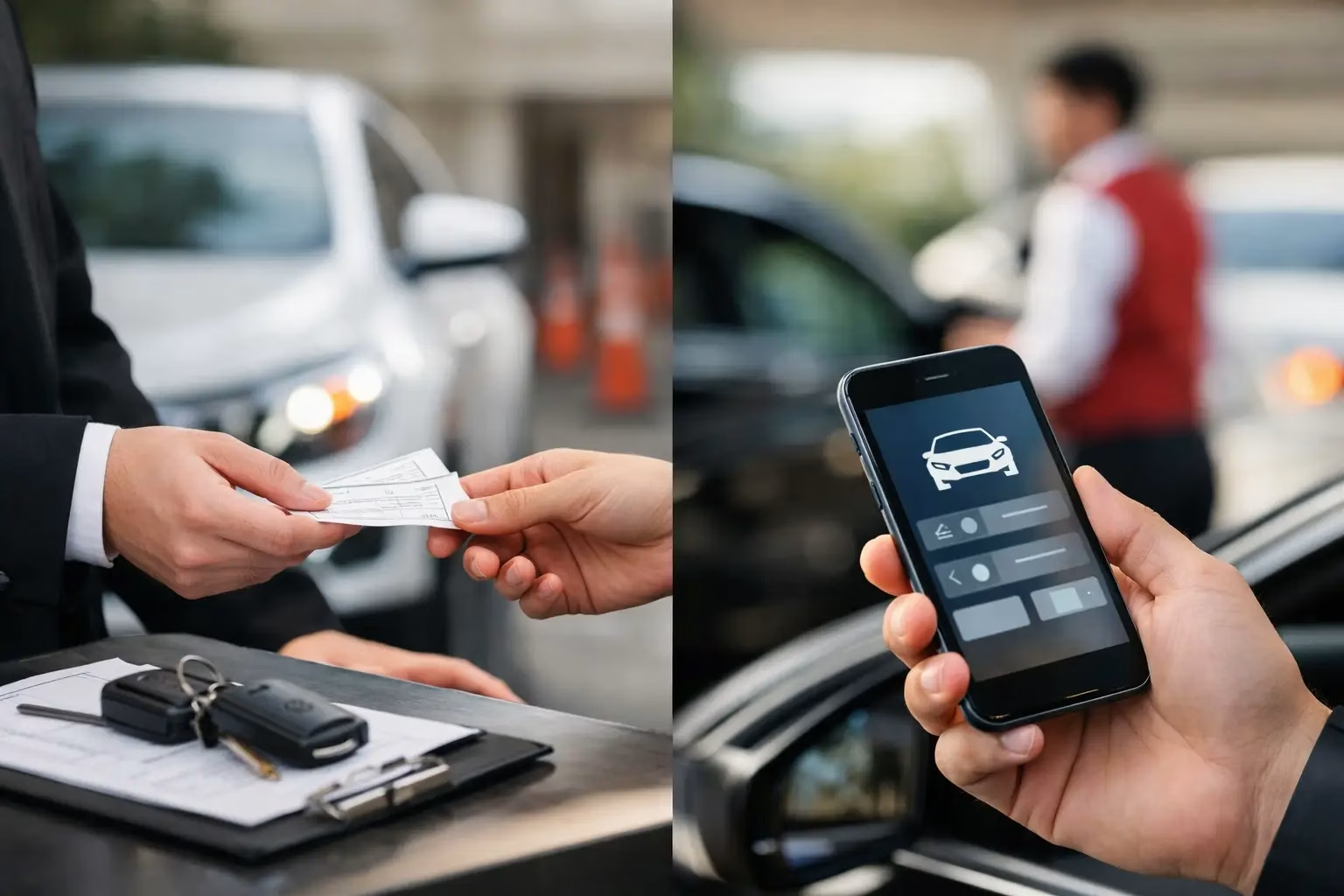
Paper valet tickets have been used for decades because they are simple. An attendant records the vehicle details, provides the guest with a numbered claim stub, and places the matching ticket with the key. The process is familiar to both staff and guests, requires little setup, and continues to work when connectivity is unavailable.
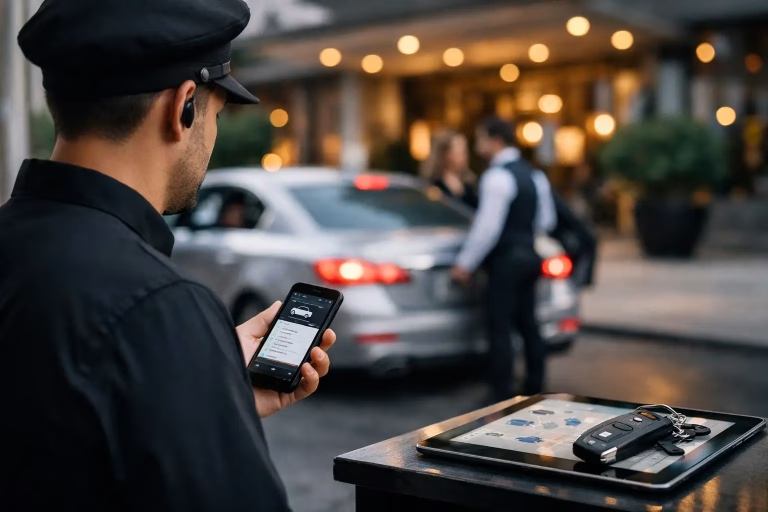
Digital valet replaces the paper claim process with a platform, usually accessed through a tablet or mobile device. Vehicle information, arrival time, parking location, attendant activity, and retrieval requests can be recorded electronically. The guest may receive a text message, a digital receipt, or a link that allows them to request their car before reaching the valet stand.
Neither model is automatically right for every site. A short, controlled service window at a private event may run effectively on well-managed paper tickets. A luxury hotel with high daily volume, multiple parking zones, and frequent guest requests is more likely to gain measurable value from a digital workflow. The decision should follow the operating model, not a preference for novelty.
Where Paper Tickets Still Work Well
Paper tickets offer a practical advantage in low-complexity environments. They can be deployed quickly for a one-night function, a temporary overflow area, or a venue with limited technology infrastructure. Staff can begin operating with minimal equipment, while guests understand the process immediately.
They also provide a useful physical backup. In outdoor events, underground parking areas, or sites where internet coverage may fluctuate, a paper-based contingency process prevents service from stopping. For many operators, that reliability is reason enough to keep printed ticket materials available even after adopting a digital platform.
The trade-off is visibility. A paper ticket can show who received a vehicle, but it does not easily show how long the vehicle has been parked, whether the guest has requested retrieval, which zone is filling fastest, or where delays are occurring. The information exists only if it is written clearly, filed correctly, and reviewed later.
Paper systems also depend heavily on disciplined handling. A ticket with unclear handwriting, a missing stub, or a key tagged incorrectly can slow down retrieval at precisely the moment a guest expects a prompt departure. In high-volume service, those small exceptions can quickly become a queue at the curb.
What Digital Valet Changes for the Guest
Digital valet is most valuable when it removes friction without making the arrival feel transactional. Guests should still be greeted professionally, assisted with courtesy, and given confidence that their vehicle is in responsible hands. The technology should support that service, not replace it.
A digital record can capture the vehicle plate, make and model, arrival condition, parking location, and the attendant assigned to the handoff. This provides a clearer chain of custody than a handwritten record alone. If a guest asks for an update or a manager needs to investigate an exception, the operation has a time-stamped record to reference.
For guests, the strongest benefit is often retrieval. Instead of waiting until they reach the valet desk to request their vehicle, they may be able to submit a request from a restaurant table, hotel lobby, meeting room, or event exit. The valet team can prepare the vehicle while the guest finishes their departure, reducing the visible wait at the busiest point of the journey.
That benefit depends on staffing and parking layout. A digital request cannot overcome an understaffed shift, a distant off-site lot, or an exit lane blocked by unmanaged traffic. It gives the team earlier notice and better information, but professional execution remains the deciding factor.
Better Records, Not Less Responsibility
Digital tools can make key handovers and vehicle movements easier to track, but they do not create accountability on their own. A well-run operation still requires trained attendants, controlled key storage, clear parking zones, insurance coverage, supervisor oversight, and documented escalation procedures.
For decision-makers, this distinction matters. Purchasing software without defining the service process can create a polished front end with weak field execution. The best results come when the technology is integrated into a complete valet plan tailored to the property’s entrance layout, demand patterns, guest profile, and parking capacity.
The Management Case for Digital Valet
At a busy property, operational data has practical value. Digital systems can show peak arrival periods, average retrieval times, number of vehicles handled, common request windows, and parking utilization by zone. That information helps management plan staffing levels, identify congestion points, and make better use of available capacity.
For example, a restaurant may discover that arrivals build sharply within a 30-minute dinner window, while vehicle retrievals cluster at closing. A conference venue may need additional lane management before the opening session and at the final departure. A hospital may need a different approach altogether, prioritizing fast turnover and sensitive guest assistance throughout the day.
This visibility is especially useful when valet is part of a broader hospitality standard. Management can move beyond asking whether the team was busy and begin evaluating whether the service met defined expectations for speed, order, and guest care.
Digital records can also strengthen reporting between the venue and its valet partner. Rather than relying only on anecdotal feedback, both sides can review service patterns and adjust the plan. That could mean changing the staging area, increasing coverage during an event, revising guest communication, or assigning a separate team to high-priority arrivals.
When Digital Is Not the Best First Move
A digital solution is not always the first investment a property should make. If the entry lane is poorly designed, staff have not received formal training, parking locations are unclear, or key control is inconsistent, operational fundamentals should be addressed first. Technology will expose those gaps, but it will not solve them by itself.
There are also guest considerations. Some visitors may prefer a physical claim check, particularly in formal events or when they do not want to share a mobile number. Others may arrive with limited phone battery, no data access, or a preference for a direct interaction. A good valet operation accommodates those needs without slowing down the overall service.
For this reason, many high-performing teams use a hybrid model. Digital records handle tracking, requests, and reporting, while a physical ticket or receipt remains available when appropriate. The guest receives the format that feels comfortable, and the team retains a dependable fallback method.
Choosing the Right System for Your Property
The right choice starts with an honest assessment of volume and complexity. Consider how many vehicles arrive during peak periods, how far vehicles are parked from the entrance, how often guests request early retrieval, and whether multiple attendants or parking zones are involved. Also consider whether your managers need regular service data to support staffing and facility decisions.
Paper tickets may be sufficient for a limited-volume operation with a simple parking layout and short service duration. Digital valet becomes more compelling when the property handles frequent traffic, has a premium guest experience to protect, manages multiple lots, or needs greater visibility into performance and vehicle custody.
In Saudi Arabia’s hospitality and event market, where arrival experience often carries significant weight, the standard should be more than getting a vehicle parked. The process should feel composed, safe, and respectful from the first greeting to the final handoff. That is why the system should be selected alongside the operating team, not separately from it.
Wagifli approaches valet as a managed hospitality function: trained attendants, site-specific parking plans, controlled vehicle handling, and technology used where it improves speed and confidence. Whether a property uses paper, digital tools, or both, the goal remains the same – protect the guest experience while keeping the operation organized under pressure.
A valet system earns its value when guests barely have to think about it. They arrive without confusion, leave without unnecessary waiting, and remember the property for the care shown at its front door.