A Practical Guide to Valet Operations Planning
A crowded driveway can undermine an otherwise exceptional property in minutes. Guests remember the delay before the welcome, the uncertainty around where to stop, and the first interaction at the curb. This guide to valet operations planning is designed for hotels, restaurants, hospitals, corporate facilities, and event venues that want arrival service to reflect the same professionalism as the rest of the guest experience.
Valet planning is not simply a question of how many attendants to schedule. It is the operating design behind a controlled arrival: people, traffic flow, parking capacity, safety procedures, technology, communication, and service standards working together under changing demand.
Start With the Arrival Experience, Not the Parking Lot
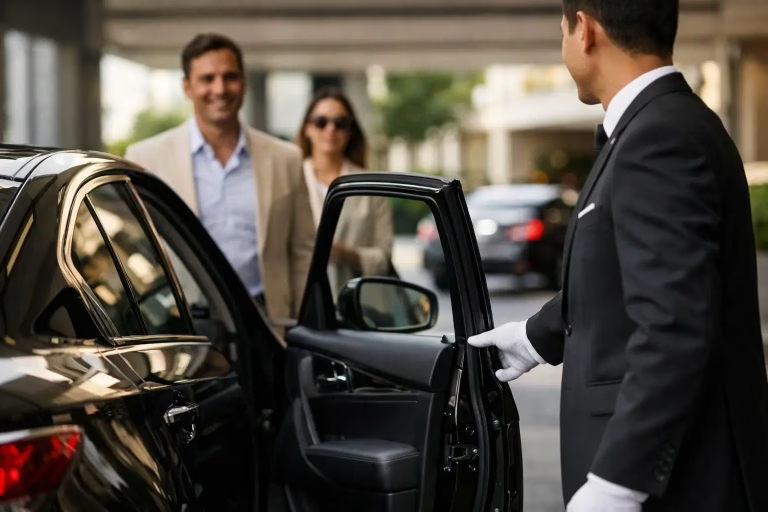
The strongest valet programs begin by defining what the guest should experience from the moment their vehicle approaches the property. A luxury hotel may prioritize a warm greeting and discreet luggage assistance. A hospital may need fast access for patients, visitors, and emergency traffic. A wedding venue may need to absorb a sharp surge of arrivals within a short window.
That desired experience should shape every operational decision. If the service promise is fast handoff, the vehicle storage area must be close enough to support it. If privacy is essential, ticketing, key handling, and vehicle retrieval procedures need tighter controls. If the property receives a mix of VIPs, families, delivery vehicles, and staff traffic, the arrival area must have clear priority rules.
A valet operation should feel calm to the guest even when the team is managing a high volume of movement behind the scenes. That requires planning for the actual behavior of vehicles at the curb, not only the number of available parking spaces.
Assess Demand Before Setting Staffing Levels
A common planning mistake is assigning a fixed number of valets based on the size or prestige of a venue. Staffing should instead follow demand patterns. Review arrival and departure volumes by day, hour, event type, season, and customer profile.
For a restaurant, the peak may be concentrated between 7:30 p.m. and 10:00 p.m., with a second burst when diners leave. For a hotel, pressure can build around check-in, check-out, conferences, and airport transfer schedules. At a hospital, traffic may be steady throughout the day, but visitor hours and clinic appointments can create predictable queues.
The key measurement is not just vehicles per day. It is vehicles per 15-minute or 30-minute interval. A site that handles 300 vehicles across a day may operate comfortably with a small team, while a site receiving 80 vehicles in 20 minutes needs a more deliberate curbside plan.
When evaluating staffing, account for more than drivers. The operation may require a curbside greeter, a dispatcher, a supervisor, runners positioned in remote parking zones, and relief coverage for breaks. The right structure depends on walking distances, layout complexity, guest expectations, and the speed required for retrieval.
Map Every Movement Through the Site
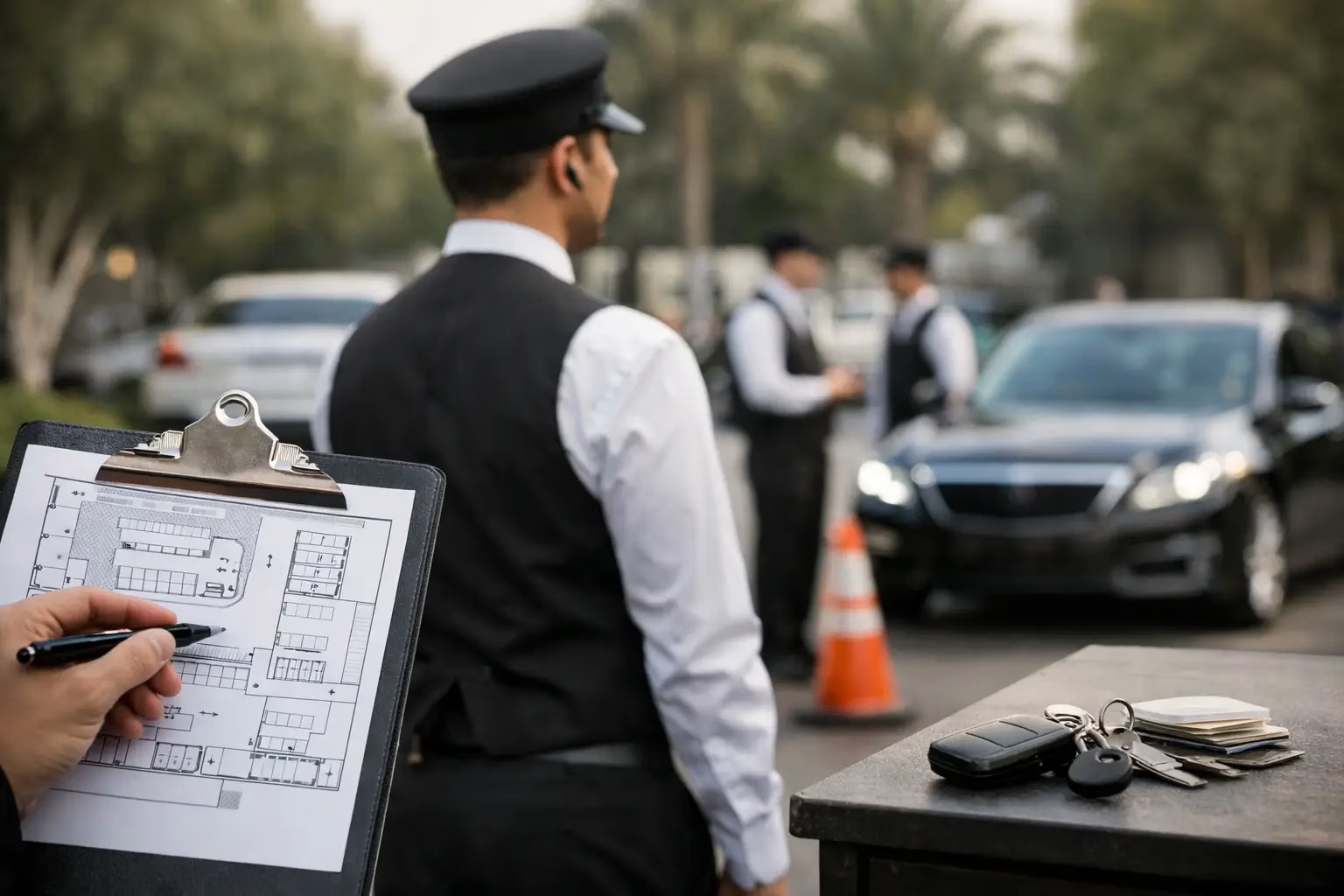
A practical valet operations plan maps the journey of the vehicle from arrival to return. This should include the drop-off lane, ticketing point, key custody process, vehicle route, parking location, retrieval request, staging zone, and exit route.
Design a curb that keeps moving
The arrival lane is a limited operational resource. If stopped vehicles, taxis, ride-share vehicles, or delivery trucks occupy it without control, valet service slows quickly. Mark where vehicles should stop, where guests should exit, and where completed handoffs should move next.
For venues with limited frontage, establish a clear overflow procedure before it becomes necessary. This may mean a secondary holding area, a traffic marshal during peak periods, or communication with security and facility teams to temporarily redirect non-guest vehicles.
The objective is not to rush guests. It is to prevent one delayed interaction from turning into a visible queue. A polite, decisive curbside team protects both service quality and traffic flow.
Measure walking and driving time
Parking capacity is only useful if it can support the promised retrieval time. A lot with abundant space may still create poor service if attendants must travel long distances through congested internal roads.
Test the real travel time between the curb and each parking zone during busy periods. Include walking time, elevator access if applicable, gate delays, key exchange, and the time needed to stage a vehicle safely for return. These observations reveal whether the operation needs additional runners, a closer overflow area, or a revised parking allocation.
Build Capacity Rules Before Peak Demand Arrives
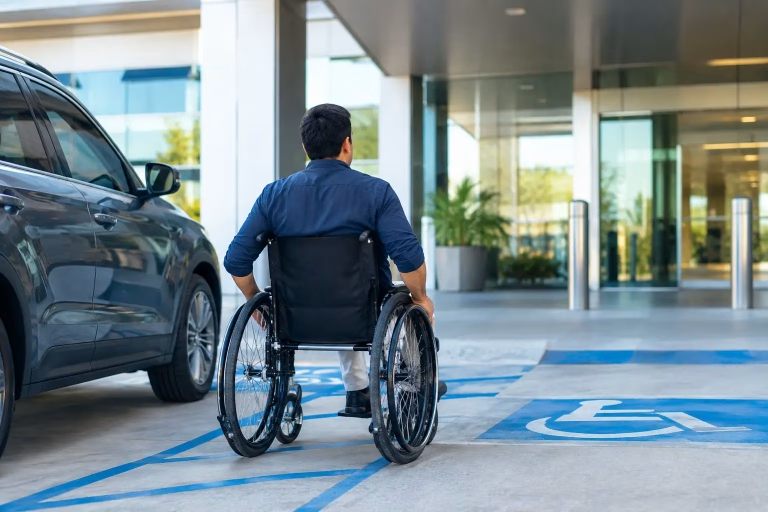
A full lot is not an operational surprise if occupancy is being monitored. The valet plan should define usable capacity by zone, including spaces reserved for accessible parking, VIPs, hotel guests, staff, loading activity, and emergency access.
Usable capacity is often lower than the total number of marked spaces. Narrow aisles, turning restrictions, temporary closures, double-parking risks, and the need for vehicle staging can reduce what can be safely operated. Planning based on the maximum theoretical number creates pressure at the exact moment the service needs control.
Set escalation points in advance. For example, when a primary zone reaches a defined occupancy level, dispatch begins directing cars to a secondary lot. When both zones approach capacity, the supervisor activates a guest communication plan and coordinates with property management. At major events, pre-booked attendee counts should be translated into parking forecasts before invitations are finalized.
In Saudi Arabia, this advance planning is especially valuable for wedding halls, conference venues, and hospitality properties that experience concentrated evening demand. The quality of the first 20 minutes of arrival can shape the entire event experience.
Put Safety, Insurance, and Accountability Into Daily Practice
Guests entrust a valet team with a high-value asset. Confidence comes from visible professionalism, but it must be supported by disciplined controls.
Every operation needs documented vehicle intake procedures. Attendants should verify the vehicle condition at handoff, record relevant notes when required, secure keys immediately, and apply a consistent ticket or digital record. The process should be quick enough to preserve the welcome while still protecting the guest, the property, and the operator.
Keys should never be left unattended, stored casually, or transferred without a traceable process. Restricted access, controlled key storage, and clear responsibility at shift changes reduce avoidable risk. Teams also need clear incident procedures covering damage claims, lost tickets, guest complaints, and emergency vehicle access.
Insurance coverage matters, but it should not be the only safety measure. Driver screening, training, speed limits, prohibited driving practices, uniform standards, supervision, and routine vehicle handling audits all contribute to a safer operation. The best response to an incident is prevention through consistent habits.
Use Technology to Improve Control, Not Add Friction
Digital ticketing and valet management tools can improve accuracy, visibility, and retrieval coordination. They can help teams record vehicle details, track parking locations, manage retrieval requests, and give supervisors a clearer view of volume and turnaround time.
However, technology should fit the site. A small restaurant with a compact lot may benefit from a simple digital record and disciplined communication. A large hotel or event complex may need more detailed zone tracking, reporting, and guest notification features. Adding a complicated system without training or reliable connectivity can slow the team rather than support it.
The useful question is: what operational decision will this tool help the team make faster or more accurately? If it reduces lost-ticket risk, improves vehicle location accuracy, or helps guests request their car before reaching the curb, it supports the service standard. If it creates extra steps at a high-pressure arrival point, it needs to be reconsidered.
Train for Hospitality and Pressure at the Same Time
A valet attendant is often the first and last person a guest encounters. Technical driving ability is necessary, but it is not enough. The team must know how to greet guests respectfully, handle special requests, communicate delays honestly, and remain composed when the driveway becomes busy.
Training should cover the property itself: entrances, guest categories, parking zones, emergency routes, VIP protocols, accessibility needs, and escalation contacts. It should also include practical peak-period drills. Staff who have rehearsed a queue, a sold-out event, a blocked lane, or a sudden rainstorm are better prepared to respond without confusion.
Supervision is equally important. A trained supervisor should monitor queue length, staffing distribution, parking capacity, guest concerns, and coordination with security or event management. When one person owns the operational picture, the team can adjust early rather than react late.
Review Performance After Every Meaningful Peak
Valet operations planning should be treated as a living process. After a major event, busy weekend, or high-occupancy period, review where delays occurred and why. Was the issue curb congestion, insufficient staff, a distant overflow lot, unclear guest instructions, or weak coordination with another department?
Focus on practical measures such as average vehicle handoff time, retrieval time, queue duration, incident reports, occupancy by zone, and guest feedback. Numbers show where pressure exists; direct observation explains what to change.
For properties seeking a more refined arrival operation, working with a specialized partner such as Wagifli can provide the operational structure, trained teams, and site-specific planning needed to protect both traffic flow and guest confidence. The goal is not merely to park more vehicles. It is to make every arrival feel expected, cared for, and professionally managed.