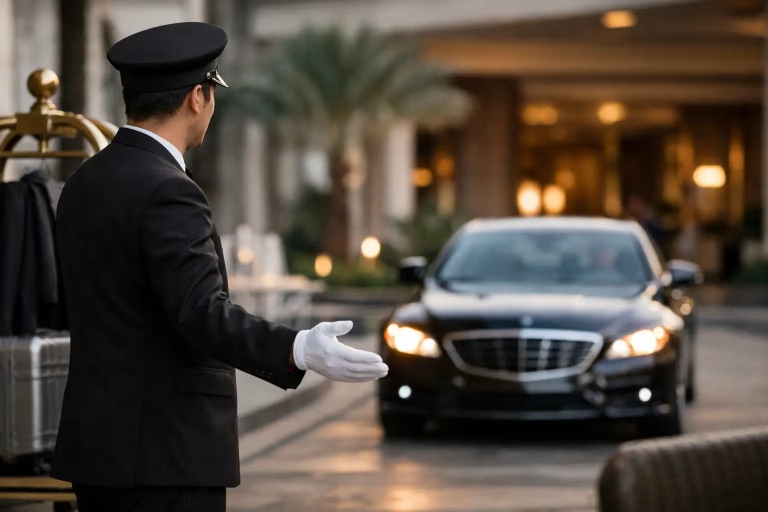

Hotel Valet Services Makkah for Better Arrivals
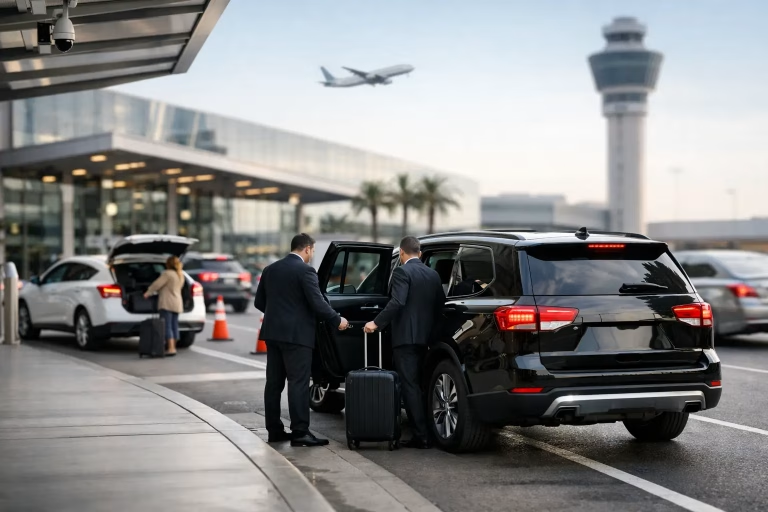
A hotel entrance in Makkah can shift from calm to congested in minutes. A coach arrives, families unload luggage, VIP guests pull up, and private vehicles compete for limited curb space. Hotel valet services Makkah are not simply about parking vehicles. They are an arrival-management function that protects the first impression, keeps traffic moving, and gives guests a composed welcome at the moment it matters most.
For hotel operators, the question is not whether guests appreciate valet service. Most do. The more practical question is whether the service can perform consistently during peak prayer periods, group check-ins, weekend demand, and seasonal surges without compromising safety or the hotel’s standards of hospitality.
Why the hotel arrival experience needs active management
The front drive is one of the few areas where guest service, traffic control, security awareness, and brand image meet in public. When it is unmanaged, the consequences are immediate: vehicles queue into the street, guests wait with luggage, reception absorbs complaints, and staff members are pulled away from their primary responsibilities.
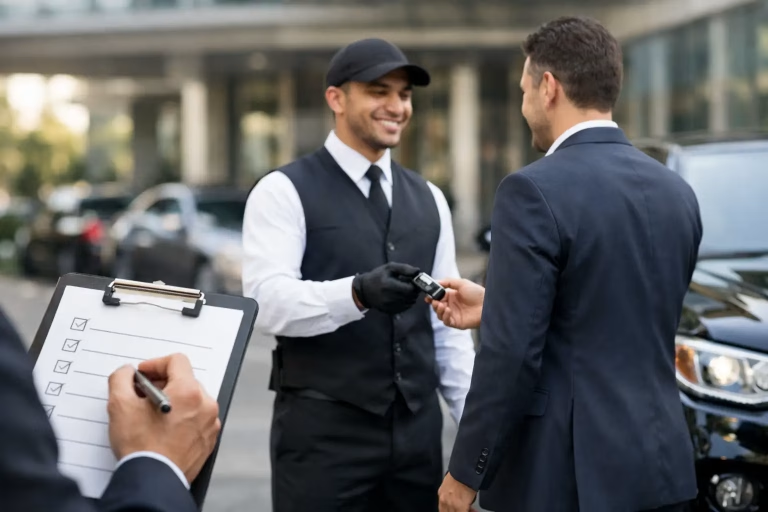
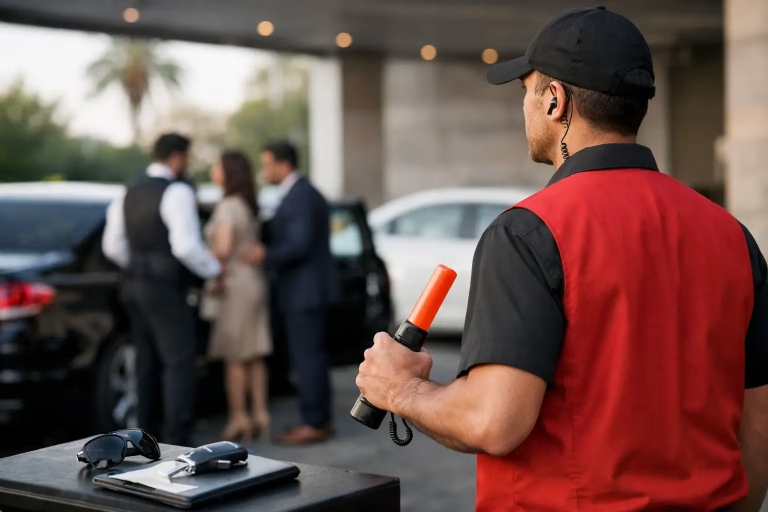
A professional valet operation brings order to this pressure point. Trained attendants receive the vehicle, confirm its condition, issue a clear ticket or digital record, and move it to the designated parking area. At the same time, a site supervisor monitors the curb, coordinates vehicle flow, and responds when demand rises beyond normal capacity.
This is particularly relevant for hotels in Makkah, where arrival patterns are often less predictable than in a typical urban property. Guests may arrive in large family groups, at unusual hours, or in concentrated waves tied to travel schedules and religious visits. A fixed staffing model without an operational plan can quickly fall behind.
Hotel valet services Makkah should be built around the property
No two hotel entrances operate the same way. A luxury property with a covered porte cochere has different needs from a compact hotel near high-footfall routes. The right valet provider begins with the site rather than a standard staffing package.
Start with the arrival map
A useful operating plan identifies where vehicles stop, where guests and luggage are received, which lane remains clear for departures, and how emergency access is protected. It also defines overflow procedures before the property reaches capacity, not after the curb becomes blocked.
The plan should account for the distance between the entrance and the parking area. If the lot is off-site or requires a shuttle movement, vehicle retrieval targets must reflect that reality. Promising immediate returns when parking is several minutes away creates frustration for guests and unnecessary pressure on attendants. Clear expectations, supported by disciplined execution, are more valuable than unrealistic speed claims.
Match staffing to demand, not just hotel size
A 200-room hotel may need a modest team on a typical weekday and a significantly larger operation during group arrivals or high-occupancy periods. Staffing should reflect vehicle volume, guest profile, curb layout, parking distance, and the number of arrival and departure peaks expected during the day.
The strongest model includes more than drivers. It includes an on-site lead who can direct traffic, manage exceptions, communicate with hotel security and front office teams, and adjust the operating rhythm when conditions change. This creates accountability at the entrance instead of leaving individual attendants to solve complex issues alone.
Make handoff details part of the service
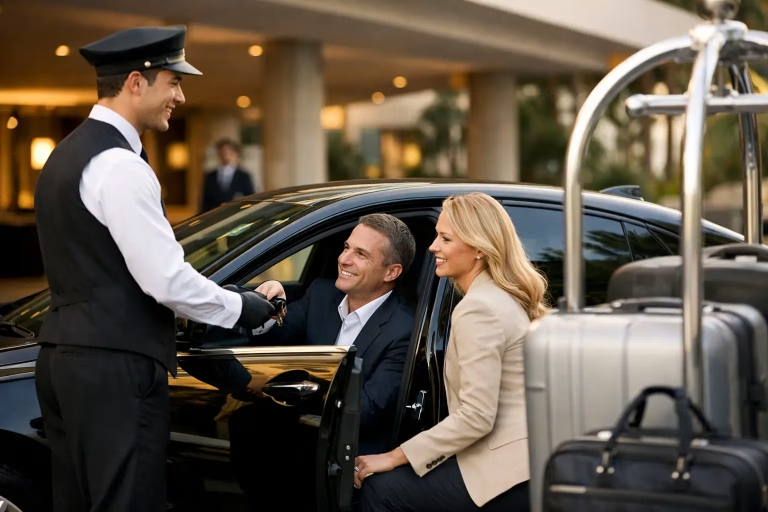
Guests notice the small things. They notice whether they are greeted promptly, whether their luggage is acknowledged, whether the attendant gives clear collection instructions, and whether their vehicle is returned without confusion. These are hospitality details, but they require operational discipline behind the scenes.
A quality service also records vehicle details at handoff, follows documented key-control procedures, and maintains a clear chain of responsibility while the vehicle is in its care. For hotel management, this reduces avoidable disputes and gives the team a reliable record when a guest has a question.
Safety, insurance, and trust cannot be treated as extras
Parking a guest’s vehicle means accepting responsibility for a valuable personal asset. That responsibility should be visible in the provider’s process, not presented only as a promise.
Trained valet teams should understand safe vehicle handling, defensive driving expectations, parking-lot rules, key security, and appropriate guest communication. They should also know when not to rush. During a high-pressure arrival rush, an attendant who cuts corners can create more damage than a short wait ever would.
Hotels should also confirm the scope of insurance coverage for vehicles under valet care and clarify the incident-reporting process before service begins. Coverage matters, but so does readiness: who documents an issue, who informs the guest, who coordinates with hotel management, and how quickly the matter is escalated. A provider with a defined response process helps protect the hotel’s reputation when an unexpected situation occurs.
Trust is reinforced through presentation as well. Uniformed staff, courteous language, professional posture, and controlled movement at the entrance signal that the hotel has invested in the guest experience. Valet service becomes part of the property’s hospitality identity rather than an improvised parking solution.
Technology improves control when it supports people
Digital ticketing and vehicle-tracking tools can shorten handoff times and improve visibility for both guests and management. They can help teams record plate numbers, vehicle locations, retrieval requests, and service timestamps with greater accuracy than informal paper processes alone.
However, technology is only effective when it is supported by a practical workflow. A system that staff cannot use during a busy curbside rush will not solve congestion. The best approach is simple: use tools that make ticketing, key management, and vehicle retrieval easier while keeping trained personnel focused on guests and traffic conditions.
For hotel leadership, reporting is another advantage. Data on peak arrival hours, average retrieval times, vehicle volume, and overflow frequency can reveal whether parking capacity or staffing assumptions need adjustment. This turns valet from an expense that is merely tolerated into an operational function that can be measured and improved.
What hotel managers should expect from a valet partner
Selecting a valet provider on price alone can create hidden costs. An under-resourced team may lead to delayed retrievals, inconsistent service, guest complaints, curbside congestion, and reputational damage that is difficult to quantify. The better evaluation is based on the provider’s ability to manage the entire arrival environment.
Hotel managers should expect a provider to assess the site, propose a staffing and traffic plan, train personnel to the property’s standards, and maintain supervision throughout the contract. The provider should be able to scale for seasonal demand, special groups, conferences, and private functions without treating each busy period as an emergency.
Communication with hotel teams is equally important. Front office staff need to know how to direct guests. Security needs clear lane and access procedures. Bell teams need a coordinated handoff point. When these functions operate separately, the guest experiences the gaps. When they work from one plan, the arrival feels calm even when volume is high.
Wagifli approaches valet operations as an extension of the hotel’s own hospitality standard. That means building site-specific procedures, deploying trained teams, and maintaining attention to safety, service speed, and the details guests see from the curb.
The trade-off between speed and a polished arrival
Fast service is valuable, but speed without control is not premium service. A team that rushes vehicles through a crowded entrance may reduce a queue for a moment while increasing risk, guest uncertainty, or staff confusion. The goal is controlled pace: prompt guest acknowledgment, orderly vehicle acceptance, safe parking, and reliable return.
In some properties, this may mean using a staging area during peak periods. In others, it may mean assigning an additional traffic coordinator rather than adding more drivers. The correct solution depends on the site, the parking layout, and the hotel’s guest mix. A tailored plan is more effective than copying an operating model from another property.
A well-run front drive gives guests a simple but lasting message: this hotel is prepared for their arrival. The vehicle is handled with care, the entrance remains composed, and the welcome begins before the guest reaches the lobby.