How Valet Parking Improves Hotel Arrivals
A hotel arrival is judged before a guest reaches the front desk. How valet parking improves hotel arrivals comes down to what happens in the first few minutes: whether vehicles move with purpose, luggage is handled attentively, and guests feel expected rather than left searching for an open space.
For hotel operators, the entrance is not simply a driveway. It is a high-visibility operating zone where guest experience, security, traffic flow, and brand perception meet. A professionally managed valet service brings order to that moment, especially during check-in peaks, events, weekend demand, and busy dining hours.
How Valet Parking Improves Hotel Arrivals
The most immediate benefit is reduced friction at the curb. Without a clear arrival process, cars stop unpredictably, guests unload luggage in traffic lanes, and drivers circle the entrance looking for instructions. The result can make even a well-designed hotel feel disorganized.
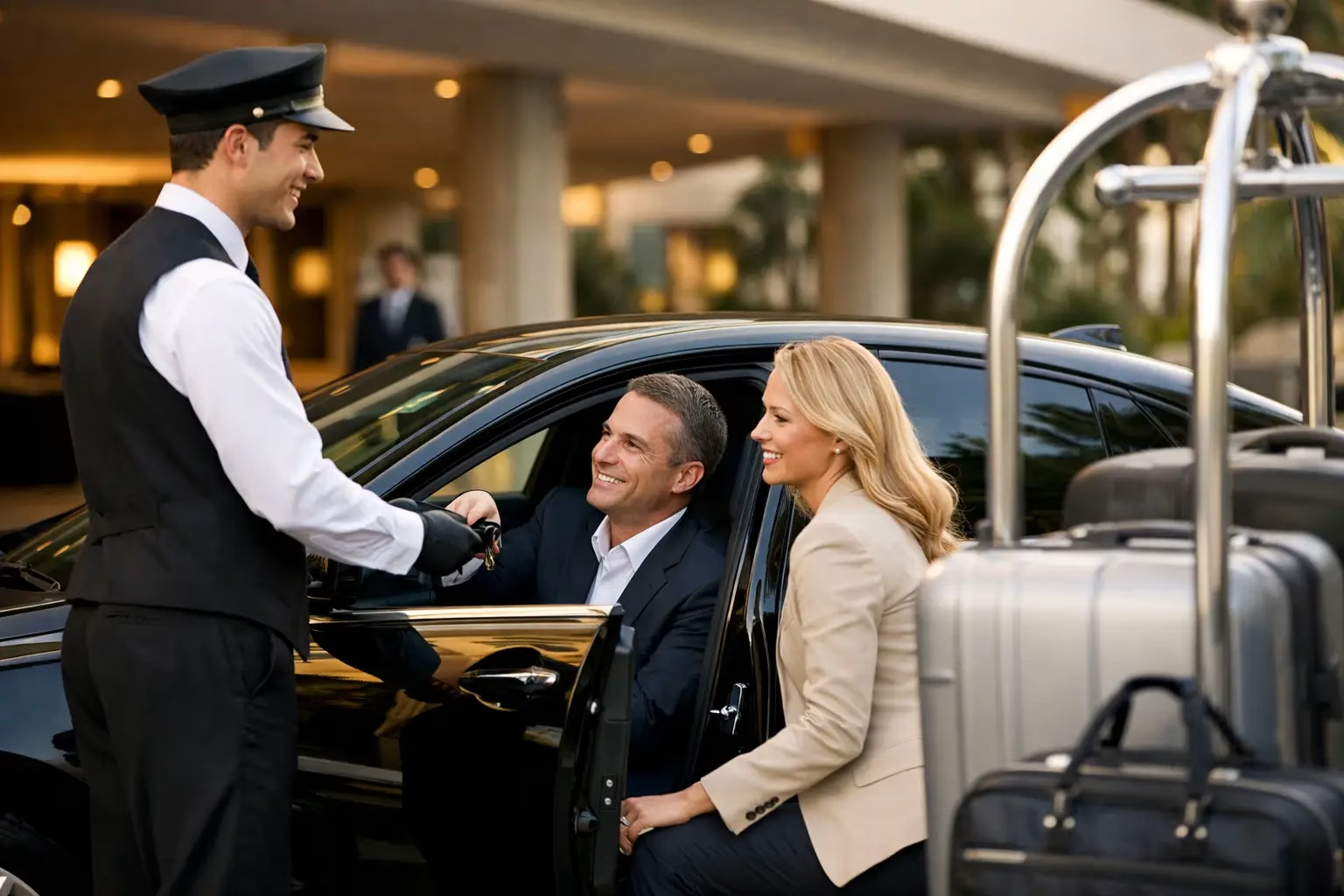
A trained valet team establishes a controlled sequence. Guests are greeted, vehicles are received, keys are documented, and cars are moved promptly to designated parking areas. The entrance remains available for the next arrival instead of becoming a queue of idling vehicles.
This matters most when arrivals come in waves. A business hotel may experience pressure before morning meetings and after late flights. A resort may see concentrated check-ins over a few afternoon hours. Properties hosting weddings, conferences, or private dinners can face a sudden increase in vehicles that exceeds normal parking patterns. In each case, valet parking gives the hotel a practical way to manage demand without asking guests to solve a parking problem on their own.
A Better First Impression Starts at the Curb
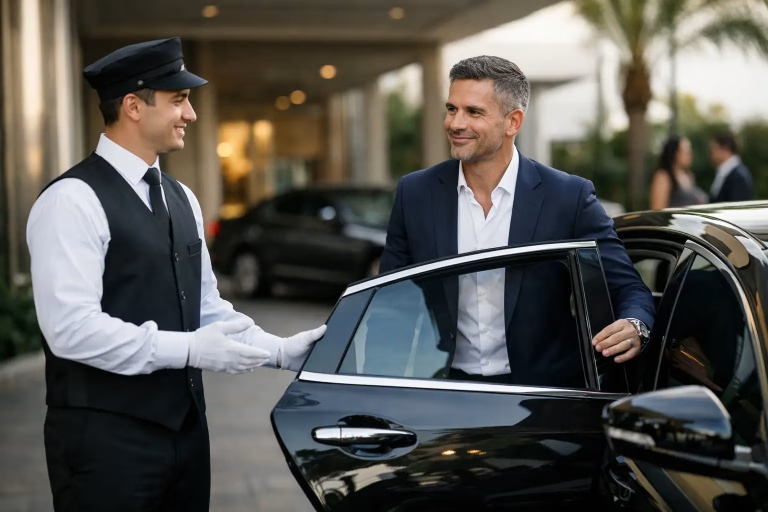
Guests often remember how a property made them feel before they remember the lobby decor. A courteous valet who opens the door, acknowledges the guest, and handles the vehicle with care signals that the hotel is attentive to details.
That signal is especially valuable for luxury, business, and full-service properties, where the guest expects an arrival experience that reflects the rate, reputation, and service promise of the hotel. The service should feel polished, but never theatrical. Clear communication, professional appearance, controlled movement, and respectful handling of every vehicle are what create confidence.
Valet service also supports the front desk by giving guests a more settled start. Instead of arriving frustrated after navigating a crowded parking area, they can step into the lobby ready to check in. This improves the tone of the interaction for both guests and hotel staff.
Curbside Control Protects the Guest Experience
A hotel entrance can become difficult to manage when several activities compete for the same space. There may be airport transfers, taxis, ride-share vehicles, restaurant visitors, delivery vehicles, tour buses, and guests checking in or out with luggage. Assigning all of this activity to an unstructured curb creates delays and safety concerns.
Professional valet operations organize the space around real traffic patterns. Teams direct vehicles into appropriate lanes, preserve access for emergency routes, coordinate with bell staff and security, and prevent long stops where they create congestion. Rather than reacting after a queue forms, the operation is designed to anticipate it.
The right plan depends on the property. A compact urban hotel may need rapid vehicle turnover and off-site or shared parking coordination. A large resort may need separate arrival points for guests, VIPs, groups, and service vehicles. Hotels with active restaurants often need to distinguish overnight guests from short-stay dining traffic. A standard staffing model is rarely enough.
This is why site assessment matters. Entry and exit paths, parking capacity, peak arrival windows, valet stand placement, key-control procedures, and communication protocols should be considered before service begins. The goal is not merely to park more cars. It is to maintain a calm, predictable arrival environment under pressure.
Faster Vehicle Handling Without Rushing the Guest
Speed matters at the entrance, but speed alone is not quality. A valet team that rushes guests, loses track of keys, or handles vehicles carelessly can damage the experience it is meant to improve.
The better measure is controlled response time. Guests should know where to stop, who is assisting them, and what to expect when they need their vehicle returned. Staff should have a reliable process for issuing tickets, recording vehicle information, identifying parking locations, and coordinating retrieval requests.
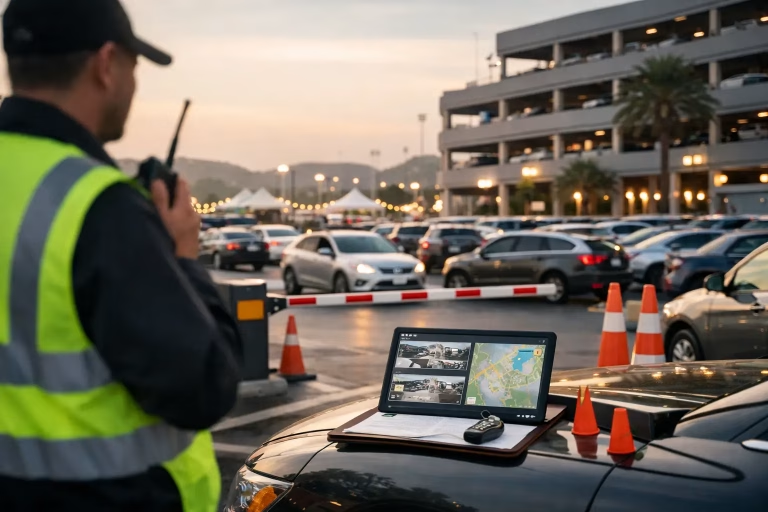
Digital ticketing and operational tools can strengthen that process. Accurate records reduce the risk of confusion during busy periods, while faster retrieval coordination helps guests avoid long waits at departure. For hotel management, these tools also provide more visibility into vehicle volume and demand patterns.
Technology, however, does not replace trained people. The guest still notices the professionalism of the greeting, the care shown around luggage, and the confidence of the person receiving the vehicle. The strongest service combines disciplined staff training with systems that support accuracy.
Valet Parking Supports Safety, Accountability, and Trust
Handing over a vehicle requires trust. Hotel guests expect their property to be treated responsibly, and hotel leadership needs assurance that every handoff is documented and managed according to clear standards.
A professional valet operation should include trained drivers, defined vehicle-handling procedures, secure key management, and insurance coverage while vehicles are under its care. These safeguards are not background details. They are central to protecting the guest relationship and the hotel’s reputation.
Accountability becomes even more important in high-volume settings. When dozens or hundreds of vehicles arrive within a short window, informal processes create avoidable risk. Clear ticketing, controlled key custody, assigned responsibilities, and documented incident procedures help the operation remain reliable when demand rises.
For hotels in Saudi Arabia, this discipline can be particularly valuable during major events, holiday periods, and high-occupancy seasons. Guests may arrive with families, luggage, and tight schedules, while the property is balancing local visitors, international travelers, and event traffic. A prepared valet partner helps the hotel maintain its service standards when the entrance is under its greatest strain.
Operational Relief for Hotel Teams
Valet parking is often viewed as a guest-facing amenity, but it also relieves pressure on internal teams. Front desk staff can focus on check-in. Bell staff can focus on luggage and guest assistance. Security teams can concentrate on access and safety instead of constantly redirecting vehicles.
This division of responsibility is valuable because curbside issues spread quickly through an operation. A traffic backup can delay a guest, frustrate a driver, interrupt a concierge, and create complaints that reach the front desk. When valet management owns the vehicle flow, hotel departments can coordinate from clearer roles.
The service also gives management better flexibility. Staffing can be adjusted for occupancy forecasts, banquet schedules, restaurant reservations, or seasonal peaks. A hotel does not have to treat valet as a fixed, one-size-fits-all expense. It can be designed around the property’s actual demand and service level.
That said, valet is not necessary for every hotel in the same form. A limited-service property with abundant self-parking may benefit more from peak-hour assistance than from a full-time valet stand. A luxury city hotel with constrained parking may require a dedicated team and detailed traffic plan every day. The right model should match the guest profile, physical site, and operational priorities.
Turning Arrival Into Part of the Hotel Brand
The arrival experience is one of the few moments when a hotel can visibly demonstrate its standards before asking anything of the guest. It shows whether the property is prepared, respectful of time, and capable of handling details with care.
When valet parking is planned as part of hospitality rather than treated as an isolated parking function, it reinforces the hotel’s entire service promise. The guest sees an organized entrance, receives an attentive welcome, and enters the lobby with confidence that the stay is being managed well.
For operators, that is the real value. A disciplined valet program does more than move vehicles. It protects the curb, supports staff, reduces avoidable friction, and gives every arriving guest a reason to feel that the hotel was ready for them.
A tailored operating plan from a specialist such as Wagifli can help hotel leaders set the right staffing levels, traffic procedures, safety controls, and guest-service standards before the next high-demand arrival period tests the entrance.