
دراسة حالة إدارة وصول مؤتمر What Works
A دراسة حالة إدارة وصول مؤتمر is rarely about parking alone. It is about what happens in the first minutes of a guest’s relationship with the event. When several hundred attendees arrive within the same narrow window, a congested entrance can weaken the entire experience before registration begins. When arrivals are controlled with clear roles, trained valet staff, and a site-specific traffic plan, the entrance reflects the professionalism of the conference itself.
This representative case examines how a conference organizer can address a common operating challenge: high-volume vehicle arrivals at a premium venue with limited curb space and a guest list that includes executives, sponsors, speakers, and VIPs. The details vary by venue, but the operational lessons apply to conferences across Saudi Arabia where hospitality standards and event schedules leave little room for delays.
The operating challenge behind a conference entrance
The conference was scheduled to begin at 9:00 a.m., but the pressure point was not the opening session. It was the 45 minutes before it. Guests arrived by private vehicle, taxis, and corporate transport, often while checking messages, locating invitations, or coordinating with colleagues. A few late arrivals could be absorbed. A large group arriving at once could quickly block the main entrance.
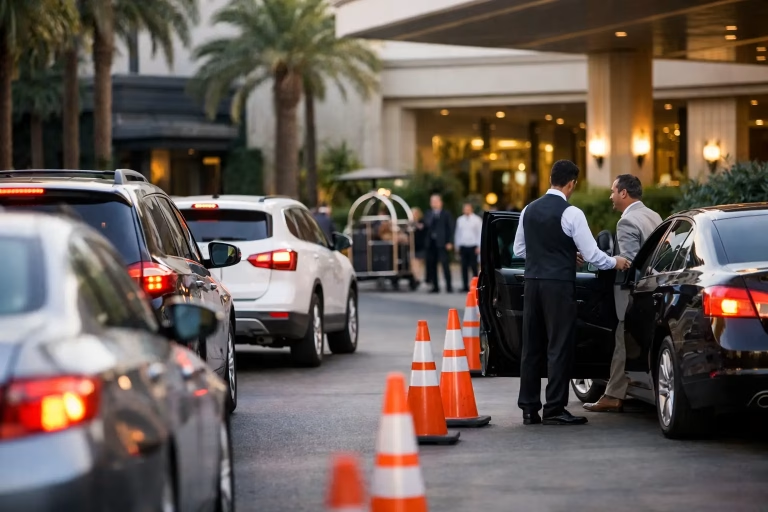
The venue had a single primary drop-off lane, a secondary access point for service traffic, and parking areas located beyond the visible entrance. Without a managed arrival plan, drivers would stop too long at the curb, guests would cross active lanes unpredictably, and vehicles waiting for a space would spill back toward public roads.
For the organizer, the risk was broader than inconvenience. Delays affect speaker schedules, registration flow, security procedures, and sponsor expectations. They also create an avoidable perception that the event is underprepared. This is why conference access management should be treated as part of the guest journey, not as a last-minute transport task.
دراسة حالة لإدارة وصول مؤتمر تحت ضغط الذروة
The first decision was to separate the arrival experience into distinct operating lanes rather than asking every vehicle to follow the same path. The main curb was reserved for quick guest drop-off and valet handover. A clearly directed route handled self-parking traffic, while VIP vehicles and speakers received a controlled arrival sequence coordinated with the event team.
This distinction matters because not every guest has the same need. A keynote speaker may require a direct escorted route to a backstage entrance. A sponsor delegation may arrive in several vehicles at once. A standard attendee needs a prompt, courteous handover and a clear indication of where to proceed next. Combining these movements at one curb creates confusion even when the parking area itself has enough capacity.
The operating plan also accounted for the timing of arrivals. Conference attendance does not usually rise at a steady pace. It peaks sharply before the opening session, then again before afternoon sessions, networking receptions, and closing programs. Staffing for average traffic rather than peak traffic is one of the most common causes of entrance congestion.
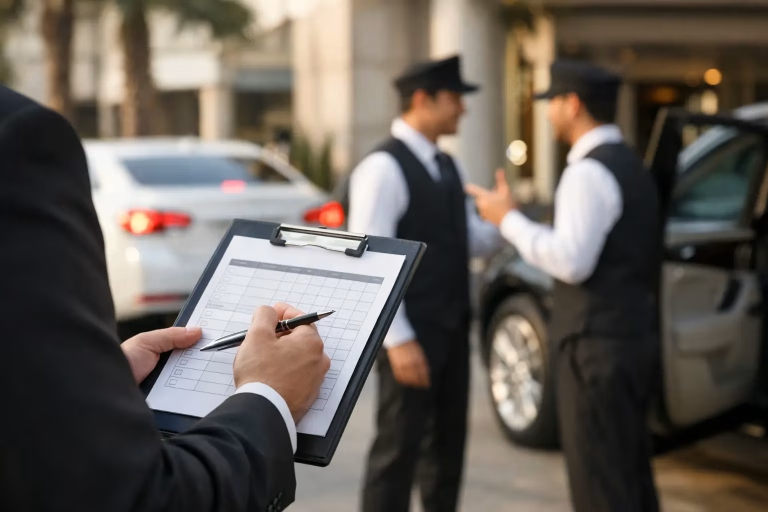
A professional valet operation adjusts to these peaks by assigning visible roles: an arrival lead, curbside attendants, vehicle runners, parking coordinators, and a supervisor in direct communication with the event organizer. This creates accountability at each handoff. Guests are welcomed, vehicles are documented, keys are controlled, and the curb remains available for the next arrival.
Designing the arrival plan before the first vehicle arrives
The strongest result in this case came from planning the site as an operating environment, not simply counting parking spaces. Capacity matters, but it is only one part of the question. The team needed to understand where cars could queue safely, how long a vehicle could remain at the curb, where pedestrians would walk, and what would happen if the main lot approached capacity.
Before the event, the operations team reviewed the venue layout and established a vehicle flow that avoided conflicting movements. Entry and exit routes were identified, staging points were selected, and staff positions were planned around real sightlines rather than a generic floor plan. Signage supported the team, but it did not replace trained staff. At high-volume moments, guests follow people more readily than signs.
The event organizer also provided expected attendance, registration timing, VIP protocols, speaker arrival windows, and any restrictions imposed by the venue. This information allowed the valet team to build a realistic staffing schedule. A 500-guest conference with staggered registration has different requirements from a 500-guest conference where most attendees are instructed to arrive at 8:30 a.m.
There is a trade-off here. Assigning more staff can shorten curbside wait times and provide a more elevated welcome, but unnecessary staffing adds cost without improving the guest experience. The right plan is not the largest team. It is the team sized to the venue, guest profile, parking distance, and concentration of arrivals.
The arrival sequence that protects guest experience
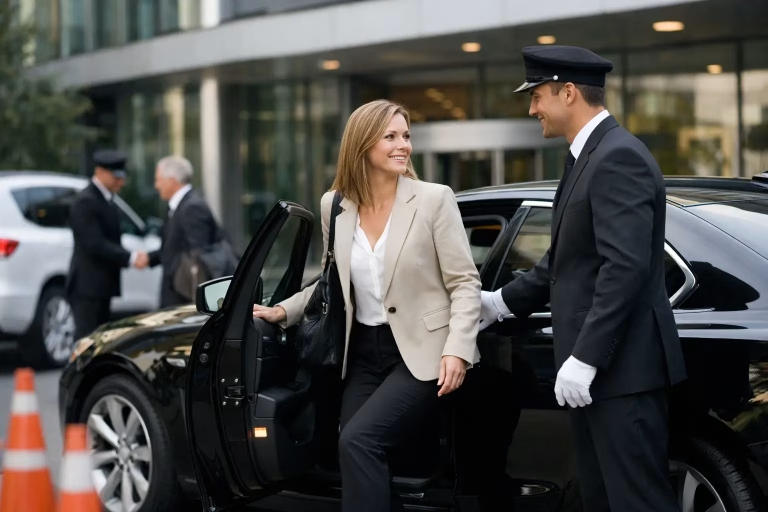
At the curb, speed should never look rushed. Guests expect a polite greeting, clear direction, and confidence that their vehicle is being handled responsibly. The most effective sequence is simple: receive the vehicle, record the required details, assist the guest with immediate direction, and move the vehicle from the handover point without delay.
For conference settings, the valet ticketing process must support both service quality and operational control. A ticket or digital record connects the guest to the vehicle while giving the team a reliable way to manage retrieval later. It also reduces avoidable questions during departure, when many guests may request their vehicles within the same short period.
Safety and insurance are part of this promise. Guests are placing valuable property in the care of the operating team, often at a venue they are visiting for the first time. Trained drivers, controlled key handling, documented procedures, and clear responsibility give organizers confidence that the arrival experience is not being delivered informally.
At the same time, the curbside team must stay connected to registration, security, and venue management. If registration is temporarily backed up, attendants can encourage guests to proceed efficiently rather than wait inside vehicles. If a VIP convoy is approaching, the curb can be prepared in advance. If a parking zone fills, staff can redirect traffic before drivers reach a dead end.
Measuring performance beyond the parking count
A successful conference entrance is not defined only by how many cars fit in a lot. It should be evaluated through the guest experience and the stability of the operation. Useful measures include average curbside handover time, queue length during peak periods, time from vehicle request to retrieval, incidents or near-misses, and the number of guest complaints related to arrival or departure.
These indicators reveal different issues. A short handover time with a long vehicle retrieval time may indicate that cars are being parked too far away or without an organized retrieval sequence. A low complaint count may look positive, but it should be reviewed alongside traffic observations. Guests may avoid complaining while still leaving with a poor impression.
For the organizer in this case, the key improvement was visibility. Rather than discovering congestion after it formed, the supervisor could see the arrival pattern develop and shift staff before the curb became blocked. This is the value of operational leadership on site. A plan has limited value if no one owns the decisions when conditions change.
Departure deserves the same discipline
Many conferences invest in a polished welcome and then underestimate the final 20 minutes. When a keynote ends, a lunch break begins, or a full-day program closes, guests often move to the valet desk simultaneously. A poorly managed exit can erase much of the positive impression created at arrival.
The departure plan should begin before guests request their vehicles. The team can anticipate high-demand periods from the agenda, position vehicles strategically, and maintain communication between the valet desk and parking areas. For VIPs, speakers, and guests with fixed transport schedules, advance coordination prevents them from waiting at the curb while their vehicle is still being located.
This does not mean every car should be brought forward too early. Excessive staging can overload the curb and create its own safety problem. The balance depends on space, weather, vehicle volume, and the timing of guest departures. Good management keeps the queue moving while preserving a composed, welcoming environment.
For organizers, the practical question is not whether valet service is necessary in every conference format. It is whether the venue entrance can absorb the expected arrival pattern without compromising safety, schedule, or the guest’s first impression. When the answer is no, a tailored access and valet plan turns a vulnerable moment into a controlled extension of the event’s hospitality.