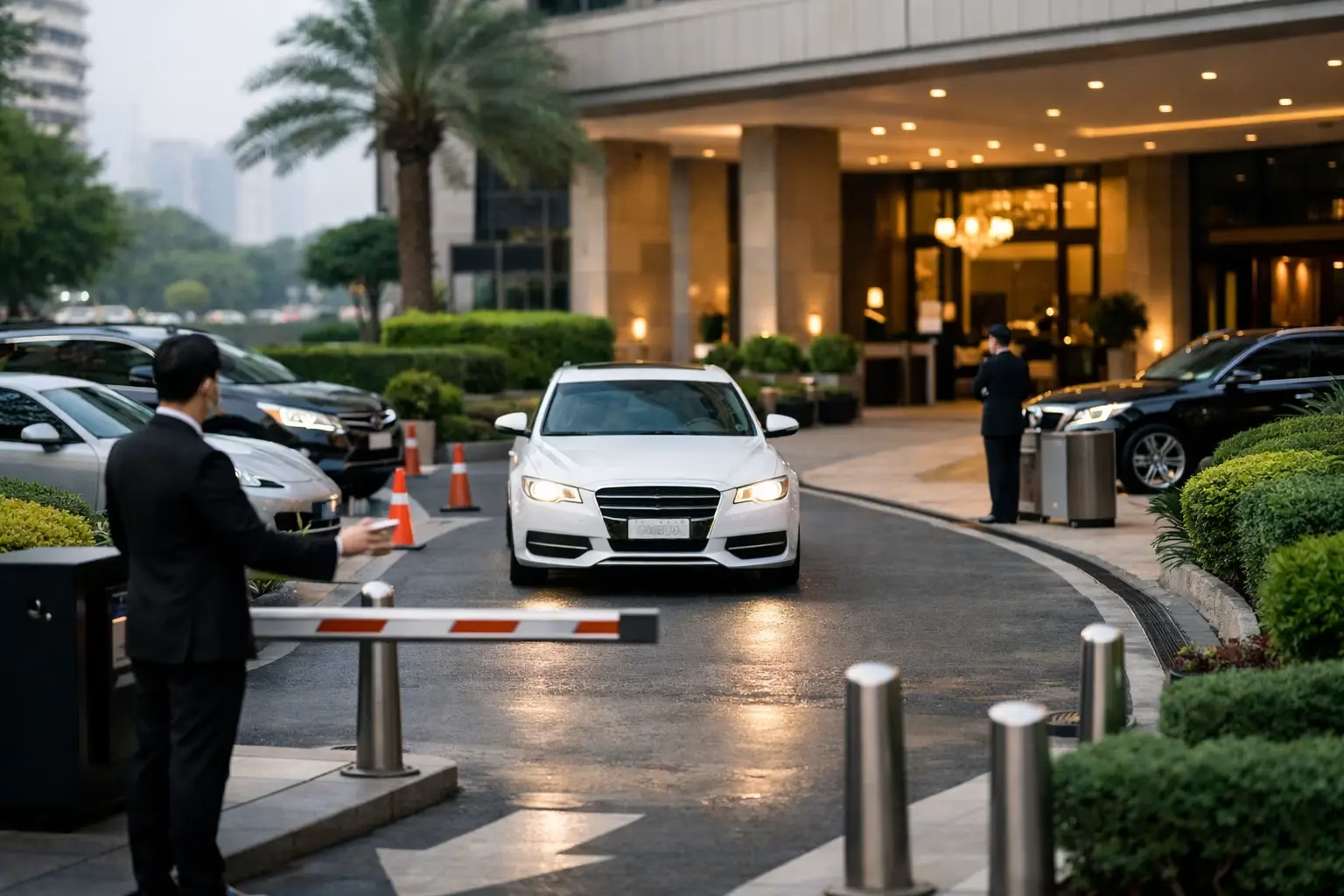
دراسة حالة تنظيم مواقف فندق لرفع جودة الوصول
The guest’s opinion of a hotel begins before the lobby door opens. A vehicle waiting in an unclear drop-off lane, a driver searching for a space, or luggage unloaded beside moving traffic can turn a premium arrival into a frustrating one. This دراسة حالة تنظيم مواقف فندق examines how a hotel can treat parking as a managed part of hospitality rather than an operational afterthought.
The scenario reflects a common challenge for full-service hotels: strong arrival peaks around check-in, dining hours, weekends, weddings, and corporate functions, with a limited curbside area and a parking supply that is adequate on paper but difficult to use under pressure. The issue is rarely just the number of spaces. It is the lack of a coordinated flow from the street to the entrance, from key handover to vehicle placement, and from a guest’s request to the return of the vehicle.
The operational problem behind the crowded entrance
Consider a hotel with a main entrance shared by overnight guests, restaurant visitors, event attendees, ride-hailing vehicles, and service deliveries. During normal periods, the parking operation may appear manageable. The pressure becomes visible when several arrivals occur at once: cars stop in a second lane, guests wait without knowing where to go, and the front desk receives calls about delayed vehicle retrieval.
For hotel management, this creates more than a traffic concern. The entrance loses its sense of order, staff spend time solving avoidable problems, and the first interaction with the property feels inconsistent with the standard promised inside. Security risk also rises when keys, vehicles, pedestrian movement, and loading activities are handled without clear ownership.
A successful solution must therefore balance four priorities: guest comfort, road safety, speed of movement, and responsible vehicle custody. Improving one priority at the expense of the others is not a lasting fix. For example, adding attendants may make arrivals feel faster for a short period, but it will not solve congestion if the parking layout, staging rules, and retrieval process remain undefined.
دراسة حالة تنظيم مواقف فندق: designing the arrival flow
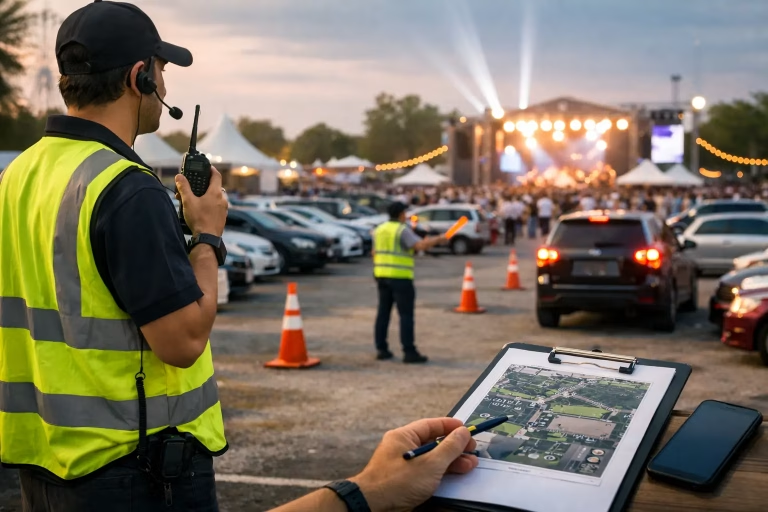
The first step in this hotel parking case study is a site assessment conducted during actual peak periods, not only during quiet hours. The assessment maps each vehicle movement: where cars enter, where passengers get out, where luggage is handled, where keys are recorded, where vehicles wait before parking, and how they return to the curb.
This observation often reveals small constraints with major consequences. A poorly placed sign may cause guests to stop before reaching the valet point. A single driveway can become blocked because arriving and departing vehicles compete for the same space. A restaurant guest may be directed to the same lane as a conference bus, despite having entirely different dwell times.
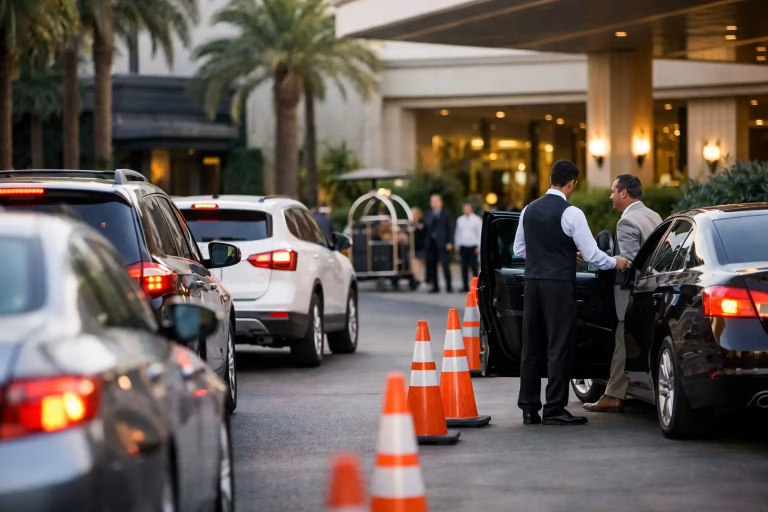
The operating plan separates the entrance into defined zones. The curbside zone is reserved for short passenger drop-off and handover. A staging zone holds vehicles briefly when the curb reaches capacity. A protected pedestrian route keeps guests and luggage away from active traffic. The parking zone is organized by retrieval priority, with short-stay and high-turnover vehicles positioned differently from overnight vehicles.
The exact layout depends on the property. A city hotel with constrained land needs a tighter staging strategy than a resort with a larger surface lot. A hotel hosting frequent events may need a dedicated arrival plan for ballroom guests. The objective is not to impose one template, but to make every movement predictable for both staff and guests.
Clear roles prevent a crowded curb
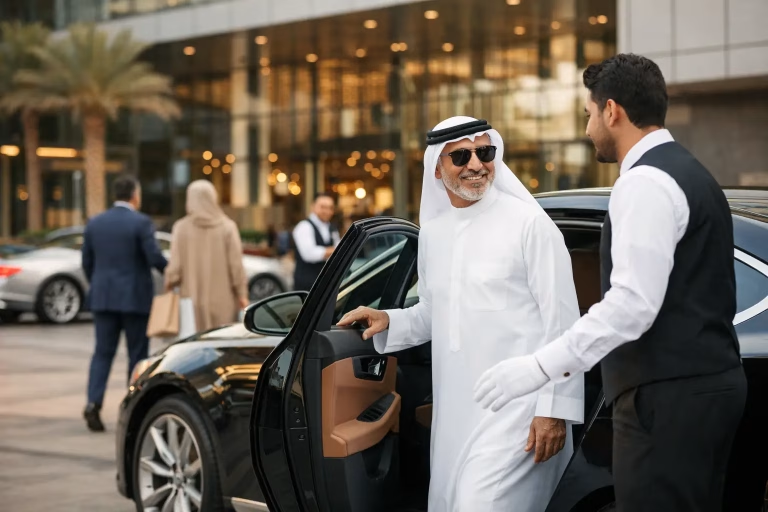
The valet team works best when each role has a defined purpose. One attendant welcomes the vehicle and confirms the guest’s needs. Another manages the curb and keeps traffic moving. Drivers transport vehicles to assigned parking areas, while a supervisor monitors queue length, vehicle status, guest requests, and exceptions.
Without this division, every attendant is pulled toward the most visible task: receiving the next car. That leaves no one accountable for the curb, for key control, or for retrieval coordination. Under high demand, the result is a fast-looking operation that becomes disorganized within minutes.
A supervisor also gives hotel leadership a direct operational point of contact. If an event begins early, a VIP arrival is expected, or rain changes the guest flow, the plan can be adjusted immediately instead of relying on improvised instructions among multiple departments.
Technology supports speed and accountability
A ticketing process is not merely a receipt for the guest. It is the record that connects the vehicle, driver, parking location, arrival time, and return request. Digital tools can reduce manual searching, improve visibility across the team, and create a more reliable chain of custody.
At vehicle handover, the attendant records the required details, checks the visible condition of the vehicle according to the agreed procedure, and issues a ticket or digital reference. The guest knows how to request retrieval, and the team knows where the vehicle is assigned. This is particularly valuable when several parking areas are used or when guests stay for multiple days.
However, technology should support trained people, not replace them. A digital system cannot compensate for poor curb discipline, unclear zones, or untrained drivers. The hotel should choose tools that fit its traffic volume and service standard. A smaller boutique hotel may need a simple, disciplined ticket process, while a large property with frequent events benefits from live vehicle status and organized retrieval queues.
Measuring performance beyond the number of parked cars
Hotels should evaluate parking operations through guest experience and operational control, not just the daily number of vehicles handled. Useful indicators include average arrival wait time, average retrieval time, curbside queue length at peak periods, the percentage of vehicles processed with complete records, and incident or damage reports.
These measures identify where the process is failing. Long retrieval times may indicate that vehicles are parked too far from the entrance, that key management is slow, or that requests are not reaching drivers quickly. A recurring curbside queue may point to event scheduling, insufficient staging capacity, or a drop-off zone used for waiting rather than active handover.
The hotel should review these results with its valet partner regularly, especially after major events and seasonal peaks. This makes improvement part of the operating routine rather than a reaction after complaints appear.
The value of trained vehicle custody
For a hotel, guest vehicles are entrusted assets. Professional valet service requires trained drivers, documented handling procedures, insurance coverage while vehicles are under care, and clear escalation steps if an unusual situation occurs. These elements protect the guest, but they also protect the hotel’s reputation and internal team.
Training should cover more than driving. Attendants need guest-service etiquette, traffic awareness, key control, vehicle condition procedures, and the judgment to recognize when a situation needs supervisory support. A respectful greeting and a confident explanation of the process are as important as moving a car efficiently.
This is where a specialist operator can make a meaningful difference. Wagifli approaches valet parking as an extension of the hotel’s hospitality standard, with site-specific planning, trained teams, and operating controls designed for busy guest environments.
What changed in the hotel experience
After the redesigned process is in place, the most visible improvement is not necessarily a dramatic change in the parking lot. It is the calm at the entrance. Guests understand where to stop. Attendants take ownership quickly. The curb remains available for the next arrival, and vehicle retrieval is managed as a scheduled service rather than an uncertain search.
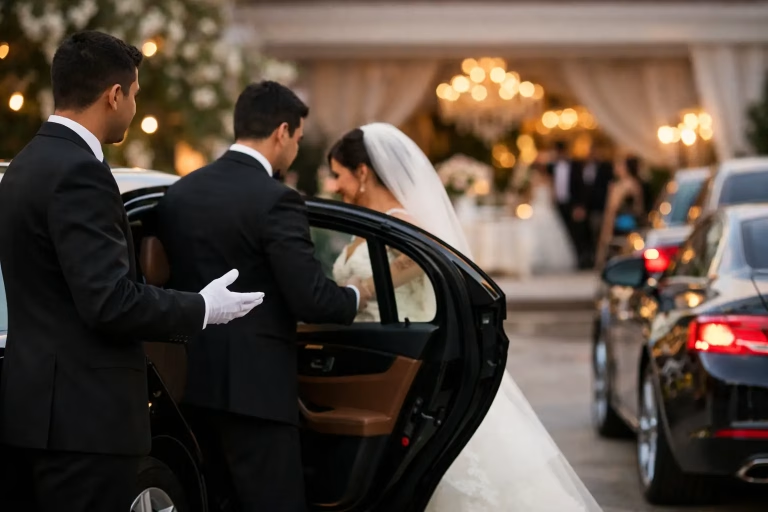
Hotel staff also gain time and clarity. The front desk no longer acts as the backup parking coordinator, security teams have defined traffic protocols, and event teams can share expected arrival volumes in advance. The operation becomes easier to scale for a wedding, conference, or holiday weekend because the fundamental rules are already established.
There are trade-offs. A higher service level may require more personnel during narrow peak windows, and dedicated staging space may reduce other uses of the driveway. Yet these choices should be assessed against the cost of congestion, guest dissatisfaction, safety exposure, and a weakened first impression. For many hotels, targeted staffing at the right hours is more effective than carrying the same team size throughout the day.
A well-organized parking operation does not call attention to itself. It gives each guest a composed welcome, gives the hotel control over a demanding moment, and lets the property’s service promise begin at the curb.