
مراجعة برامج إدارة خدمة الفاليه للمواقع المزدحمة
A search for “مراجعة برامج إدارة خدمة الفاليه” usually begins when a property has outgrown paper tickets, radio calls, and informal vehicle tracking. The right platform can shorten handoff times, create a clearer record of custody, and give management visibility into a part of the guest journey that is often judged in the first few minutes. But software alone does not create a premium arrival experience. It must support trained attendants, a disciplined traffic plan, and a service standard that holds under pressure.
For hotels, hospitals, restaurants, corporate campuses, and event venues, the question is not simply which valet system has the most features. It is which system fits the site, the volume of arrivals, the operating model, and the level of accountability expected by guests and leadership.
What valet management software should solve
A valet operation has two jobs happening at once: welcoming the guest and controlling the movement of valuable vehicles in a limited physical space. Good software brings structure to both. At the curb, it should record vehicle details quickly, assign a digital ticket, and capture the information attendants need without turning check-in into an interview. Behind the scenes, it should show where the vehicle was parked, who handled it, when it was requested, and whether a delay requires attention.
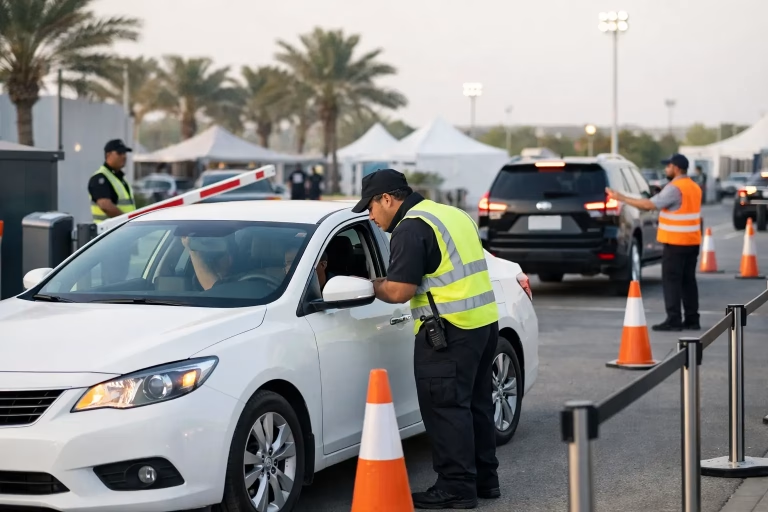
The value becomes more visible during peak periods. A wedding arrival, a busy restaurant dinner service, or a hospital visiting window can create a queue in minutes. If the team cannot see pending retrievals, available drivers, parking zones, and exceptions from one operating view, small delays can compound into a poor first impression.
Software is therefore most useful when it reduces uncertainty. It should help supervisors answer practical questions immediately: Which cars are waiting? Where is a requested vehicle? Has the guest been notified? Which area is nearing capacity? What happened during a service issue?
مراجعة برامج إدارة خدمة الفاليه: the criteria that matter
A credible review should look beyond the dashboard design. An attractive interface is useful, but reliability at the driveway matters more. Evaluate each platform against the realities of your operation rather than a generic feature checklist.
Ticketing and guest communication
Digital ticketing is the foundation. The system should issue a unique ticket quickly, record the vehicle’s plate, make, color, and relevant condition notes, and work comfortably on the devices attendants will actually use. Some properties need printed tickets as a backup; others prefer SMS-based retrieval requests or a QR code. The best choice depends on the guest profile and the pace of service.
Guest notifications can improve the retrieval experience, particularly at hotels, shopping destinations, and large events. Yet automated messages should never become a substitute for personal attention. A guest who is elderly, carrying children, recovering from an appointment, or leaving a formal event may need a staff member to confirm the process directly. Technology should support hospitality, not place another screen between the guest and the team.
Vehicle custody and risk controls
For any operation handling guest vehicles, accountability is nonnegotiable. Look for timestamped activity records that show check-in, parking, request, retrieval, and handoff. Driver assignment, vehicle condition photos, damage notes, and authorization records can also be valuable, especially for high-value vehicles or locations with elevated claims exposure.
There is a trade-off here. Requiring too many fields at arrival can slow the lane and frustrate guests. The practical approach is to make essential documentation fast and consistent, then reserve extended inspection steps for situations that genuinely require them. A well-designed operating procedure matters as much as the software setting.
Parking-zone control and capacity visibility
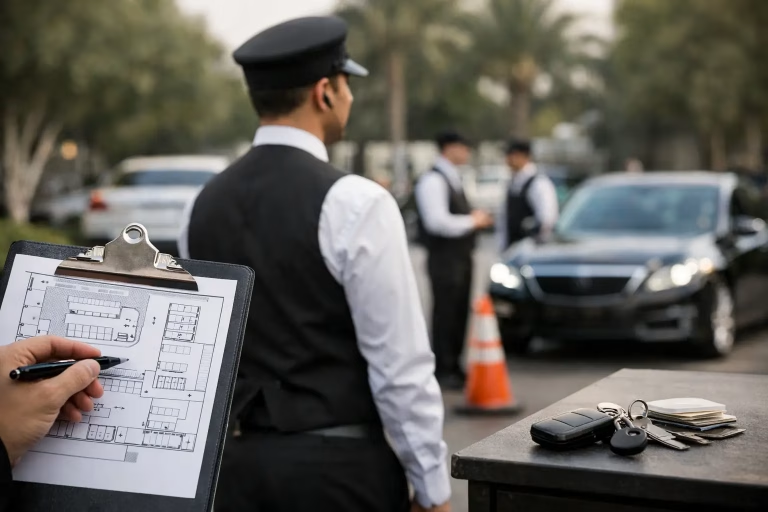
A valet system should reflect the physical reality of the property. Attendants need a simple way to identify parking zones, rows, levels, and temporary overflow areas. Supervisors need to see available capacity before the driveway becomes congested.
This is particularly relevant for venues in Jeddah, Makkah, and Madina where seasonal demand, major gatherings, and changing access conditions can create sharp volume swings. A platform that works well for a 40-car restaurant lot may be inadequate for a hotel or event site managing several parking areas and hundreds of arrivals in a short window.
Ask whether the system can adapt to your site plan. Can it separate hotel guests from event guests? Can it flag restricted areas? Can teams open temporary zones without confusing retrieval records? Flexible configuration is more valuable than a long list of features that cannot be used at the curb.
Dispatch and retrieval workflow
Retrieval is the moment guests remember. The platform should clearly prioritize requests, show the assigned driver, and track the time from request to delivery. Some systems include automated dispatch logic, while others depend on a supervisor assigning requests manually.
Automation can help at high volume, but it needs human oversight. A VIP departure, a family with a medical need, or a guest whose vehicle is blocked in may require a different response than the order in which requests appeared. The best workflow gives the supervisor visibility and control without requiring constant manual updates.
Reporting that leads to operational decisions
Reports are useful only if they improve the next shift. Focus on metrics that reveal service quality and capacity pressure: average check-in time, average retrieval time, peak arrival windows, cars managed per hour, pending requests, incident records, and zone utilization.
Be careful with averages alone. An average retrieval time may look acceptable while a small group of guests regularly waits far too long during the busiest period. A system that lets managers review performance by hour, zone, event, or service team provides a more accurate picture.
Common software approaches and their trade-offs
Valet management software generally falls into three practical categories. Dedicated valet platforms are built around ticketing, dispatch, vehicle tracking, and guest pickup. They tend to offer the closest fit for a professional valet operation, though the level of local support and integration capability should be verified before commitment.
Parking management platforms may offer stronger capacity analytics, payment functions, or integration with gates and access systems. They can suit larger facilities, but may feel less intuitive for attendants if valet workflow is not a core part of the product.
General field-service or custom-built tools can be adapted for basic tracking. They may cost less at first, but often require workarounds for ticketing, vehicle condition documentation, and rapid retrieval. For a low-volume site, that compromise may be reasonable. For a high-touch hospitality environment, it can shift too much burden back onto staff.
The right choice depends on whether valet is an occasional convenience or a visible extension of the property’s brand. When guests expect a polished welcome, a purpose-built workflow is usually easier to enforce and measure.
Questions to ask before selecting a platform
Before scheduling a demonstration, define your operating conditions. Estimate daily and peak vehicle volume, number of entrance lanes, parking areas, staff roles, and the typical time guests expect to wait. Identify where the current process fails: missing keys, unclear parking locations, delayed retrievals, limited reporting, or inconsistent incident records.
During the demonstration, ask the provider to show the busiest scenario, not just a clean single-car check-in. Have them walk through a queue of arrivals, a batch of simultaneous vehicle requests, a lost-ticket case, a vehicle condition note, a network interruption, and a temporary overflow zone. If the process becomes complicated in the demonstration, it will become harder at a live curbside during peak service.
Also confirm device requirements, offline capability, data access, user permissions, training time, implementation support, and the ability to export records. A platform that performs well only with constant vendor assistance may create an avoidable dependency for the property.
Software works best with an operating partner
A valet platform is not a replacement for site design, trained staff, insurance coverage, or leadership on the ground. It is the operating layer that makes those elements more visible and consistent. Without clear lane management, parking allocation, guest greeting standards, and escalation procedures, software can document disorder rather than prevent it.
This is why properties should evaluate technology alongside the team responsible for execution. An experienced service partner can configure ticketing fields around the venue, establish parking zones, train attendants on the actual workflow, and use reporting to adjust staffing before recurring bottlenecks affect guests. At Waqifli, that connection between disciplined operations and refined guest care is central to how valet service is planned.
Choose a system that your attendants can operate confidently, your supervisors can act on quickly, and your guests barely need to notice. The strongest result is not a more visible platform at the curb. It is a calmer arrival, a faster return of the vehicle, and a guest who leaves with greater confidence in the venue behind the service.