Guide to Insured Valet Services for Venues
The first few minutes of a guest’s visit can shape their view of the entire property. A backed-up driveway, unclear handoff, or concern about vehicle safety can undermine even the strongest hospitality experience. This guide to insured valet services explains what decision-makers should expect from a provider that takes responsibility for both the vehicle and the arrival experience.
For hotels, restaurants, hospitals, corporate facilities, and event venues, valet is not simply a parking function. It is a managed point of arrival where traffic flow, guest communication, staff conduct, safety, and accountability must work together under pressure.
What insured valet service should mean
Insurance is often treated as a reassuring phrase in a service proposal. It should be much more specific than that. An insured valet operation is one where the provider has appropriate coverage for vehicles while they are under its care, custody, and control, supported by operating procedures that reduce the likelihood of an incident in the first place.
The distinction matters. A policy alone does not create a professional service. If attendants are not trained, vehicle keys are handled informally, parking areas are not assessed, or supervisors are unavailable during peak periods, the operation still exposes the venue and its guests to avoidable risk.
A qualified provider should be able to explain the scope of its coverage clearly, including how incidents are documented, who is notified, and how claims are managed. The goal is not to create concern around every possible scenario. It is to give property managers and organizers confidence that accountability is established before the first guest arrives.
Why insurance affects more than vehicle protection
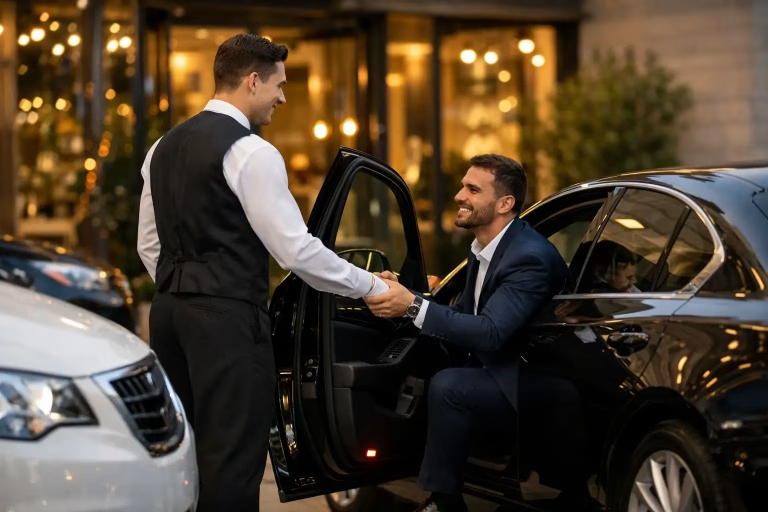
When a guest hands over a vehicle key, they are extending trust to the venue as well as the valet attendant. That trust has commercial value. A controlled, insured operation protects the guest’s property, but it also protects the reputation of the hotel, restaurant, hospital, or event organizer hosting them.
For a luxury restaurant, a minor delay or unclear response to a vehicle issue can change the tone of an otherwise excellent evening. For a hospital, parking confusion can add stress for patients and families who are already arriving under difficult circumstances. At a conference or wedding, the arrival period is highly concentrated, meaning one weak process can quickly turn into visible congestion.
Insurance supports confidence, but its strongest value appears when it is paired with disciplined operations. Guests should see an attentive greeting and timely retrieval. Behind that experience, the facility should have clear records, designated vehicle areas, trained personnel, and a responsible supervisor managing the operation.
A guide to insured valet services: what to verify
Before appointing a valet provider, ask practical questions that reveal how the service will perform on an ordinary busy day, not just how it appears in a proposal. The most useful conversations connect insurance to the provider’s daily controls.
Confirm the coverage and responsibility process
Ask what insurance applies while vehicles are in the valet provider’s possession and whether the limits suit the profile of vehicles expected at your location. A high-end hotel entrance, private wedding, or premium retail center may receive vehicles that require a higher level of consideration than a standard office site.
Also ask for the incident process. If a vehicle is damaged, what happens first? Who documents the condition, communicates with the guest, informs venue management, and follows through on resolution? A capable partner will have a calm, documented process rather than an improvised response.
Review staff training, not only staffing numbers
A large team is not automatically the right team. Staffing should match the site layout, projected vehicle volume, peak arrival windows, and service expectations. Training should cover safe vehicle movement, guest interaction, key control, ticketing procedures, escalation protocols, and conduct appropriate to the venue.
Attendants represent the host property at a highly visible moment. Their appearance, language, attentiveness, and ability to manage pressure are part of the guest experience. For this reason, trained teams are particularly valuable in hospitality settings and high-attendance events.
Examine key control and ticketing procedures
Keys should never depend on memory, informal handovers, or unmarked storage. A professional valet operation uses a traceable system that links the guest, vehicle, key, parking position, and retrieval request. Digital tools and organized ticketing can reduce retrieval time while giving management better visibility during busy periods.
The right method depends on the operation. A small private event may require a compact, closely supervised setup, while a hospital or hotel may benefit from a more structured ticketing and dispatch process. In either case, the essential standard is traceability.
Assess the parking plan before service begins
Insurance is only one layer of risk management. The physical parking plan often determines whether the operation remains orderly. A provider should assess entry and exit points, pedestrian crossings, vehicle stacking areas, available capacity, routes to off-site or overflow parking, and the areas where attendants can safely move vehicles.
This planning becomes especially important in dense urban areas and high-demand venues across Saudi Arabia, where arrival surges can be brief but intense. A plan that works for weekday hotel traffic may not work for a wedding reception, a major conference, or a weekend restaurant rush.
The operating details that guests notice
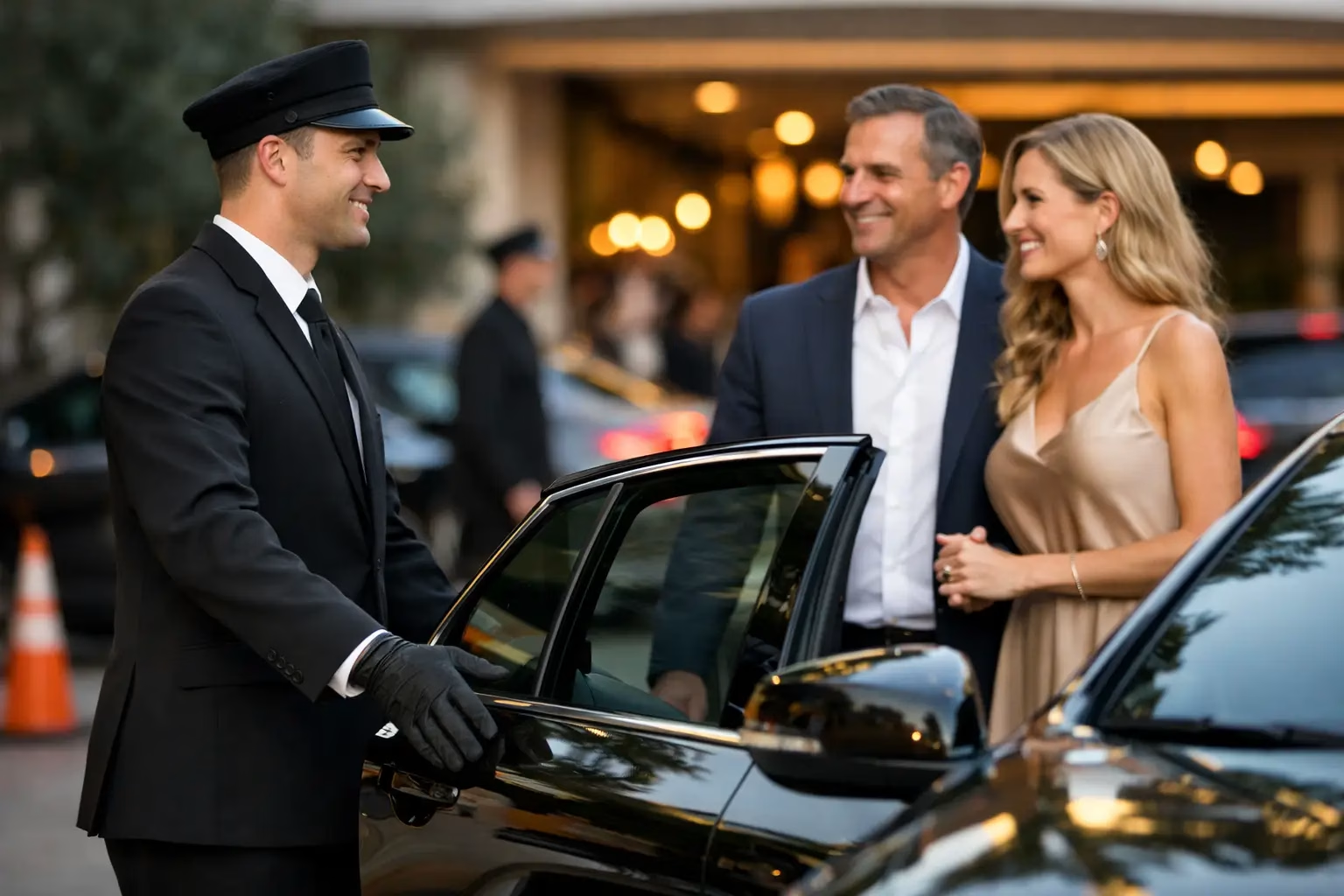
Guests may never ask about liability coverage or key-control logs. They will notice whether the entrance feels composed. They will notice if they are greeted promptly, if traffic keeps moving, and if their vehicle is returned without an uncomfortable wait.
That is why insured valet should be evaluated as a hospitality operation, not as a standalone security measure. The best providers combine safe vehicle handling with polished service, giving guests a clear sense that the venue anticipated their arrival.
For the property, this can ease pressure on front-desk teams, security personnel, restaurant hosts, and event coordinators. Instead of redirecting traffic or answering repeated parking questions, internal staff can focus on their core responsibilities while the valet team manages the curbside experience.
How service requirements differ by venue
There is no single valet model that fits every site. The service must reflect the nature of the guest journey and the operational constraints of the property.
Hotels often need a continuous operation that manages guest arrivals, departures, luggage coordination, and periods of concentrated check-in activity. Restaurants tend to face sharp peaks before and after dining hours, where speed and curbside organization are critical. Hospitals require a particularly considerate approach, with clear access for patients, visitors, and emergency routes.
Corporate facilities may prioritize employee access, visitor protocol, and predictable traffic at the beginning and end of the workday. Event venues require flexible staffing and a carefully timed arrival plan because hundreds of vehicles can reach the same entrance within a short window.
A provider such as Wagifli approaches these situations as tailored operating plans, matching trained teams, parking capacity, guest flow, and service standards to the site rather than placing attendants at the entrance without a wider framework.
Questions that help compare providers fairly
When comparing proposals, price should be considered alongside the actual level of responsibility included. A lower quote can become costly if it excludes sufficient supervision, appropriate insurance, traffic planning, or the staffing needed for peak demand.
Ask each provider how it calculates team size, how it handles overflow, what tools it uses for tracking vehicles, and how it reports incidents or service issues. Request clarity on supervisor availability and whether the provider can adjust the plan when attendance changes. For recurring operations, it is also reasonable to ask how performance is reviewed over time.
The answer should be specific to your property. General assurances about quality are less useful than a clear explanation of arrival flow, vehicle capacity, contingency planning, and guest communication.
Build confidence before the first vehicle arrives
An insured valet service is most valuable when guests never have reason to think about the insurance behind it. They simply experience a courteous welcome, an organized entrance, and the confidence that their vehicle is being handled responsibly.
Choose a partner that treats every key handoff as part of your property’s reputation. With the right coverage, trained personnel, clear controls, and a parking plan built around your real operating conditions, valet becomes a dependable extension of the hospitality your guests came to receive.