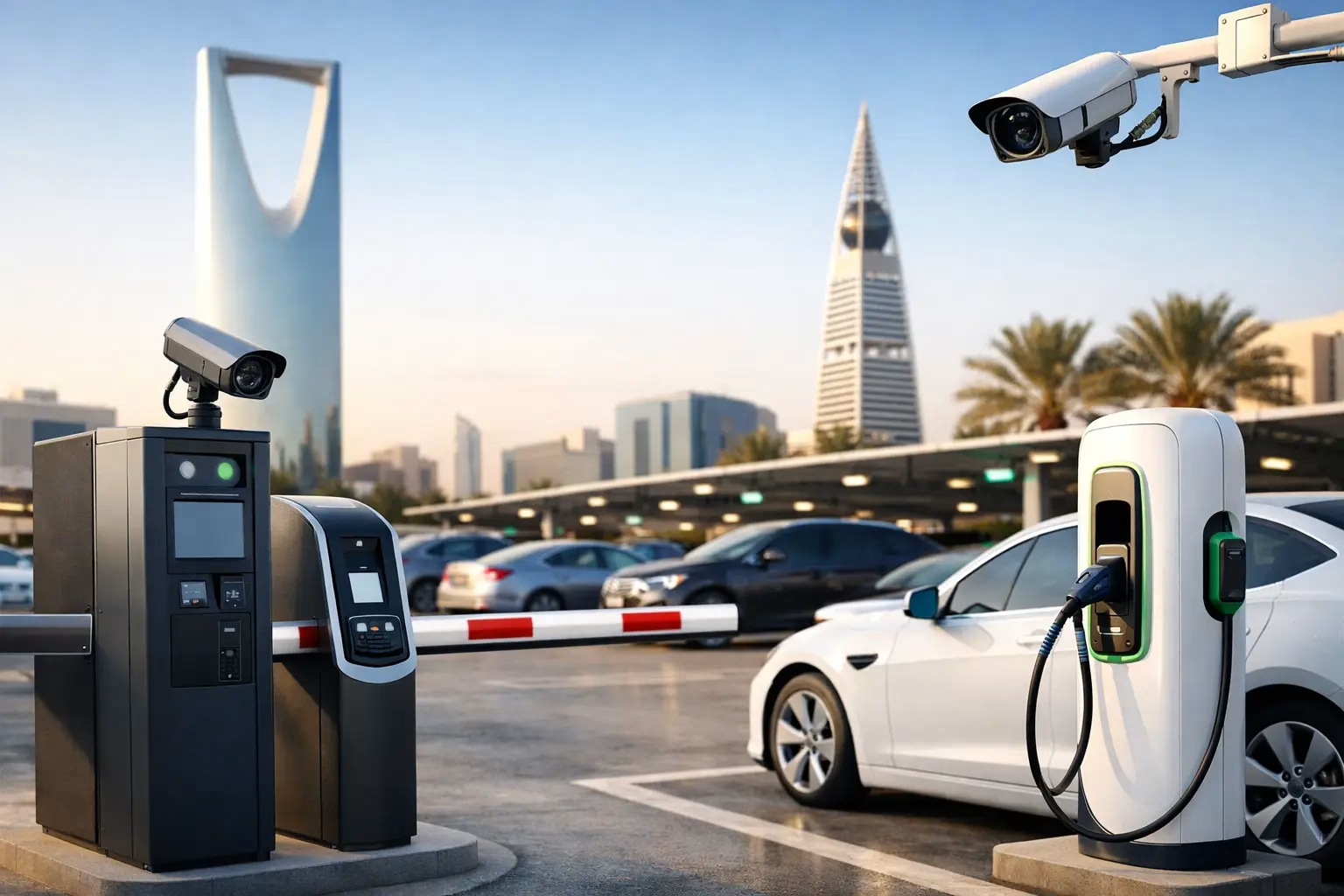
Parking Technology Trends in Saudi Arabia
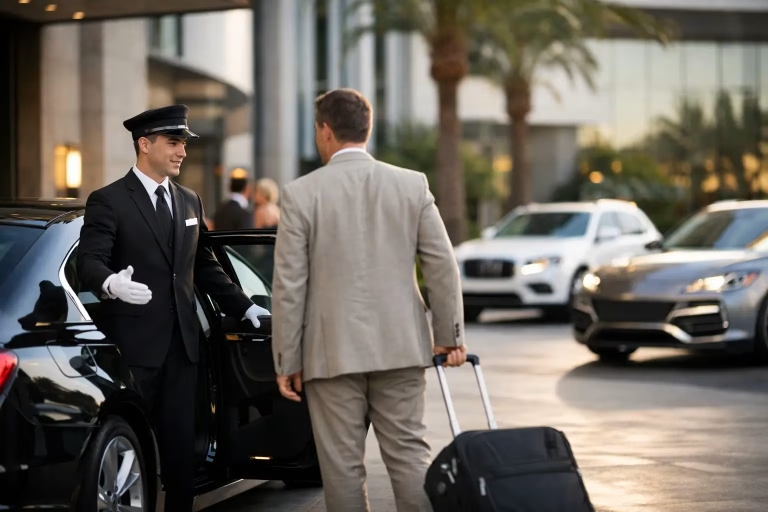
A guest’s experience of a hotel, hospital, restaurant, or event often begins before they reach the entrance. It begins in the driveway: with the clarity of directions, the pace of vehicle handoff, and the confidence that their car is being handled professionally. That is why parking technology trends in Saudi Arabia matter to more than facility managers. They directly affect guest satisfaction, site capacity, operating costs, and the reputation of the venue.
For decision-makers, the priority is not adding technology for its own sake. The right system should reduce friction at peak times, give teams better control over vehicle movement, and preserve the polished hospitality experience guests expect. The strongest results come when technology supports disciplined operations rather than attempting to replace them.
Parking Technology Trends in Saudi Arabia: A Shift Toward Better Arrival Experiences
Saudi Arabia’s hospitality, retail, healthcare, and events sectors are handling increasingly complex arrival patterns. Major developments, busy commercial districts, destination restaurants, conferences, and private celebrations can all create short but intense periods of vehicle demand. A parking plan that works on an average weekday may fail during a weekend rush, a large event, or a VIP arrival window.
Technology is helping operators move from reactive parking management to more informed, controlled decision-making. Digital tools can show where capacity is available, document vehicle custody, reduce manual bottlenecks, and provide better visibility into how a site performs under pressure.
Still, no two properties need the same setup. A hospital needs fast turnover and accessible patient access. A luxury hotel must protect a refined arrival experience. A wedding venue may need to process hundreds of vehicles within a narrow time frame. The technology should follow the operational reality of the site.
Digital Valet Ticketing Is Becoming an Operational Standard
Paper tickets have long been familiar, but they create avoidable risks. They can be misplaced, become unreadable, slow down retrieval, and offer limited visibility when a guest needs an update. Digital valet ticketing is increasingly being adopted because it creates a clearer record from the moment a vehicle is received until it is returned.
A well-designed digital ticket can document the vehicle details, arrival time, assigned location, and handoff status. Depending on the workflow, it may also support guest notifications and faster vehicle requests. For the operator, this means fewer verbal exchanges between team members and a more reliable chain of custody.
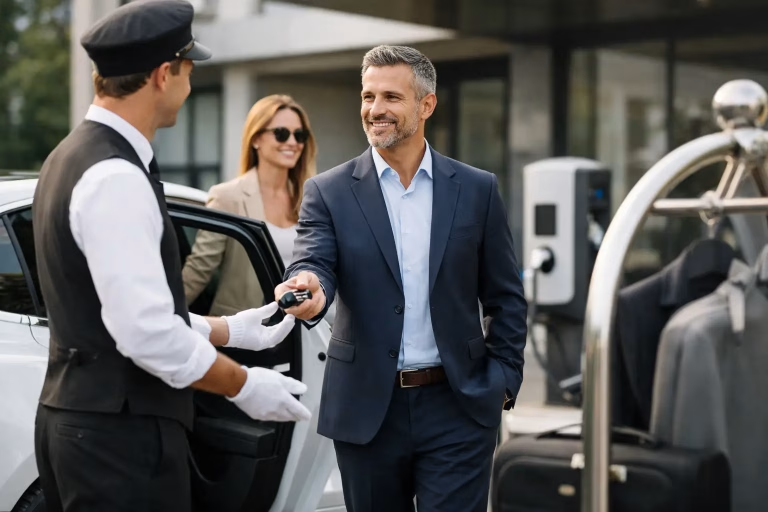
The guest benefit is equally important. At a restaurant or event, nobody wants to wait outside wondering whether their request was received. At a hotel, the return of the vehicle should feel coordinated and attentive, not improvised. Digital systems help the valet team respond with speed while keeping the interaction personal.
Technology does not remove the need for trained attendants. It gives them better information. A professional team still needs clear roles, careful vehicle handling, polished communication, and the ability to make sound decisions when traffic conditions change unexpectedly.
Real-Time Capacity Visibility Helps Prevent Driveway Congestion
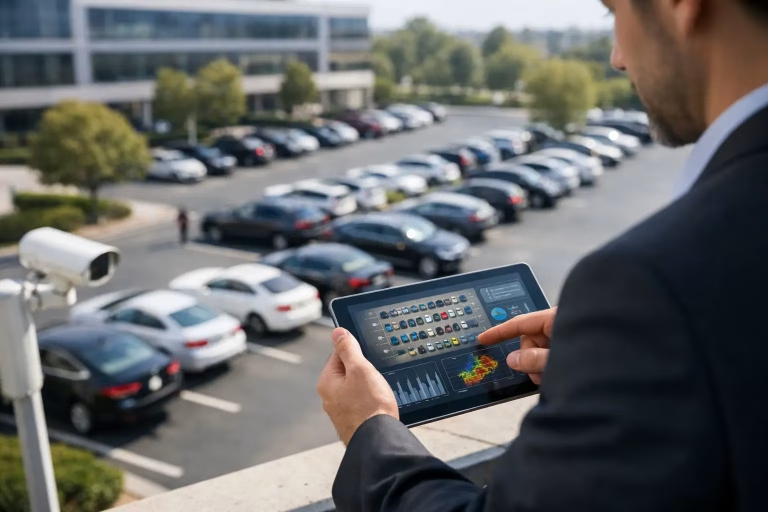
One of the most valuable developments in parking operations is real-time visibility into available space. This may come from parking sensors, access data, camera-supported monitoring, manual digital updates, or a combination of these methods. The goal is simple: know the true operating capacity before the driveway becomes congested.
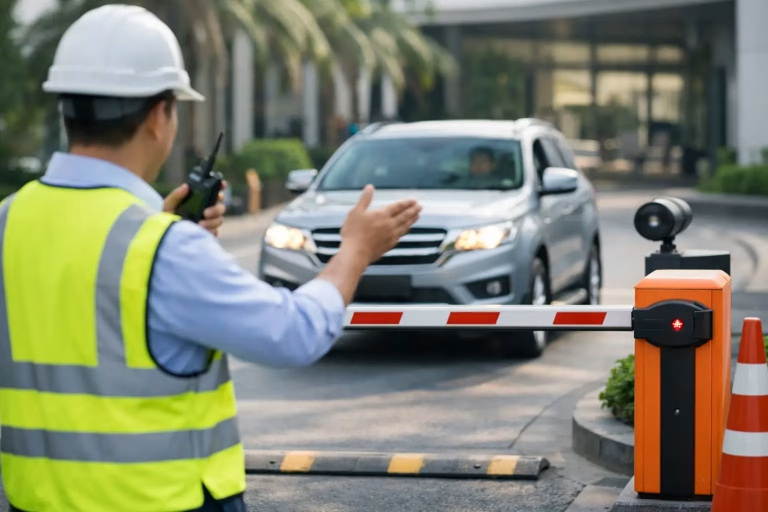
For a busy property, capacity is not only the number of marked parking spaces. It also includes valet staging positions, vehicle retrieval lanes, overflow arrangements, accessible parking, loading areas, and the time required to move cars safely. A site can appear to have open spaces while still being operationally full because its movement lanes are blocked or its retrieval area is overloaded.
Real-time visibility allows supervisors to make earlier decisions. They can redirect incoming vehicles, activate overflow procedures, adjust staffing, or communicate expectations to the front-of-house team before the guest experience suffers. This is especially relevant for high-volume events in Jeddah, Makkah, and Madina, where traffic conditions and concentrated guest arrivals can change quickly.
Not every site needs a full sensor network. A smaller restaurant or private venue may achieve meaningful improvements through a disciplined digital log and a trained supervisor. Larger mixed-use developments, however, may benefit from integrated monitoring that provides a broader view across entrances and parking zones.
License Plate Recognition Is Improving Speed and Control
License plate recognition is becoming more relevant at controlled-entry facilities, corporate campuses, residential developments, and properties with repeat visitors. When used appropriately, it can reduce manual data entry, support access control, and help identify authorized vehicles at entry and exit points.
For valet operations, license plate recognition can support faster intake by connecting the arriving vehicle to a digital record. It can also help reduce confusion in high-volume environments where similar vehicles, multiple entrances, and overlapping shifts increase the chance of error.
However, the technology must be planned carefully. Recognition accuracy can be affected by camera placement, lighting, plate condition, and traffic flow. It also requires clear policies for data handling, access permissions, retention periods, and cybersecurity. A system that gathers vehicle information without clear operational ownership can create more complexity than value.
The best approach is to define the use case first. Is the objective faster access, improved security, better reporting, or all three? Once the answer is clear, the technology can be configured around a specific operational outcome.
Reservation and Pre-Arrival Planning Are Growing in Value
Parking is increasingly becoming part of the reservation journey. Guests booking a restaurant table, hotel stay, conference pass, or event ticket may also need clear arrival instructions and an option to reserve valet or parking access in advance.
Pre-arrival planning is particularly valuable when demand is predictable but capacity is limited. It gives the operator a better forecast of expected vehicles and helps guests arrive with confidence. For premium hospitality environments, it can also support tailored service for VIPs, families, guests requiring accessible access, and corporate groups.
The trade-off is that reservations need operational discipline. Holding spaces for no-shows can reduce effective capacity, while overbooking can undermine the promise of convenience. Properties should establish practical rules for arrival windows, cancellation handling, and overflow planning before introducing a reservation feature.
Electric Vehicle Readiness Is Moving From Feature to Planning Requirement
As electric vehicle adoption grows, guests increasingly expect charging to be considered within the parking experience. For hotels, offices, retail destinations, and long-stay facilities, charging availability can influence where guests choose to visit or stay.
Adding chargers, however, is not simply a parking project. It involves electrical capacity, equipment placement, charging duration, access rules, maintenance responsibility, and the impact on available spaces. A charger located in a poorly managed area can create disputes and block circulation. A charger integrated into a managed arrival plan can become a useful service enhancement.
Valet-operated charging offers another model for select properties. It can be appropriate where attendants move vehicles as part of the service, but only when there is a clear process for guest consent, connector compatibility, charging limits, and vehicle monitoring. The service should be presented with the same care as any other guest-facing responsibility.
Data Is Helping Operators Staff More Intelligently
Parking technology creates value when its information leads to better decisions. Arrival patterns, average retrieval times, peak demand periods, no-show rates, overflow usage, and vehicle dwell time can all reveal where a site is losing efficiency.
For example, a venue may learn that its biggest pressure point is not parking capacity but the ten minutes before an event begins. Another property may find that vehicle retrieval slows because attendants walk too far between storage areas and the entrance. These insights allow managers to revise layouts, stagger staff schedules, or change guest communication.
The goal should not be surveillance for its own sake or a dashboard filled with unused metrics. The most useful reporting focuses on operational questions: Are guests waiting too long? Is the arrival lane clearing quickly? Are staffing levels matching demand? Are incidents and exceptions being documented consistently?
The Human Standard Still Defines the Service
Technology can accelerate ticketing, inform capacity decisions, and improve reporting. It cannot independently manage a blocked entrance, reassure an impatient guest, protect a vehicle during handoff, or represent the standards of a premium venue.
That is why the most effective parking programs combine digital tools with trained, accountable teams. Attendants need to understand site circulation, safety procedures, vehicle care, guest communication, escalation paths, and the service expectations of the property. Supervisors need live visibility and the authority to adjust the plan when demand changes.
For facilities that want parking to strengthen rather than weaken their guest experience, the first question is not which technology to buy. It is what kind of arrival experience the property wants to deliver, and what operating model will consistently support it. From there, the right mix of trained personnel, digital ticketing, capacity control, and reporting can turn a crowded driveway into a controlled and welcoming first impression.