
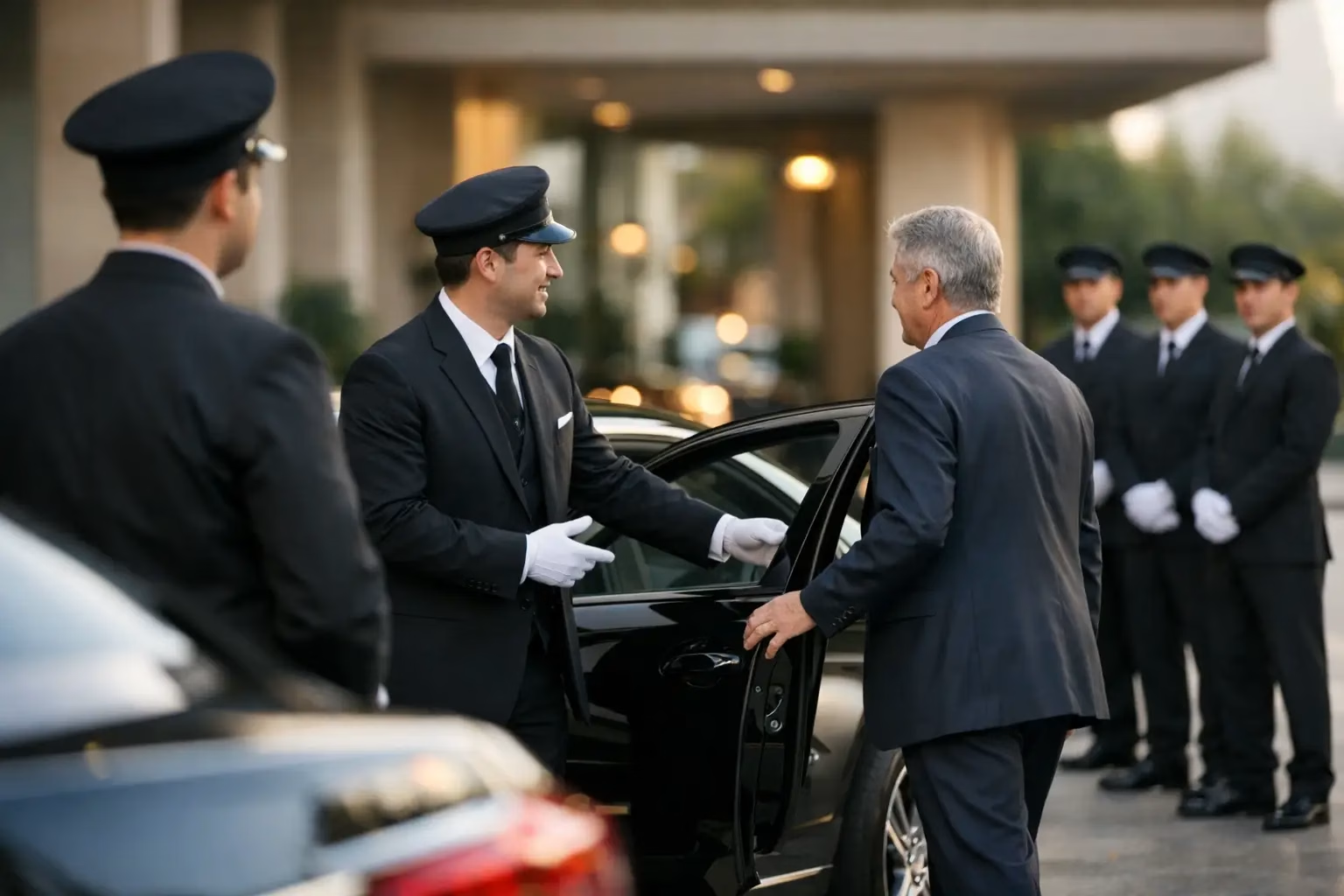
How Many Valet Staff Are Appropriate?
A valet line that looks calm from the curb can be under real pressure behind the scenes. One extra arrival wave, one distant parking zone, or one bottleneck at the entrance can turn a polished guest experience into a visible delay. That is why the question كم عدد موظفي الفاليه المناسب is not really about headcount alone. It is about matching staffing to traffic, site conditions, and the standard of arrival your property wants to deliver.
What determines how many valet staff are appropriate?
The right number starts with one simple fact: valet demand is uneven. Most properties do not receive cars at a steady rate all day. They get spikes. A hotel may see pressure at check-in and event start times. A restaurant may get a sharp arrival rush between 7:30 and 9:00 PM. A hospital may deal with continuous turnover but less predictability. An event venue may experience very high compression in a short window.
That means the question is not just how many cars arrive in a day. It is how many arrive within 10, 15, or 30 minutes, and how fast each car can be received, parked, retrieved, and returned.
A properly sized valet team usually depends on five variables working together: arrival volume, retrieval volume, parking distance, site layout, and service standard. If any one of these changes, staffing often needs to change with it.
كم عدد موظفي الفاليه المناسب حسب نوع الموقع؟
For most decision-makers, this is the practical starting point. A small team may be enough at one site and completely inadequate at another, even if daily vehicle counts look similar on paper.
Hotels
Hotels usually need staffing built around guest experience as much as traffic flow. Guests arriving with luggage, families, VIP visitors, and conference attendees all raise the service requirement. A hotel valet operation often needs visible front-of-house coverage plus back-of-house parking runners. If the driveway is narrow or the self-parking alternative is limited, staffing should lean higher to protect wait times and keep the arrival zone clear.
Restaurants
Restaurants can look simple, but they often have compressed peaks. If most arrivals happen within a 90-minute dinner window, a lean team may quickly fall behind. Fine dining also has less tolerance for visible disorder. Guests expect a smooth handoff, quick vehicle retrieval, and courteous interaction. In this setting, staffing needs to reflect both speed and presentation.
Hospitals and medical facilities
Healthcare sites require a different balance. The guest mix may include elderly visitors, patients with mobility needs, and urgent drop-offs. Here, staffing decisions should account for assistance time, curb management, and the need to maintain a safe, uncluttered entrance. The correct team size is not just about volume. It is also about how much support each arrival requires.
Corporate sites and offices
Corporate locations often have more predictable rhythms, but event days can change the equation. A standard weekday setup may work well for routine traffic, while board meetings, client visits, or company gatherings may require a temporary staffing increase. This is where flexible scheduling matters more than a fixed number.
Weddings, conferences, and private events
Events typically need the most careful staffing model because the arrival curve is compressed and highly visible. If 150 cars arrive within one hour, the operation is judged in real time by every guest standing in line. Event valet teams should be planned around arrival and departure surges, not average volume.
Why average daily car count is not enough
One of the most common mistakes is sizing valet staffing from total daily vehicle count alone. A site handling 200 cars per day can be easy to operate if arrivals are spread out. Another site with 120 cars can struggle if most of them arrive in a short burst.
The better metric is cars per peak interval. If 40 vehicles arrive in 20 minutes, the team must absorb that pressure without blocking the entrance or extending guest wait times beyond what the brand experience allows. The same applies at pickup. Retrieval surges after events, dinner service, or conference sessions can overwhelm an undersized team very quickly.
This is why professional planning looks at the shape of demand, not just the size of demand.
The hidden factors that change staffing needs
Two valet setups can process the same number of cars with different staffing because the operating conditions are different.
A short parking route allows each attendant to complete more cycles per hour. A remote overflow lot reduces that capacity. A clear one-way driveway is easier to manage than a shared entrance with taxis, deliveries, and private drivers. Digital ticketing can speed handoff and retrieval coordination. Manual processes usually require more labor to maintain the same pace.
There is also the question of vehicle mix. Larger vehicles take more space and sometimes more time to position safely. High-value vehicles may require more careful handling. Properties serving VIP traffic may need more experienced staff at the curb, not just more staff overall.
Weather, local traffic behavior, prayer time patterns, and event release timing can also shift the operation. In places such as Jeddah, Makkah, or Madina, traffic conditions around hospitality and event venues can change staffing assumptions in a very practical way. A plan that works on a quiet weekday may not hold during peak seasonal activity.
A practical way to estimate staffing
If you are trying to decide whether your current team is too small, start with service goals instead of budget alone. Ask three questions.
First, how long can a guest reasonably wait at drop-off before it affects their impression of the property? Second, how long is acceptable for vehicle retrieval during peak periods? Third, how much curbside congestion can your site physically tolerate before it starts affecting safety or traffic flow?
From there, evaluate throughput. How many cars can one trained valet realistically process per hour at your site, with your parking distance, your ticketing method, and your traffic pattern? This number is often lower than managers expect when the site has walking distance, elevator use, stacked parking, or retrieval coordination issues.
A staffing plan should then include more than drivers. Strong operations often require a curbside lead or dispatcher during peak times, especially where guest communication and lane control matter. In other words, the answer to كم عدد موظفي الفاليه المناسب may include both parking attendants and supervisory coverage.
Signs your valet team is understaffed
The first sign is not always a complaint. Sometimes it is a driveway that stays full longer than it should, attendants moving reactively instead of confidently, or retrieval promises that keep slipping by a few minutes.
You may also notice that your front entrance starts to feel transactional rather than welcoming. Staff become focused on catching up instead of hosting. That shift matters. For hotels, restaurants, and premium venues, valet is part of the arrival experience, not a background task.
Other warning signs include frequent key handoff confusion, difficulty keeping up during shift changes, pressure on security or door staff to assist with traffic, and dependence on one or two high-performing attendants to hold the operation together. Those are not efficiency wins. They are usually signs that the operation is running too close to the edge.
Signs you may be overstaffed
Overstaffing is less visible, but it matters too. If attendants spend long periods idle during most of the shift, or if the same service level could be delivered with a better schedule rather than a larger team, the model may need adjustment.
That said, overstaffing should be judged carefully. Some properties intentionally maintain slightly higher coverage at premium arrival points because presentation, speed, and reassurance are part of the brand promise. In those cases, staffing is supporting revenue perception and guest confidence, not just vehicle movement.
The value of a custom staffing model
The most reliable valet operations are built site by site. They consider driveway geometry, parking inventory, guest profile, peak demand, and the expected level of hospitality. That is why professional operators do not treat staffing as a generic ratio.
A well-designed model can reduce curb congestion, protect vehicle handling standards, improve retrieval times, and create a more polished arrival moment without adding unnecessary labor. It can also scale for weekends, holidays, and event overlays rather than forcing one fixed team to solve every operating condition.
For properties that view valet as part of their front-door identity, this matters. Guests rarely separate the parking experience from the overall quality of the venue. They remember whether arrival felt organized, courteous, and under control.
If you are deciding how many valet staff are appropriate, the best answer is rarely the cheapest number or the largest number. It is the number that allows your site to stay composed under pressure while protecting the level of service your guests expect the moment they arrive.