مستقبل إدارة المواقف بالذكاء الاصطناعي
The pressure shows up first at the curb.
A hotel can invest in design, staffing, and guest service, yet a bottleneck at arrival can undo that work in minutes. The same is true for hospitals, private events, corporate headquarters, and high-traffic restaurants. That is why مستقبل إدارة المواقف بالذكاء الاصطناعي matters now. It is not about replacing people with software. It is about making arrival, handoff, routing, and retrieval more controlled, more predictable, and more fitting for brands that care about first impressions.
For decision-makers, the real question is not whether AI will enter parking operations. It already has. The better question is where it adds measurable value, where human judgment still leads, and how to adopt it without compromising service standards.
What مستقبل إدارة المواقف بالذكاء الاصطناعي really means
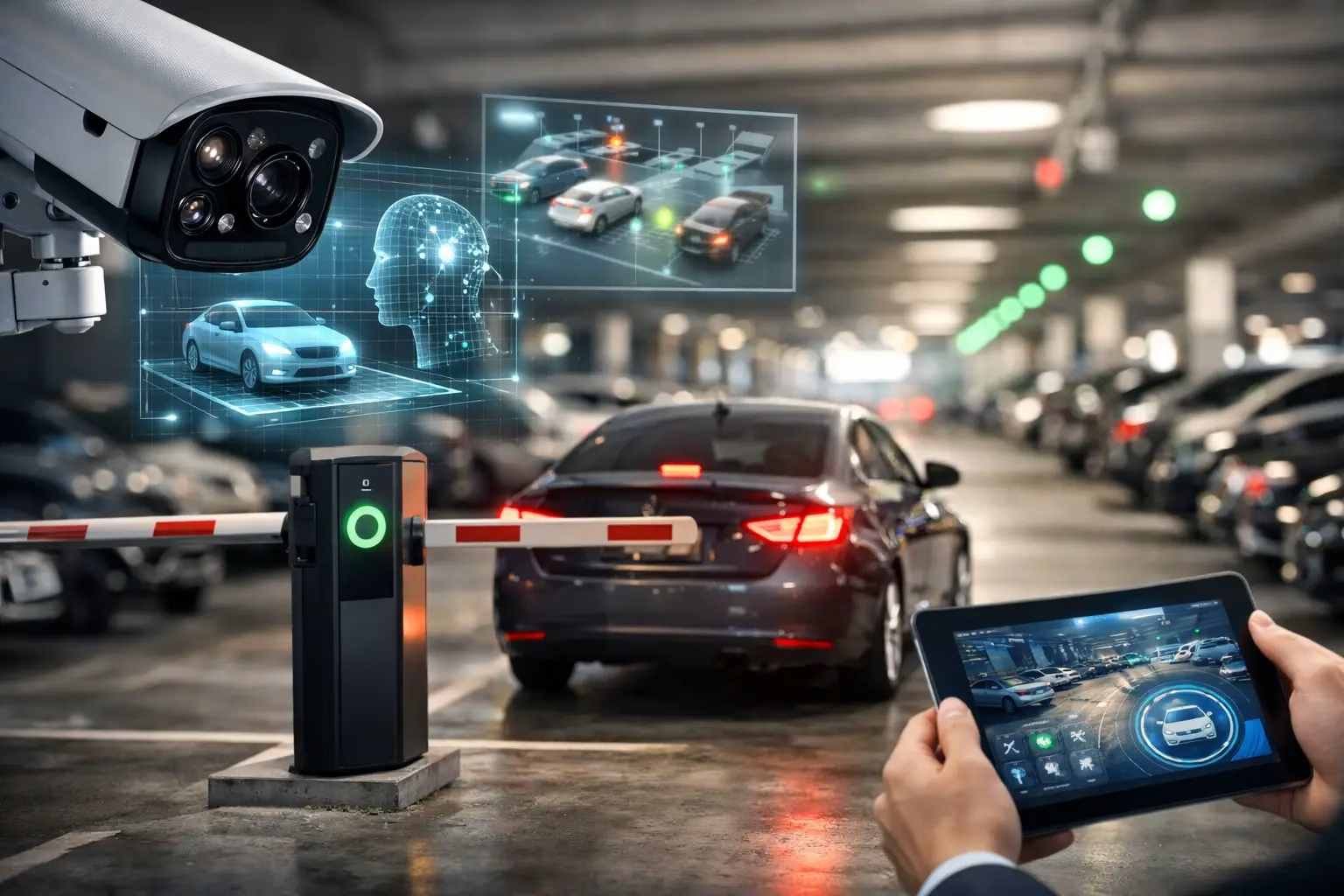
In practical terms, AI in parking management is a decision layer. It reads patterns faster than a human team can, then supports better operational choices in real time. That can include forecasting arrival peaks, directing vehicles to available zones, helping attendants prioritize retrieval order, identifying congestion risk before it forms, and improving staffing plans based on historical demand.
For a guest-facing operation, this changes the role of technology. It stops being a back-office reporting tool and becomes part of live service delivery. The gain is not only speed. It is consistency under pressure.
That distinction matters. A busy property does not struggle only because too many cars arrive at once. It struggles because demand is uneven, guest behavior is unpredictable, and site constraints are fixed. AI helps connect those variables. But the service still depends on disciplined teams, clear SOPs, and a hospitality mindset at the point of contact.
Where AI creates real value in parking operations
The strongest use cases are not flashy. They are operational.
An AI-assisted system can predict demand by daypart, event type, booking schedule, weather conditions, or traffic patterns. For a hotel hosting a conference, that means preparing for overlapping guest arrivals before the queue reaches the entrance. For a hospital, it can mean routing vehicle flow in a way that protects access for urgent cases. For a wedding venue, it can mean timing staff deployment around guest waves instead of staffing broadly and hoping for balance.
The second value area is vehicle flow. AI can help determine which lanes should be used for intake, which holding areas are reaching capacity, and when retrieval requests should be staggered to avoid internal gridlock. This is especially useful in sites where parking inventory is limited and the margin for error is small.
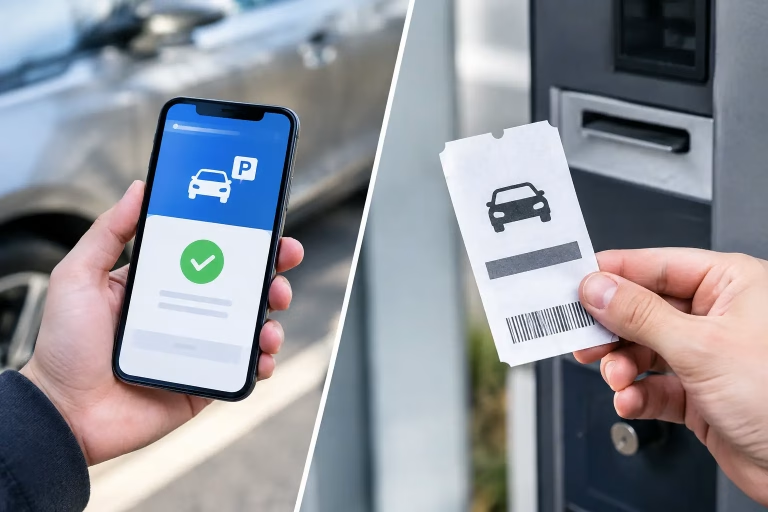
The third area is guest communication. When integrated properly, AI can support ticketing and retrieval systems that estimate return times more accurately. That matters because guest satisfaction is often tied less to the absolute wait and more to whether the wait feels informed, orderly, and fair.
A fourth benefit is post-operation learning. AI tools can surface patterns that manual reporting often misses, such as recurring congestion windows, underused staging zones, or staffing mismatches by event profile. Over time, this supports better planning and better service economics.
The future of AI parking management will be hybrid
Some forecasts present automation as if attendants will become secondary. In premium valet and managed parking environments, that is the wrong model.
The future of AI parking management will be hybrid because arrival is part logistics and part hospitality. A guest does not remember that a prediction model optimized retrieval flow. They remember whether they were greeted promptly, whether handoff felt secure, and whether the experience reflected the standards of the property.
AI is excellent at pattern recognition, queue prediction, and scenario modeling. It is not excellent at reading a VIP guest’s expectations, calming a frustrated visitor, or handling a last-minute site exception with tact. Those moments still belong to trained teams.
For that reason, the most effective operators will not use AI to remove people from the process. They will use it to make people more precise. Better dispatching. Better pacing. Better visibility. Fewer avoidable delays. The human layer remains central because service quality is never just a math problem.
What smart operators should watch before adopting AI
Not every property needs the same level of technology. A five-star hotel with daily valet demand has different priorities than a seasonal event venue. A medical campus has different risk controls than a restaurant cluster. The right question is not, “Do we need AI?” It is, “Which operational decisions are we still making too late or with too little visibility?”
If peak periods are frequent, retrieval times are inconsistent, and supervisors are relying on manual judgment alone, AI can likely improve performance. If the site has simple traffic flow and stable demand, the gain may be smaller. Technology should match operational complexity.
Data quality is another issue. AI only performs well when inputs are reliable. Poor ticketing discipline, inconsistent vehicle logging, or unclear site rules will weaken the system quickly. In other words, AI does not fix a broken operation on its own. It strengthens a disciplined one.
There is also the question of guest trust. In premium service settings, efficiency cannot come at the cost of reassurance. If a system feels confusing, impersonal, or opaque, guests may perceive the operation as less professional even if the numbers improve. Adoption has to preserve confidence at every touchpoint.
Privacy, security, and operational accountability
As AI becomes more involved in parking workflows, privacy and accountability become more important. Plate recognition, behavioral data, and location tracking can improve control, but they also raise legitimate concerns about data handling and retention.
That means operators need clear standards. What is collected, why it is collected, who can access it, and how long it is stored should not be an afterthought. For commercial clients, especially in healthcare, hospitality, and corporate environments, this is not only a technical issue. It is part of brand protection.
Operational accountability matters just as much. If an AI system recommends a routing decision that causes delay, who overrides it? If demand spikes beyond forecast, who adjusts the plan? Good operations require visible ownership. Technology can inform decisions, but responsibility still sits with the operator.
مستقبل إدارة المواقف بالذكاء الاصطناعي in Saudi service environments
In Saudi Arabia, the case for AI-assisted parking management is especially strong where hospitality standards and traffic intensity meet. High-volume hotels, major events, premium dining destinations, and medical facilities all face a similar challenge: they must keep vehicle movement controlled while preserving a polished guest experience.
That combination makes AI useful not as a novelty, but as an execution advantage. The goal is to reduce friction at moments that shape perception – entrance flow, ticket handoff, waiting time, retrieval accuracy, and curbside order. In cities and venues where pressure builds quickly, small operational improvements can have a visible effect on guest confidence.
For companies like Wagifli, this reinforces a practical point. Technology works best when it is part of a complete operating model that includes trained valet teams, site-specific planning, safety procedures, and service discipline. Software can enhance the standard. It cannot substitute for one.
What the next few years will likely bring
The next phase will probably be less about fully autonomous parking and more about better orchestration. Expect stronger demand forecasting, more intelligent dispatching, improved lane and zone assignment, and tighter integration between valet operations and guest communication systems.
We will also likely see more adaptive staffing models. Instead of planning only by experience or fixed schedules, operators will use AI insights to assign teams based on expected arrival bursts, event type, and retrieval intensity. That can improve labor efficiency without making service feel stretched.
Another likely shift is performance visibility for clients. Commercial properties increasingly want proof of service quality, not just a vendor promise. AI-supported reporting can give clearer views into wait times, intake volume, peak congestion windows, and operational exceptions. For decision-makers, that makes parking less of a blind spot and more of a managed part of the guest journey.
Still, the winners will be the operators who stay balanced. Too little technology leaves performance exposed to avoidable inconsistency. Too much automation, applied without hospitality judgment, can make service feel cold and rigid. The right future is not machine-led parking. It is well-run parking, supported by intelligent tools and delivered by accountable teams.
For any property where arrival sets the tone, that is the standard worth building toward.