دراسة حالة تقليل زمن الانتظار في خدمة Valet
At 7:42 p.m., a hotel entrance can reveal more about its operation than a lobby ever will. Vehicles begin to queue, guests step out with luggage or reservations in hand, and the first few minutes determine whether arrival feels considered or chaotic. This دراسة حالة تقليل زمن الانتظار examines how a planned valet operation can reduce friction at the curb while protecting the service standards guests expect.
The scenario is representative of a high-traffic hospitality venue in Saudi Arabia during a busy evening period. It is not about adding more attendants without direction. It is about identifying where time is lost, assigning responsibility at each point of arrival, and managing parking capacity before the queue becomes visible to guests.
The operational problem behind a long queue
The venue in this case received strong traffic during dinner hours and weekend events. Its entrance had limited curb space, while its parking inventory was spread between an on-site lot and an overflow area. Guests often arrived in clusters, creating a pattern that looked manageable for most of the day but became difficult within a short peak window.
Before the revised operation, the average guest experience followed an inconsistent path. A driver would wait for an available attendant, the vehicle information might be recorded manually, and staff would decide where to place the car only after receiving it. When several vehicles arrived together, this sequence created a bottleneck at the entrance. The delay was not caused by one issue alone. It came from small decisions happening too late.
For a hotel, restaurant, hospital, or event venue, that delay carries a cost beyond minutes. Guests may miss a reservation time, families may feel exposed while waiting at the curb, and front-of-house teams are forced to respond to frustration they did not create. The entrance becomes a pressure point for the entire property.
دراسة حالة تقليل زمن الانتظار: setting the right baseline
A credible improvement plan starts with measurement. Rather than relying on general impressions such as “the queue feels long,” the operating team observed the full arrival sequence across several peak periods. The goal was to distinguish vehicle wait time from total service time.
Four measures provided a practical baseline:
- Time from vehicle arrival to guest handoff
- Time from vehicle handoff to parking placement
- Number of vehicles waiting at the curb
- Time required to retrieve a vehicle at departure
The initial review showed that curbside wait time was the most visible concern, but vehicle placement also varied widely. Some attendants were walking longer routes than necessary, while others were waiting for parking direction. Manual tickets made it harder to confirm a vehicle’s location quickly during retrieval, especially when the departure rush overlapped with new arrivals.
This distinction matters. A venue can reduce the apparent queue by moving cars quickly but create a second problem later if retrieval becomes slow or vehicle locations are unclear. Good valet management balances arrival speed, safe handling, accurate tracking, and a respectful guest interaction.
The revised arrival flow
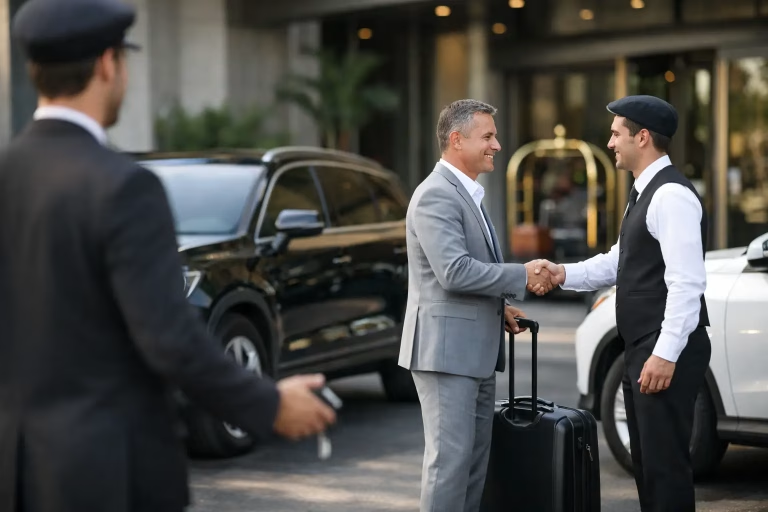
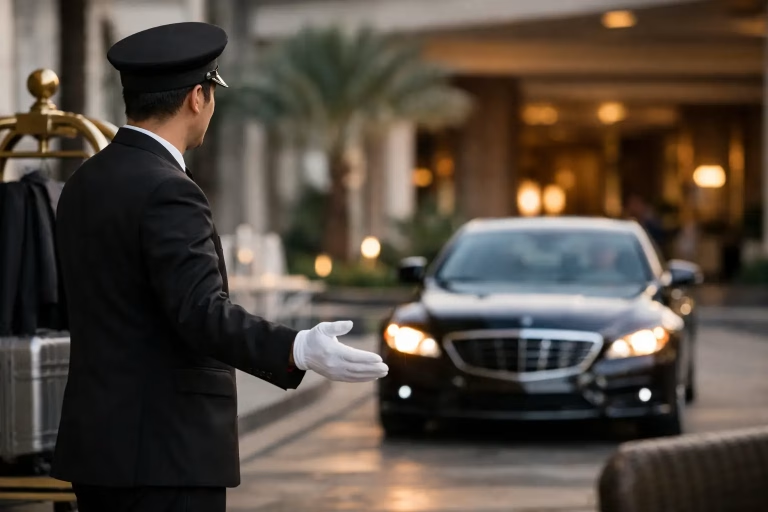
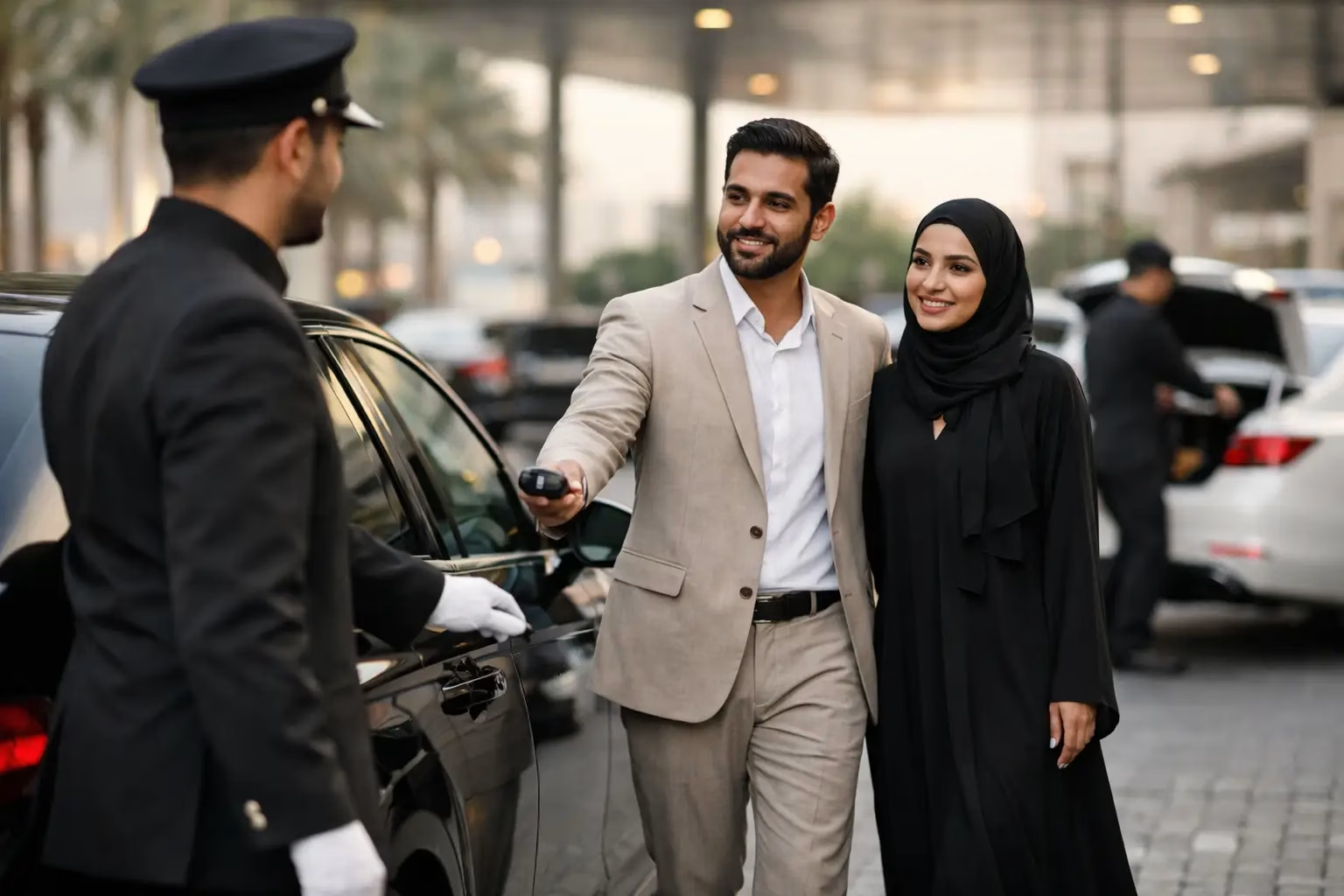
The first operational change was to divide the arrival process into clear roles. One team member focused on greeting the guest, confirming key details, and managing the handoff. A second attendant received the vehicle and moved it immediately to a preassigned zone. A lead supervisor monitored curb occupancy, parking availability, and incoming traffic rather than handling every vehicle personally.
This role separation reduced idle moments. The guest-facing attendant was not delayed by parking decisions, and the driver did not need to return to the entrance to ask where the next vehicle should go. Each person had a defined point of responsibility.
The second change involved parking allocation. The closest and fastest-access spaces were reserved for vehicles likely to be retrieved soon, including short-stay guests and known departure groups. Overflow parking was planned in advance, with a route that avoided crossing the main arrival lane. This is where capacity management becomes more valuable than simply increasing headcount. A larger team cannot compensate for a parking plan that sends every driver to make the same long trip.
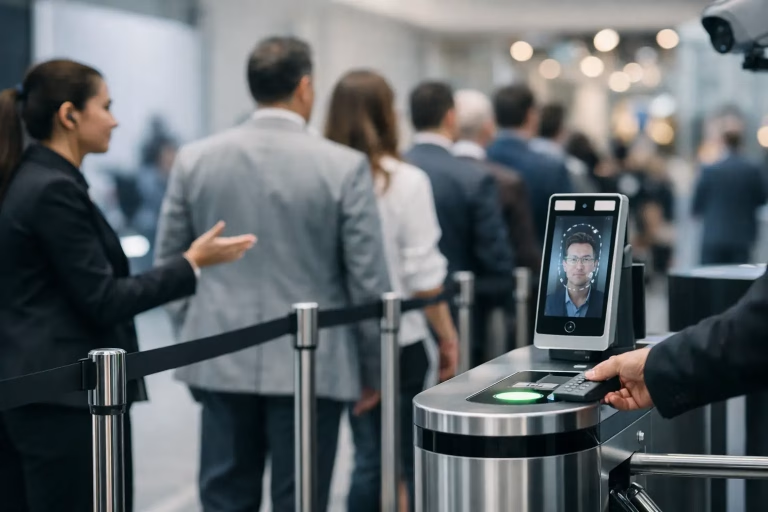
Digital ticketing was also introduced to record vehicle details and parking location at handoff. The system supported faster verification when guests requested their vehicles and gave supervisors a clearer view of the active inventory. Technology did not replace professional judgment. It reduced avoidable searching and helped the team stay coordinated under pressure.
Staffing for demand, not averages
A common operational mistake is staffing valet service according to the average number of daily vehicles. Average traffic does not describe the 30-minute period when arrivals concentrate before dinner, a conference session, or a wedding reception.
In this case, staffing was scheduled around demand peaks. The venue identified its highest-volume windows using reservation patterns, event schedules, and prior traffic observations. Additional trained attendants were deployed before the peak began, not after the curbside queue had already formed.
There is a trade-off. Overstaffing every hour raises cost without improving the guest experience proportionately. Understaffing at critical times risks reputational damage that is far more difficult to correct. The practical approach is flexible coverage: a core operating team for normal flow and planned reinforcement for predictable surges.
Results that matter to guests and management
Following the revised process, curbside waiting was reduced because vehicles were accepted, logged, and moved with fewer handoffs. More importantly, the operation became more consistent. Guests were greeted promptly even when parking demand increased, and the entrance remained organized rather than becoming a visible line of stopped vehicles.
For management, the improvement was not limited to speed. Supervisors had better visibility into the parking inventory, attendants worked with less uncertainty, and the front desk received fewer complaints related to arrival delays. The team could also identify when capacity was approaching its limit and activate overflow procedures before service quality declined.
The strongest result was the change in guest perception. A guest rarely measures whether an attendant saved 90 seconds in parking a vehicle. They notice whether someone is ready to receive them, whether their car is handled with care, and whether the arrival feels controlled. Those details shape confidence in the venue before the guest reaches the reception desk or dining room.
What this case reveals for different venues
The same operating principles apply across properties, but the execution must reflect the site. A restaurant may need rapid turnover and short retrieval times. A hospital must prioritize accessible drop-off zones, visitor guidance, and calm movement around urgent arrivals. A wedding venue may require a temporary traffic plan that handles a concentrated arrival period and a large departure wave at the end of the event.
Hotels often face the most layered challenge because arrivals, departures, dining traffic, and events can occur at the same entrance. In that environment, a valet provider must coordinate with security, reception, event teams, and facility management. Parking cannot be managed as an isolated task. It is part of the broader guest journey.
This is why a site assessment should precede any service launch. The assessment should review curb dimensions, vehicle entry and exit routes, peak-hour demand, available parking capacity, accessibility requirements, and the service style expected by the venue. A polished operation is built from those details, not from a generic staffing formula.
Turning shorter waits into a stronger arrival experience
Reducing waiting time does not mean rushing guests or compromising safety. The right standard is deliberate speed: prompt acknowledgment, accurate vehicle handling, clear traffic movement, and reliable retrieval. Each element supports the other.
For venues that receive high volumes of guests, a professional valet partner such as Wagifli can translate this standard into a tailored operating plan, trained staffing, ticketing procedures, and peak-period coverage. The purpose is not merely to park more vehicles. It is to protect the moment when a guest decides what kind of service they have arrived to receive.
A well-managed entrance gives guests a simple but powerful message: their time is respected, their vehicle is in capable hands, and the venue is ready for them.