Corporate Event Valet Management for Better Arrivals
A corporate event can be impeccably planned inside the venue and still lose momentum at the curb. When vehicles queue at the entrance, guests search for parking, and executives arrive at the same time, the first impression becomes one of delay rather than welcome. Corporate event valet management gives that high-pressure moment a clear operating structure, protecting the guest experience before registration, networking, or the program even begins.
For event organizers, facility managers, and corporate hosts, valet is not simply about moving cars. It is a live coordination function that manages traffic, parking capacity, guest communication, safety, and the pace of arrival and departure. Done professionally, it allows the venue to feel prepared even when demand is at its highest.
Why Arrival Requires an Operating Plan
Corporate events create concentrated traffic patterns. A conference may receive hundreds of guests within a 30-minute window. An executive dinner may involve VIP vehicles, drivers, and security considerations. A product launch can draw media, partners, and guests unfamiliar with the site. These are different scenarios, but each requires the same discipline: a plan that matches people, space, timing, and vehicle flow.
Without that plan, the curbside area becomes a bottleneck. Guests may stop in active lanes, attendants may park vehicles without a clear zone strategy, and retrieval requests can overwhelm the team at the end of the program. The cost is more than inconvenience. It can affect safety, delay the agenda, frustrate nearby tenants, and weaken the professional image the event was designed to project.
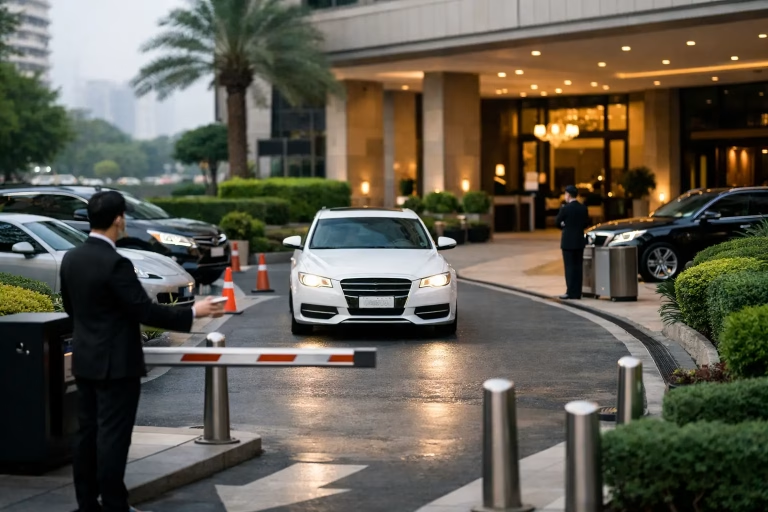
A managed valet operation begins with a site assessment. The team needs to understand entry and exit points, pedestrian paths, available parking areas, vehicle travel time, loading zones, and any restrictions imposed by the venue or local authorities. It also needs an honest estimate of attendance, arrival concentration, and the likely number of cars. A strong operation is built around the real conditions of the site, not an assumed staffing formula.
Corporate Event Valet Management Starts Before Guests Arrive
The visible part of valet service begins at the entrance, but the work should begin well before event day. A tailored parking plan identifies where vehicles will be staged, how keys and tickets will be controlled, which routes attendants will use, and how exceptions will be handled. This preparation makes the service faster because the team is not making fundamental decisions while guests are waiting.
Staffing is one of the most important variables. A small leadership gathering at a hotel may need a compact, highly polished team focused on personal recognition and quick retrieval. A large corporate conference may need supervisors, curbside coordinators, ticketing staff, drivers, and parking-lot marshals working in defined zones. More personnel is not always the answer. The right number depends on vehicle volume, parking distance, event schedule, and the complexity of the entrance.
The arrival schedule matters as much as the guest count. If registration opens at 8:00 a.m., many guests may arrive between 7:40 and 8:10. If a keynote ends at 5:00 p.m., a large share of retrieval requests may occur within minutes of one another. A professional valet manager plans around these peaks, assigning the strongest coverage when the pressure is highest rather than spreading resources evenly across the day.
Technology can improve control when it supports the operation rather than complicates it. Digital ticketing, vehicle records, and coordinated retrieval requests help reduce confusion and give supervisors visibility into where vehicles are parked. However, the system must be practical for the venue, reliable under pressure, and supported by trained staff. A digital process does not replace hospitality or sound traffic management. It strengthens both when used correctly.
Capacity Is More Than the Number of Parking Spaces
A parking area may have enough physical spaces and still fail operationally. The real question is whether cars can be received, moved, parked, and retrieved at the speed the event demands. A distant overflow lot may add significant travel time. A narrow access road may limit how many vehicles can enter safely. A shared property may require careful coordination with other users of the site.
This is why capacity planning should include turnover time and route design, not just a space count. For a daytime corporate event, the team may use a primary lot for short retrieval times and reserve a secondary area for longer-stay vehicles. For an evening gala, it may be better to stage departure vehicles based on expected exit order. The right approach depends on the venue and program, but the objective remains consistent: keep the guest-facing experience orderly while using the available space intelligently.
The Hospitality Standard at the Curb
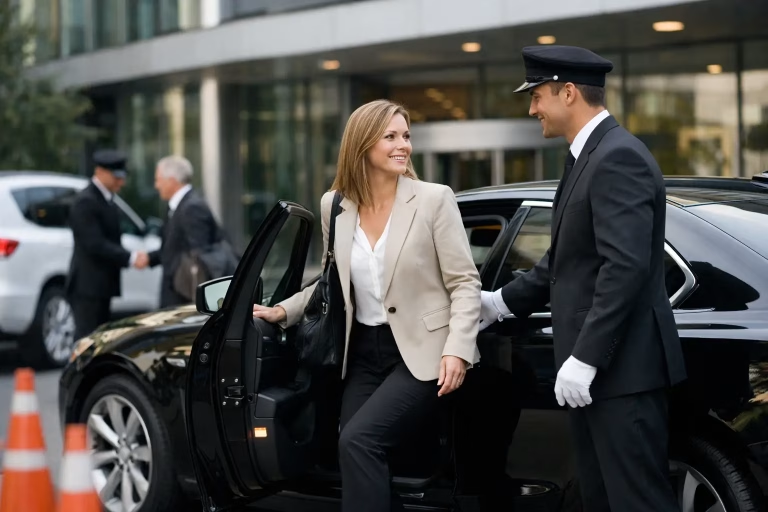
Guests often judge an event before they see the lobby, ballroom, or meeting room. The first person they meet may be a valet attendant. That attendant’s greeting, posture, clarity, and speed become part of the host organization’s image.
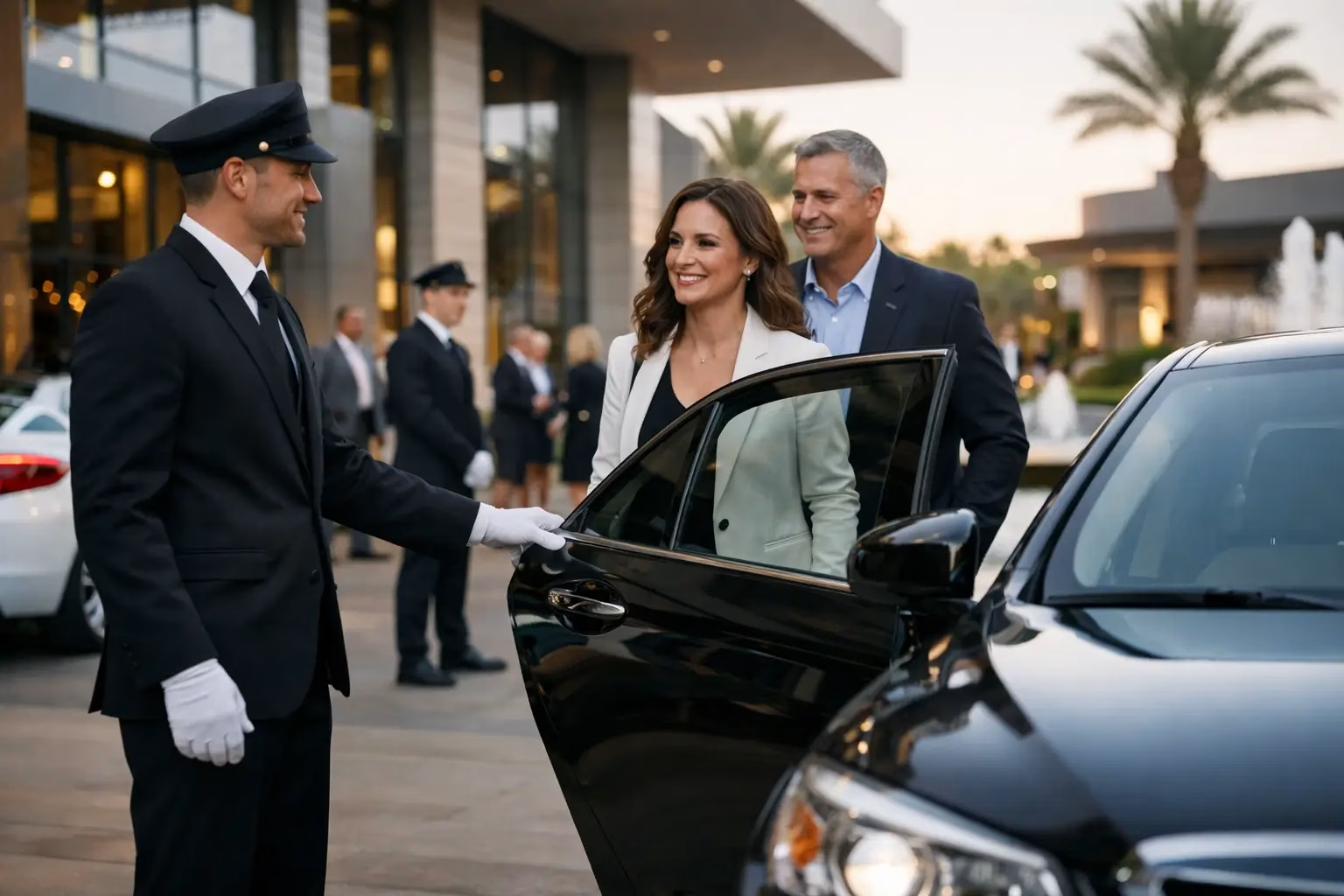
Professional presentation matters, but it must be paired with composure. Guests may arrive late, feel uncertain about the entrance, need accessibility support, or request special handling for a vehicle. A trained team responds with courtesy while maintaining the flow of traffic. The best service feels attentive without creating unnecessary delay for anyone in the queue.
This is particularly valuable for executive events, investor meetings, hospitality functions, and client-facing programs where every detail communicates standards. In Saudi Arabia’s active business and event environment, where formal hospitality and guest care carry real weight, a disciplined valet operation can reinforce the level of consideration an organization wants its guests to feel.
Safety, Accountability, and Vehicle Care
Trust is fundamental when guests hand over their keys. Corporate hosts should expect a valet provider to have clear procedures for vehicle custody, driver conduct, key control, incident reporting, and insurance coverage while vehicles are under its care. These are not secondary details to discuss after the event plan is finished. They are central to selecting the right operating partner.
Drivers should be trained to handle vehicles responsibly, follow defined routes, and observe site speed limits and safety procedures. Keys should be tracked through a controlled process, not left exposed at a busy desk or transferred informally between staff. Supervisors need to remain visible and accountable, especially during peak periods when mistakes are more likely.
Event conditions can change quickly. A guest may need an early departure, a vehicle may require special access, weather may affect the curbside layout, or an unexpected surge may develop after the program. The quality of a valet team is visible in how calmly it handles these exceptions. Preparation creates the foundation, but experienced supervision keeps service stable when the plan must adapt.
Designing Departure as Carefully as Arrival
Many event teams focus heavily on the opening rush and underestimate the departure rush. Yet the final few minutes often leave the strongest memory. If guests wait too long for their cars after a successful program, the event ends with friction.
A retrieval plan should be aligned with the agenda. When possible, the valet supervisor should receive notice before a session ends, a dinner concludes, or a VIP is scheduled to leave. This allows vehicles to be staged responsibly and attendants to prepare for the release pattern. Pre-staging every car is rarely practical and can create congestion, but staging selected vehicles based on clear information can meaningfully reduce wait times.
Communication is essential here. The event lead, venue security, and valet supervisor should know who makes decisions if an entrance must be adjusted or traffic builds unexpectedly. A short operational briefing before the event can prevent confusion later. It clarifies escalation contacts, emergency access requirements, VIP protocols, and the process for managing ride-share or chauffeur-driven vehicles alongside valet traffic.
What to Ask a Valet Partner Before Your Event
The right provider should be able to discuss your event in operational terms, not just offer a number of attendants. Ask how the team will assess the site, calculate staffing, manage peak arrival periods, control keys, and respond to an incident. Ask whether the provider can create a parking plan specific to your venue and whether supervisors will be present throughout the event.
It is also useful to discuss guest profile and service expectations. A large employee gathering, a board reception, and a client awards event each require a different balance of speed, protocol, and personal attention. A capable partner will ask detailed questions about the program rather than treating every event as identical.
Wagifli approaches valet as an extension of the host’s hospitality and operational standards. That means trained teams, organized traffic flow, tailored parking plans, and accountable vehicle care designed around the demands of the specific location and guest experience.
Before confirming your next corporate venue, walk the arrival route at the same time guests will use it. That simple review often reveals the difference between having parking available and delivering an arrival experience worthy of the event.