كيفية إدارة مسارات الوصول للضيوف for Better Flow
A guest’s opinion of a hotel, restaurant, hospital, or event often begins before they reach the reception desk. It begins at the curb. For teams asking كيفية إدارة مسارات الوصول للضيوف, the objective is not simply to move cars faster. It is to create a controlled, welcoming arrival that protects safety, respects the guest’s time, and reflects the standards of the property.
When the arrival route is unclear, even a well-designed venue can feel disorganized. Vehicles stop in the wrong place, pedestrians cross between cars, valet staff lose visibility of the queue, and a short period of peak demand becomes a visible service failure. A well-managed access route turns that same pressure into a composed first impression.
Start With the Arrival Experience, Not the Parking Lot
Guest access management should begin with a simple question: what should a guest see, understand, and do from the moment they approach the property?
The answer differs by venue. A luxury restaurant may need a short, elegant curbside handoff that prevents cars from stacking onto the street. A hospital needs clearly separated routes for patients, visitors, emergency vehicles, and people with limited mobility. A conference venue may need to receive hundreds of vehicles within a narrow time window, while maintaining a calm entry for VIPs and speakers.
This is why a generic parking plan rarely performs well. The route must be designed around the property’s service model, physical constraints, expected volume, and guest profile. The best operating plan makes the right behavior obvious without requiring guests to study signs or ask for directions.
كيفية إدارة مسارات الوصول للضيوف Through a Site Assessment
Before assigning staff or placing signage, assess the journey from the public road to the final guest destination. This assessment should cover more than the number of available spaces. It should identify every point where traffic, people, and service activity intersect.
Review the entry width, turning radius, curb length, gate locations, pedestrian crossings, loading areas, and exit routes. Look closely at what happens during peak periods rather than relying on traffic patterns during quiet hours. A driveway that works at 2:00 p.m. may become a bottleneck at hotel check-in, restaurant dinner service, or the opening of a wedding reception.
It also helps to map the route in practical stages: approach, decision point, vehicle handoff, pedestrian transfer, parking movement, and exit. At each stage, determine who is responsible for directing the guest and what information they need. If responsibility is unclear at any point, delays and safety risks will usually appear there first.
For properties in busy Saudi cities such as Jeddah, Makkah, and Madinah, this assessment should also account for seasonal demand, Friday peaks, religious occasions, major events, and periods when surrounding roads are under pressure. The route inside the property cannot be planned in isolation from the traffic outside it.
Separate Traffic by Purpose and Priority
A common operational mistake is treating all arriving vehicles as one queue. In reality, guests may include families, VIPs, ride-share passengers, delivery drivers, employees, people requiring accessible access, and emergency visitors. Their needs and dwell times are not the same.
A controlled operation creates separate paths where the site allows it. Valet arrivals should have a dedicated handoff zone. Self-parking guests should receive clear direction before they reach the curb. Ride-share vehicles need a brief pickup and drop-off area that does not block the main arrival lane. Service and delivery vehicles should be kept away from the guest-facing route whenever possible.
Priority is equally important. Emergency access must remain protected at all times, particularly in healthcare facilities. Accessible drop-off points must be close, visible, and free from temporary obstructions. At premium events, VIP movement may require a discreet route that does not interrupt general arrivals.
The goal is not to create excessive complexity. It is to prevent different vehicle types from competing for the same small piece of curb space.
Design the Curbside Handoff for Speed and Courtesy
The curb is where guest service and traffic control meet. A valet handoff that takes too long can quickly cause a queue. One that is rushed can leave the guest uncertain about their vehicle, belongings, or next step.
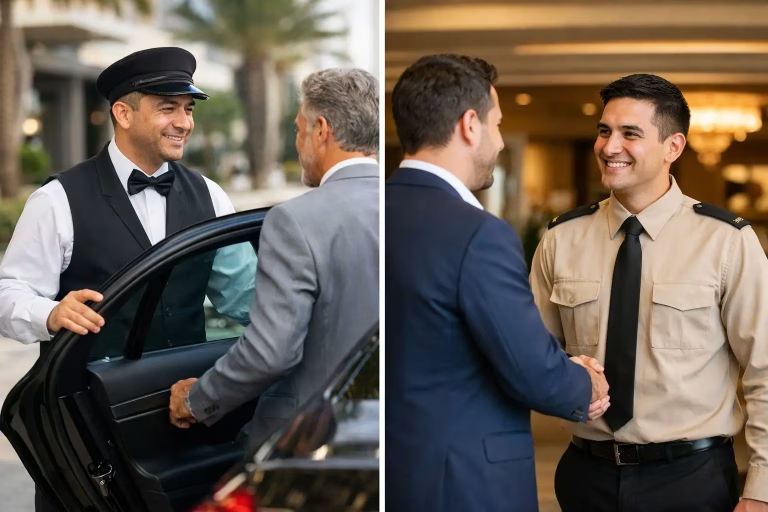
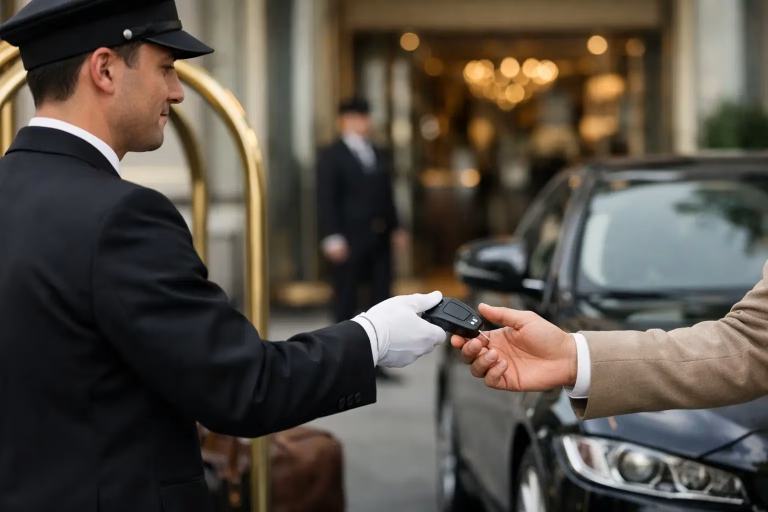
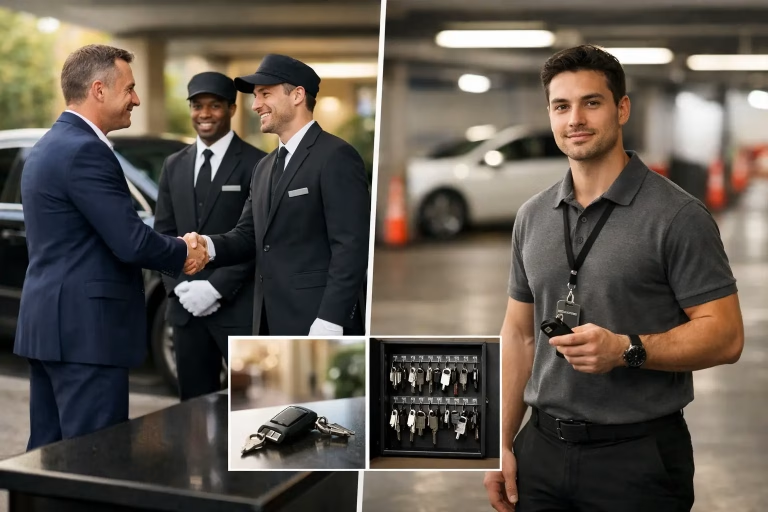
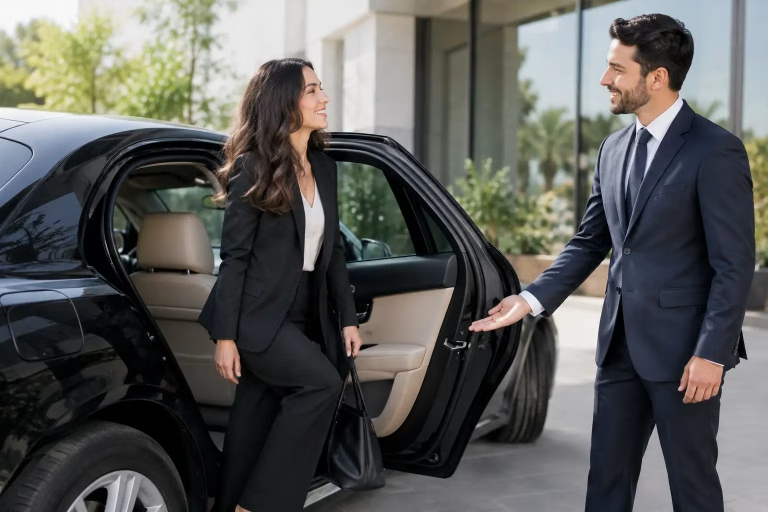
A professional handoff follows a consistent sequence: greet the guest, confirm the service, receive the vehicle safely, issue or digitally register the ticket, and direct the guest toward the entrance. Staff should know where to position vehicles temporarily, when to move them immediately to parking, and how to respond if a guest needs assistance with luggage, mobility, or directions.
The right staffing level depends on the arrival curve, not only the total number of expected cars. A venue expecting 120 vehicles over four hours may need a modest team. The same 120 vehicles arriving within 30 minutes requires more curbside staff, runners, supervisors, and holding capacity. Planning by total volume alone leaves the operation exposed during the moments guests remember most.
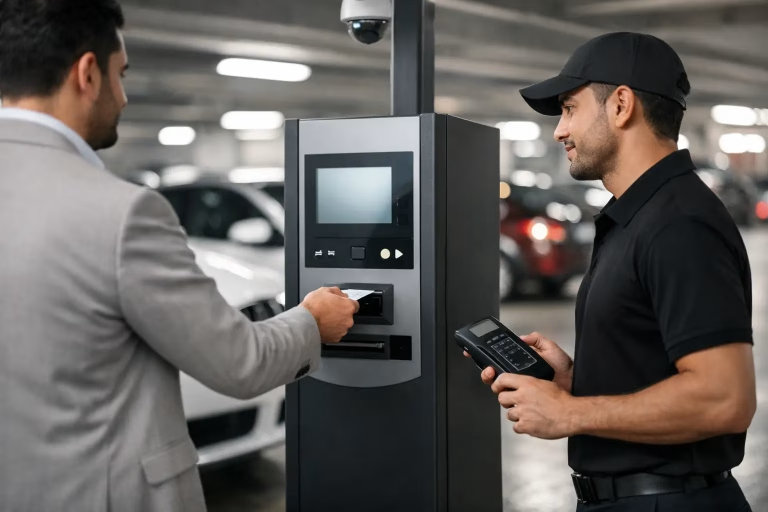
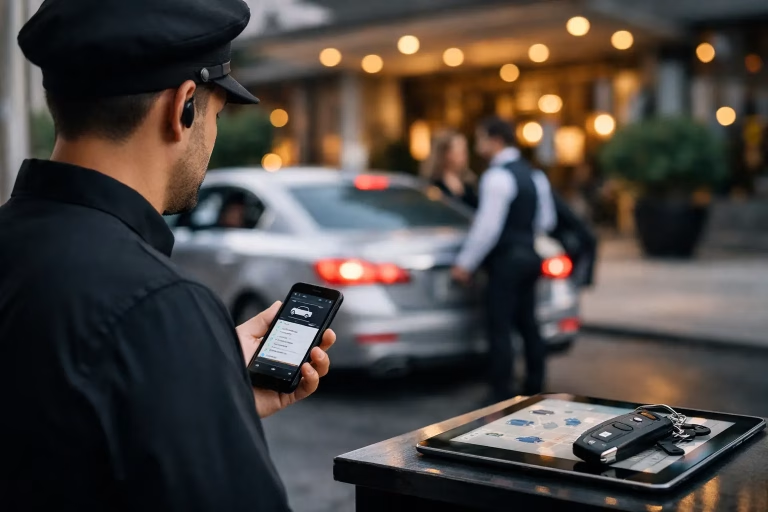
Digital ticketing and vehicle tracking can further reduce uncertainty. They help staff record vehicle details accurately, support faster retrieval, and provide managers with visibility into demand. Technology is valuable when it supports disciplined processes. It cannot compensate for an unclear route or an understaffed curb.
Use Signage as Guidance, Not Decoration
Signs should remove hesitation before it creates a blockage. Guests need to know where to enter, whether valet service is available, where self-parking begins, and where to exit. The wording should be brief, visible from a moving vehicle, and placed before the decision point rather than directly at it.
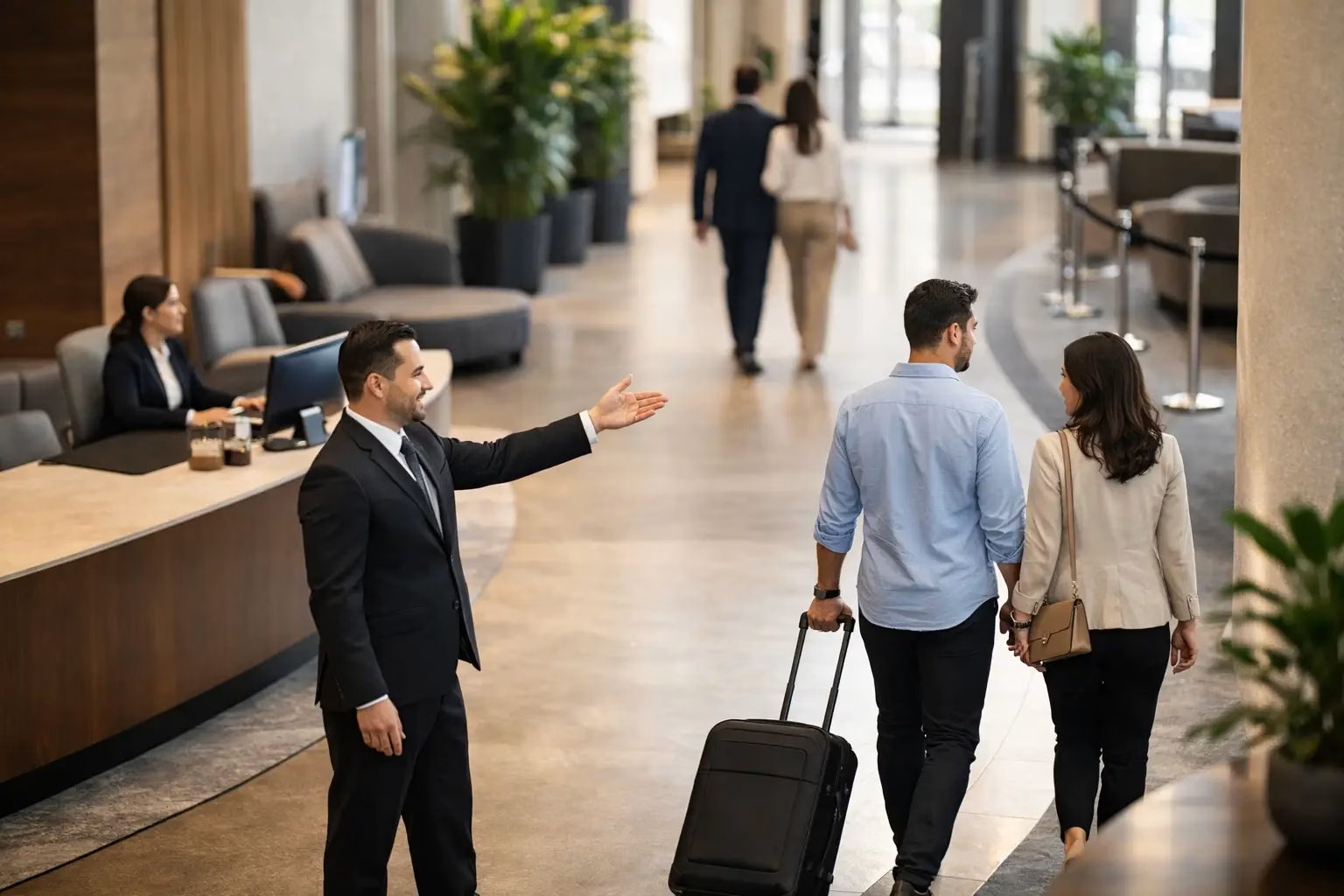
However, signage alone is not enough during high-pressure periods. A trained traffic marshal or valet host can read the situation, redirect an arriving vehicle, and communicate with guests in a way a static sign cannot. This is particularly valuable at events, where unfamiliar guests arrive simultaneously and may not know the property layout.
Avoid cluttered signs, conflicting directions, and temporary barriers that force last-minute turns. Consistency in colors, lane markings, cones, and staff positioning helps guests understand the flow before they stop.
Prepare for Peak Demand Before It Reaches the Gate
The strongest access plans include a response for overflow. This may involve a temporary holding lane, an alternate parking area, scheduled arrival windows, additional runners, or coordination with security and neighboring facilities. The appropriate solution depends on the site, but waiting until vehicles are already queued at the entrance is too late.
For an event, review guest lists, expected arrival times, transport arrangements, and the likelihood of late arrivals. For a hotel or restaurant, use reservation and occupancy patterns to forecast pressure. For a hospital, the plan must allow for unpredictable demand while preserving emergency routes.
Communication is central during these periods. Supervisors should have a clear method for reporting queue length, available spaces, vehicle retrieval demand, and incidents. Staff need authority to make immediate adjustments within agreed limits, such as opening an additional lane or redirecting self-parking vehicles. Small decisions made early prevent a visible backlog later.
Measure What Guests Actually Feel
Operational performance should be reviewed through practical measures: average curbside handoff time, queue length at peak periods, vehicle retrieval time, number of misdirected vehicles, incidents, and guest complaints related to arrival or parking. These indicators reveal where the route needs adjustment.
Numbers should be considered alongside observation. If guests repeatedly hesitate at one turn, the issue may be signage or lane visibility. If vehicles idle at the curb despite available parking, the problem may be team coordination. If staff are moving quickly but the queue grows, the property may need more temporary holding capacity rather than faster individual service.
A regular post-event or weekly review helps turn these observations into changes. Adjusting a sign position, moving a barrier, revising staff roles, or changing the order of vehicle dispatch can have a meaningful effect on flow.
Choose an Operating Partner That Protects Your Brand
Managing guest access is a live operation, not a plan that can be left in a binder. It requires trained people, defined responsibilities, insurance coverage, situational awareness, and a service standard that remains consistent when demand rises.
For properties that want arrival management to reflect their hospitality standards, a specialized valet and parking operator can take responsibility for route design, team deployment, traffic direction, capacity management, and vehicle care. Wagifli approaches this work as part of the guest experience, combining operational discipline with the courtesy expected at a premium venue.
The most effective arrival route is often the one guests barely notice. They arrive without confusion, step out without delay, and enter feeling expected. That quiet confidence at the curb gives the rest of the guest experience a stronger place to begin.