Top Parking Flow Ideas for Venues That Work
A guest can form an opinion about a venue before reaching the reception desk, host stand, or event hall. A blocked driveway, unclear drop-off point, or long line of vehicles signals pressure and poor control. The best top parking flow ideas for venues treat arrival as part of the guest experience while protecting capacity, safety, and staff productivity.
For hotels, hospitals, restaurants, corporate facilities, and private events, parking flow is not solved by adding more attendants at the last minute. It is designed around how vehicles arrive, where guests make decisions, how cars are staged, and what happens when demand peaks. The right plan should feel calm to the guest even when the operation behind it is moving quickly.
Top Parking Flow Ideas for Venues With High Guest Volume
1. Separate arrival, departure, and valet paths
The most common cause of entrance congestion is asking every vehicle to use the same lane for every purpose. Arriving guests need time to stop, unload, ask questions, or hand over their keys. Departing guests need a clear route out. Vehicles waiting for valet retrieval should never compete with either group.
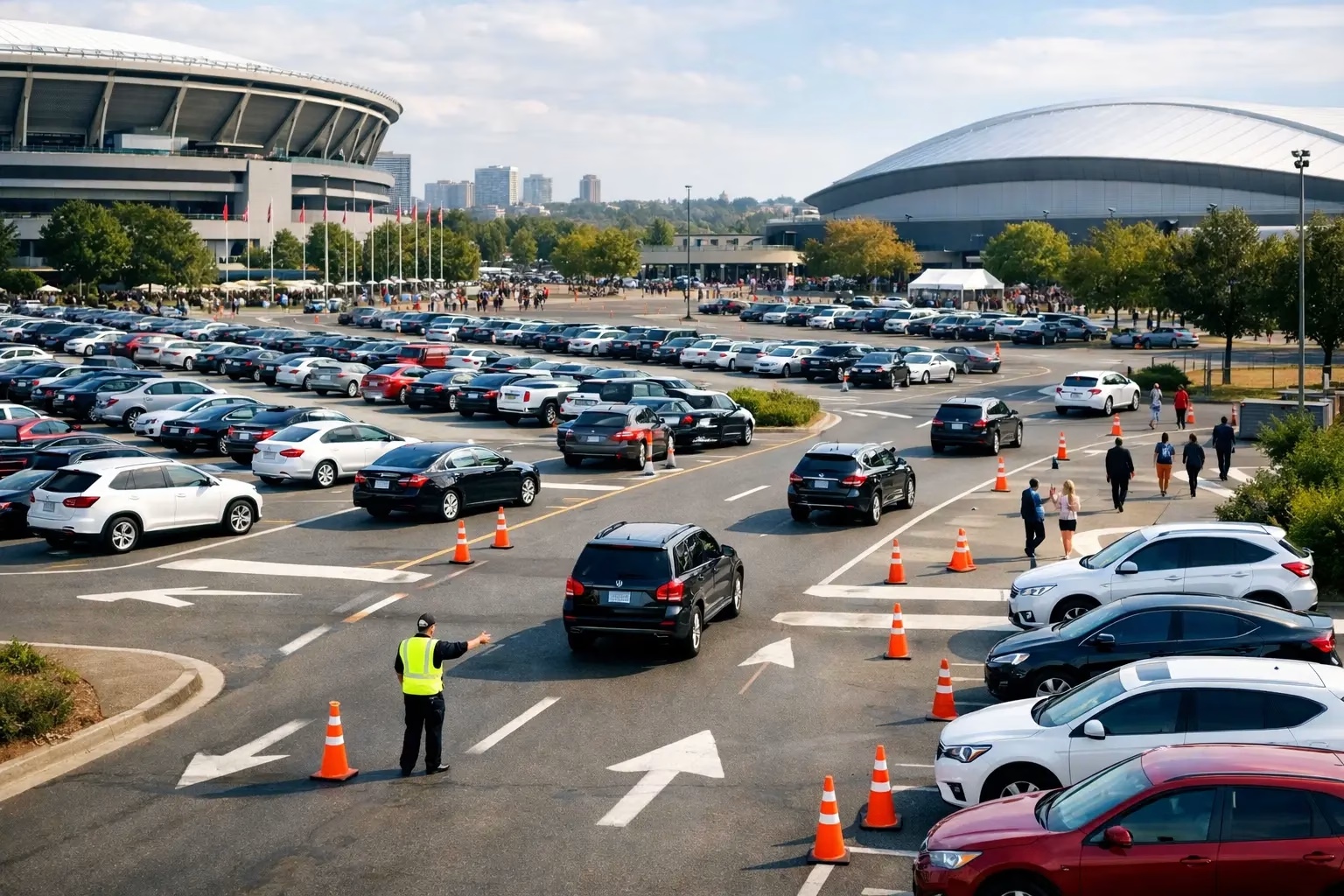
Where the physical layout allows it, create distinct zones for drop-off, valet handover, self-parking entry, and exit. This does not always require construction. Clear traffic cones, elegant barriers, pavement markings, and visible staff positioning can establish order quickly. The goal is to prevent one stopped vehicle from holding up the entire approach.
For a wedding venue or conference center, this separation is especially valuable during the first 30 minutes of arrival, when a large share of guests arrives at once. For a hospital, it helps protect access for patients, ambulances, and visitors with limited mobility.
2. Design the curbside as a working zone, not a waiting area
A curbside lane has limited capacity. Every extra minute spent collecting bags, confirming reservations, or locating a parking ticket reduces the number of vehicles it can process. The most effective operations define what happens at the curb and move nonessential tasks away from it.
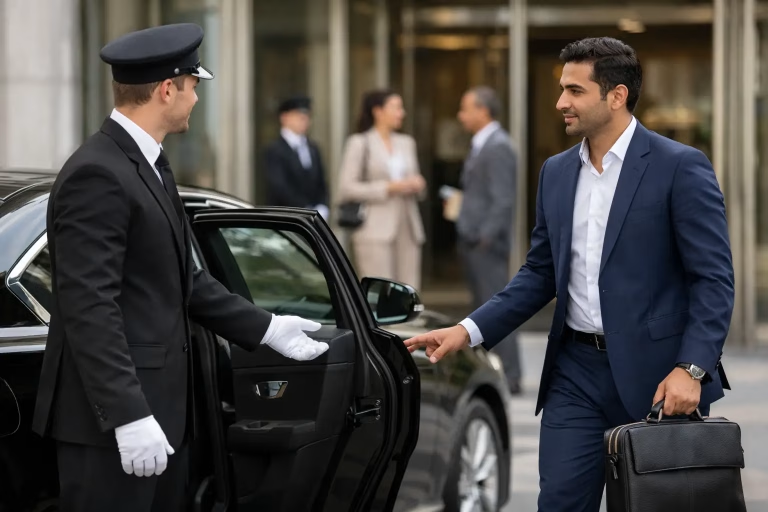
Valet attendants should greet the driver, confirm the required details, inspect the vehicle when appropriate, and direct guests safely toward the entrance without creating unnecessary delay. Luggage assistance can be managed efficiently when staff roles are assigned in advance. At restaurants, a host or greeter can help distinguish guests arriving for dining, pickup, or private functions before vehicles begin to stack up.
The trade-off is that speed should never come at the expense of courtesy. Guests should feel welcomed, not rushed. A polished arrival is concise, attentive, and clearly managed.
3. Assign parking inventory by priority and walking distance
Not every space should be treated equally. The closest and easiest-to-access spaces should be reserved for the vehicles that genuinely need them: guests with disabilities, VIPs, families with young children, patients, elderly visitors, or short-stay guests. Valet inventory should also be allocated according to retrieval frequency, not simply based on the order cars arrive.
For example, a restaurant with predictable dinner seating times may park earlier arrivals slightly farther away and keep near spaces available for guests expected to depart sooner. A hotel may need a different approach, prioritizing overnight vehicles in secure longer-term areas while keeping the closest positions available for active check-in and check-out periods.
This requires a live understanding of occupancy. When attendants know which areas are full, which spaces are available, and which vehicles are likely to be requested next, they make better decisions under pressure.
4. Use clear signage before drivers need it
Drivers should not have to stop and interpret the site at the decision point. If a guest only sees a valet sign after reaching the curb, the vehicle behind them may already be blocked. Directional signs work best when placed early enough for drivers to choose a lane calmly.
Use simple, high-contrast messages: Valet Entrance, Self-Parking, Event Drop-Off, Exit, and Accessible Parking. Avoid overloading signs with too much text. At large events, temporary signs should match the venue’s visual standards and remain easy to read at night.
Staff direction matters just as much as signage. A trained attendant positioned before the final turn can answer questions and guide vehicles before they become a queue. That presence communicates control, particularly at unfamiliar locations or venues with multiple entrances.
5. Plan for peak windows instead of average traffic
A parking operation can appear well staffed on a normal day and still fail during the 20-minute peak that defines the guest’s memory. The key is to plan around arrival and departure surges, not daily averages.
Hotels often see pressure around check-in, evening dining, and event transitions. Corporate offices may experience short but intense morning and late-afternoon peaks. Wedding venues need an arrival plan, a mid-event vehicle access plan, and a departure plan, since guests often leave in concentrated groups.
Build a staffing schedule around these windows. Add lane coordinators, runners, or retrieval staff when demand is expected to rise, then scale back when traffic settles. This is more efficient than maintaining the same staffing level all day, and it reduces the risk of guests waiting while available staff are positioned in the wrong area.
6. Make ticketing and vehicle records fast to retrieve
A valet ticket is more than a claim check. It is the link between the guest, the vehicle, its location, and the accountability of the operation. Paper systems can work for smaller settings, but high-volume venues benefit from digital tools that reduce searching and support faster vehicle retrieval.
The system should record key details accurately, including vehicle identification, parking location, time of handover, and any documented condition notes. For the guest, the process should be easy. For the operator, it should provide clarity when several cars are being requested at once.
Technology is not a substitute for disciplined service. A poorly trained team can create delays with any system. But when trained attendants use organized digital ticketing, the operation gains visibility and the venue gains a stronger standard of care.
7. Protect pedestrian movement at every crossing point
Parking flow is not only about vehicles. Guests may be stepping out with children, luggage, mobility aids, formal attire, or limited familiarity with the site. A fast-moving driveway without protected walking routes creates risk and makes the venue feel less hospitable.
Mark pedestrian routes clearly from the curb to the entrance. Use attendants to manage crossings during peak arrivals, especially where vehicles are reversing from parking rows or valet staging areas. Lighting deserves the same attention. A route that is understandable in daylight can become confusing after sunset.
At medical facilities, this principle has an added operational purpose. A protected path helps keep visitor traffic from interfering with clinical access and emergency movement. At hospitality venues, it reinforces the feeling that every detail has been considered.
8. Create a contingency plan before traffic breaks down
Even a well-designed parking plan can be tested by rain, an unexpected VIP arrival, a sold-out event, road closures, or several guests arriving at once in large vehicles. The difference between a controlled disruption and visible chaos is whether the team already knows what to do.
A practical contingency plan identifies overflow parking, alternate drop-off points, escalation contacts, additional staffing options, and a clear communication method for the team. It should also define the threshold for activating the plan. Waiting until queues have reached the public road is too late.
For venues in busy areas of Jeddah, Makkah, or Madina, traffic conditions outside the property can affect what happens inside it. A parking partner should account for surrounding access roads, local event patterns, and the realistic turning space available for guests and service vehicles.
The Operating Detail Guests Notice Without Seeing
Guests rarely comment on lane assignments, staging maps, or capacity calculations. They notice that they did not have to circle for an entrance, wait in an unexplained line, or wonder where their vehicle went. That is the standard a professional parking flow plan should deliver.
Wagifli approaches valet and parking management as an extension of a venue’s hospitality promise. The work combines trained teams, customized site planning, vehicle care, and operational discipline so the arrival experience reflects the standard of the property itself.
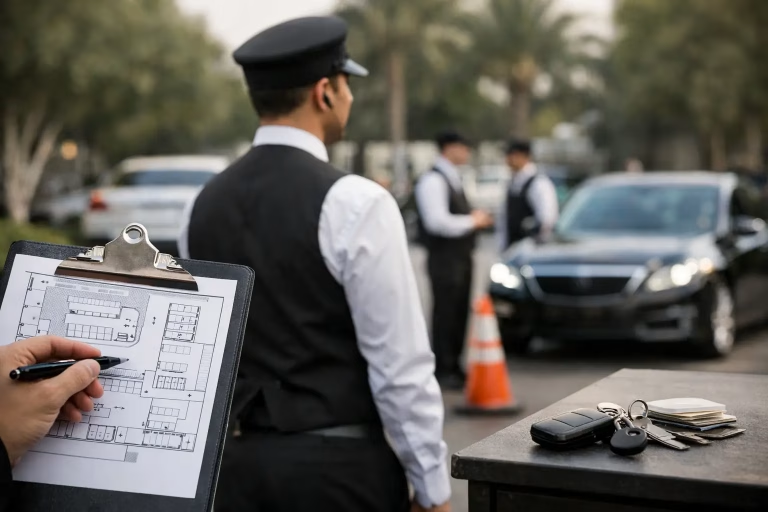
The right first step is a site walk during a realistic busy period. Observe where cars stop, where drivers hesitate, how long handovers take, and what happens when the lot reaches capacity. Those details reveal the practical changes that turn a stressful arrival into a confident welcome.