Why Hotels Outsource Parking Operations Today
A guest can form an opinion of a hotel before reaching the front desk. A blocked driveway, an unclear drop-off point, or a long wait to retrieve a vehicle can undermine an otherwise polished stay. That is why hotels outsource parking operations: the arrival experience requires dedicated attention, trained personnel, and operational control that many internal teams cannot consistently provide on their own.
For hotel leaders, valet and parking are not peripheral services. They affect guest satisfaction, lobby flow, security, staff productivity, and the property’s reputation during its busiest hours. A specialized operating partner turns parking from a daily source of pressure into a managed part of the hospitality experience.
Why Hotels Outsource Parking Operations
Hotels operate around changing demand. Check-in peaks may overlap with restaurant traffic, conference arrivals, weddings, airport transfers, and weekend leisure guests. A parking area that appears manageable at noon can become congested within minutes when several guest movements occur at once.
An outsourced parking operator is built to manage those fluctuations. Rather than assigning front desk staff, security personnel, or facilities employees to direct vehicles when demand rises, the hotel has a dedicated team with defined roles. One team member welcomes and receives vehicles, another manages the staging area, and another coordinates retrievals and traffic flow. This structure creates accountability at the curb and prevents parking activity from spilling into the lobby operation.
The value is especially clear at properties where the arrival area is limited. In busy hospitality districts across Saudi Arabia, driveway space is often as valuable as indoor space. A properly managed valet operation keeps vehicles moving, protects access for guests and emergency services, and makes the entrance feel calm even when demand is high.
The Arrival Experience Is Part of the Brand
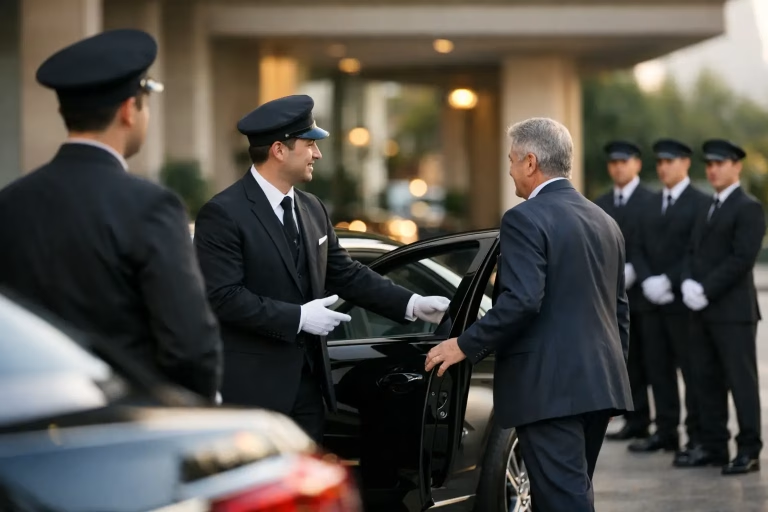
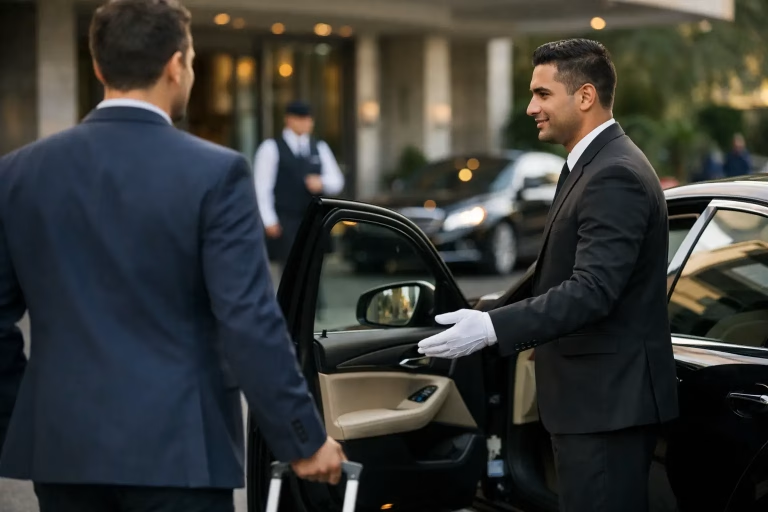
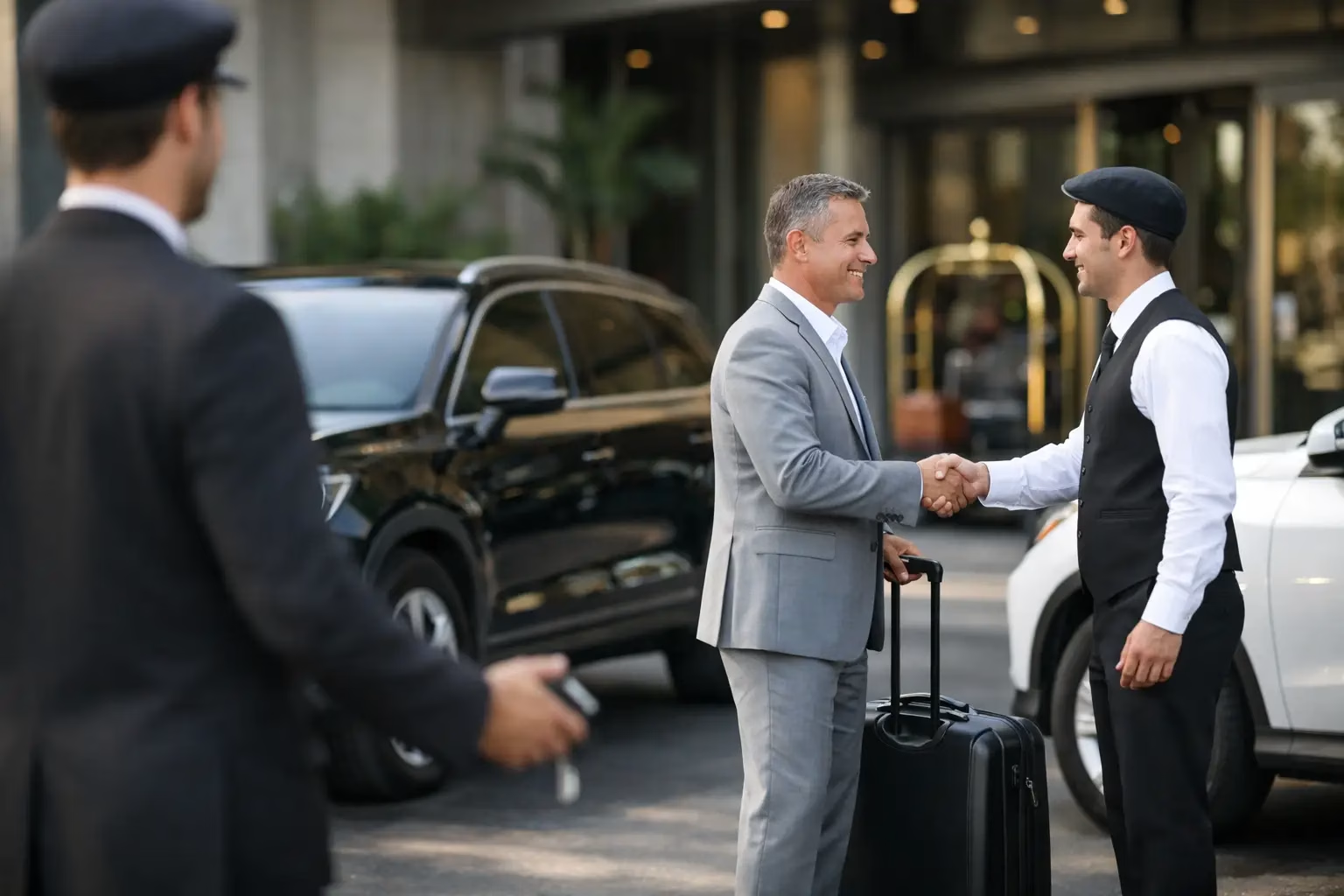
Guests do not separate the valet attendant from the hotel brand. The greeting, posture, communication, and speed of service all become part of their impression of the property. A professional parking team understands that the handover of a vehicle is also a handover of trust.
This is one reason outsourcing can be stronger than hiring individual attendants internally. A specialist provider recruits, trains, supervises, and evaluates teams specifically for guest-facing parking work. Staff learn how to welcome guests courteously, document vehicle condition, handle keys responsibly, communicate wait times, and respond professionally when the driveway is under pressure.
The goal is not simply to park more cars. It is to give every arriving guest a clear, confident welcome. For luxury hotels, this supports the level of service guests expect. For business hotels, it helps travelers move efficiently from vehicle to meeting, room, or reception. For resort and event properties, it establishes order before the guest enters the building.
Consistency Matters More Than a Busy-Day Fix
A hotel may be able to manage parking with internal resources on a typical weekday. The real test comes during peak occupancy, high-profile events, holidays, or unexpected traffic surges. Service quality should not decline precisely when the property is most visible.
Outsourced operators can plan staffing around occupancy forecasts, event calendars, booking patterns, and expected arrival windows. They can also provide structured shift coverage, on-site supervision, and procedures for sudden volume increases. This gives management a more reliable standard of service instead of depending on improvised solutions.
Better Control of Traffic and Capacity
Parking operations involve more than attendants moving vehicles. They require a clear understanding of the property’s physical layout, available capacity, guest priorities, loading zones, accessible spaces, employee parking, and surrounding road conditions.
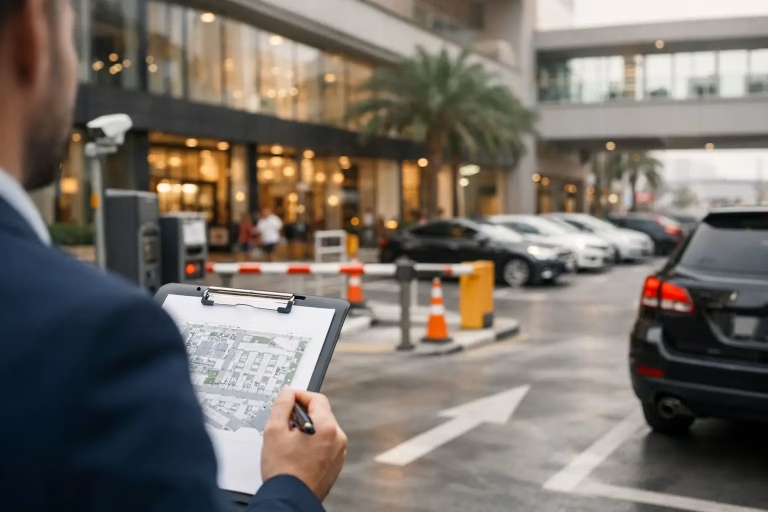
A professional operator begins with a site-specific parking plan. The plan identifies where vehicles should enter, where guests should be received, how cars are staged, which spaces are reserved, and how vehicles are retrieved without creating bottlenecks. It also considers separate flows for hotel guests, restaurant visitors, conference attendees, suppliers, and VIP arrivals when necessary.
This level of planning can reduce unnecessary circulation in the driveway and parking area. It helps prevent a common hotel problem: cars entering a full or poorly organized lot without direction, then blocking other guests while attempting to turn around or wait. With active capacity management, the team can guide vehicles early and keep the entrance functioning with greater order.
For properties with limited parking, outsourcing does not create new spaces. It does, however, help the hotel use existing spaces more intelligently. Faster vehicle handling, controlled staging, and clear prioritization can improve the practical capacity of a parking operation without compromising safety.
Lower Operational Burden for Hotel Management
Managing valet internally means managing recruitment, scheduling, uniforms, training, supervision, turnover, incident procedures, and performance standards. Those responsibilities can consume significant time for hotel operations and human resources teams, particularly when parking is not their core specialization.
Outsourcing shifts much of that burden to a partner whose work is centered on parking. The hotel can focus on rooms, food and beverage, housekeeping, guest relations, and revenue performance while retaining visibility over the parking experience through agreed service standards and reporting.
This does not mean the hotel gives up control. The most effective arrangements establish clear expectations from the start: staffing levels, operating hours, guest greeting standards, retrieval targets, escalation contacts, appearance requirements, and procedures for special events. The provider manages execution, while hotel leadership maintains oversight of the experience guests receive.
The Cost Decision Requires More Than Payroll Math
Some hotels compare outsourcing only against the hourly cost of in-house attendants. That comparison is incomplete. Internal parking teams also involve hiring time, training costs, overtime exposure, absenteeism coverage, uniforms, insurance considerations, management attention, and the operational impact of inconsistent service.
A specialist partner may offer a more predictable operating model, especially for hotels with fluctuating demand. Still, outsourcing is not automatically the right answer for every property. A small hotel with ample self-parking, low arrival volume, and no valet expectation may not need a full-service operation. The decision depends on traffic intensity, guest profile, physical constraints, and the importance of the arrival experience to the hotel’s positioning.
Safety, Vehicle Care, and Accountability
When guests hand over their keys, they expect their vehicle to be handled with care and returned in the same condition. A single poorly handled incident can affect trust far beyond the parking area.
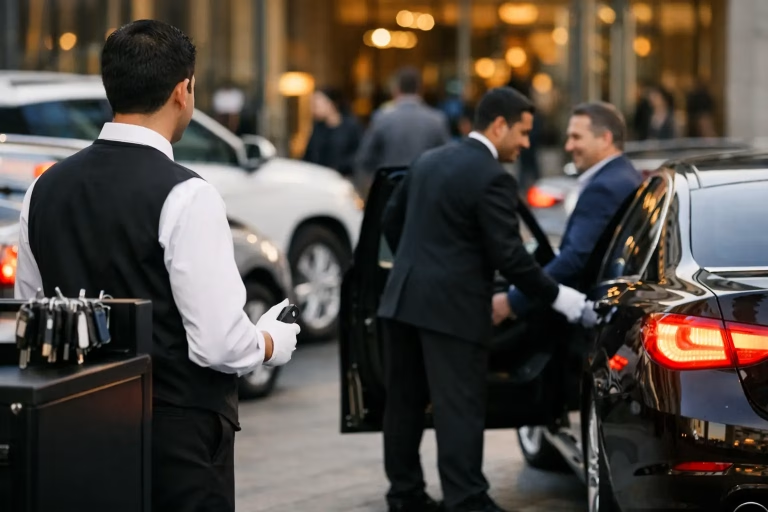
Professional parking operations use documented procedures for vehicle intake, key custody, parking allocation, retrieval, and incident reporting. Digital ticketing tools can improve traceability by recording key details, reducing confusion during busy shifts, and supporting faster vehicle retrieval. The right system also gives supervisors a clearer view of vehicles currently in custody and those ready for collection.
Insurance coverage and defined liability procedures are equally important. Hotels should confirm how vehicles are protected while under the operator’s care, how damage claims are documented, and who communicates with the guest if an incident occurs. These details should be clear before the service begins, not discovered after a problem.
At Wagifli, parking operations are approached as an extension of the hotel’s hospitality standards, with trained teams, tailored site plans, and operational discipline designed to protect both the guest experience and the property’s image.
Stronger Support for Events and High-Volume Periods
Hotels frequently host conditions that are difficult to absorb with a fixed internal team. Conferences can release hundreds of attendees at once. Wedding guests often arrive within a narrow time window. Restaurant reservations may overlap with hotel check-in, creating demand at the same entrance.
An outsourced operator can build an event parking plan around these moments. That may include additional attendants, designated VIP handling, separate vehicle lanes, temporary staging procedures, guest communication points, and coordination with hotel security and event organizers. The team can also adjust the plan as conditions change on site.
The operational benefit is visible to guests. Instead of searching for direction at the curb, they are received, guided, and moved through the arrival process with purpose. For organizers, that reduces one of the most common sources of event frustration: the feeling that everything was well planned inside the venue but disorganized outside it.
What Hotels Should Look for in a Parking Partner
The right partner should be evaluated on more than the number of attendants it can provide. Hotel leaders should look for evidence of training, supervisory structure, vehicle-care procedures, insurance protection, uniform standards, and experience managing guest-facing environments.
It is also worth asking how the provider develops a site plan, measures performance, handles peak periods, and communicates operational issues. A provider that offers only labor may solve an immediate staffing gap. A provider with a clear operating framework can improve the entire arrival process.
For the strongest results, involve the parking partner before a major opening, renovation, event season, or change in driveway layout. A few practical adjustments to traffic flow, signage, staff placement, and staging can prevent recurring problems long before guests encounter them.
A hotel’s entrance should communicate care from the first vehicle to the final farewell. When parking is managed with the same discipline as the front desk, guests notice the difference before they ever collect a room key.