فاليه للمطاعم الفاخرة for Better Fine Dining
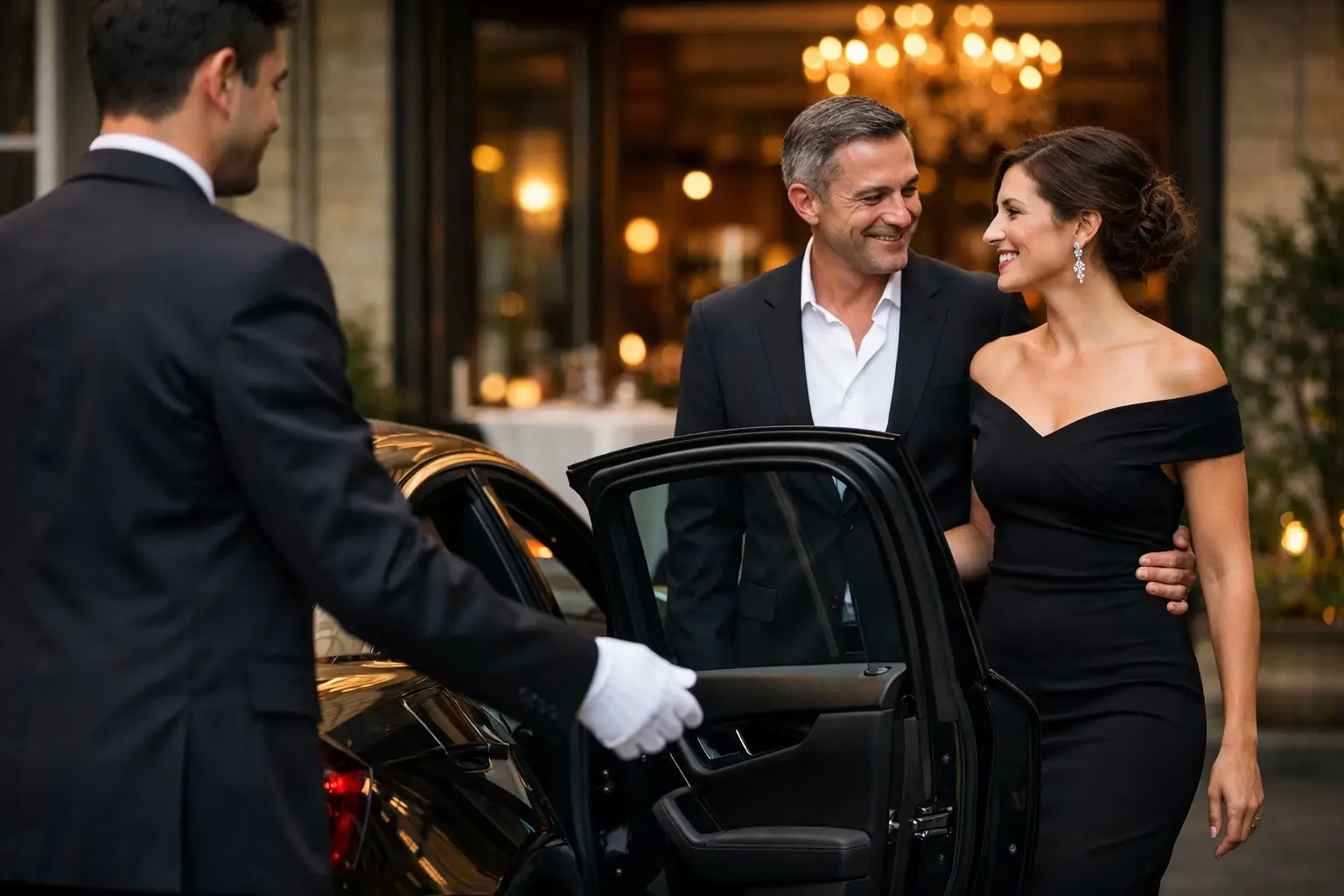
A guest can forgive a short wait for a table more easily than a confusing arrival. When cars stack up at the entrance, drivers circle for space, and guests step into traffic before they reach the host stand, the dining experience starts under pressure. فاليه للمطاعم الفاخرة changes that first moment from a traffic problem into a composed, attentive welcome that reflects the standard of the restaurant.
For premium restaurants, valet service is not simply about parking vehicles. It is an operational part of hospitality: directing cars safely, receiving guests with courtesy, protecting vehicles, and keeping the entrance clear during the hours that matter most. Done well, it gives the restaurant team more control over the guest journey before the first menu is opened.
Why Arrival Matters at a Fine-Dining Restaurant
A fine-dining restaurant invests heavily in the details guests can see: lighting, table settings, music, service choreography, and menu presentation. Yet the driveway or curb often determines the mood before any of those elements have a chance to work. A guest arriving for a business dinner, anniversary, or family occasion expects the same care outside the building as inside it.
The operational stakes are equally high. A crowded entrance can delay reservations, create friction with neighboring businesses, block access lanes, and place unnecessary pressure on hosts and security personnel. These issues are especially visible during weekend peaks, holiday evenings, and private dining events, when several parties may arrive within minutes of one another.
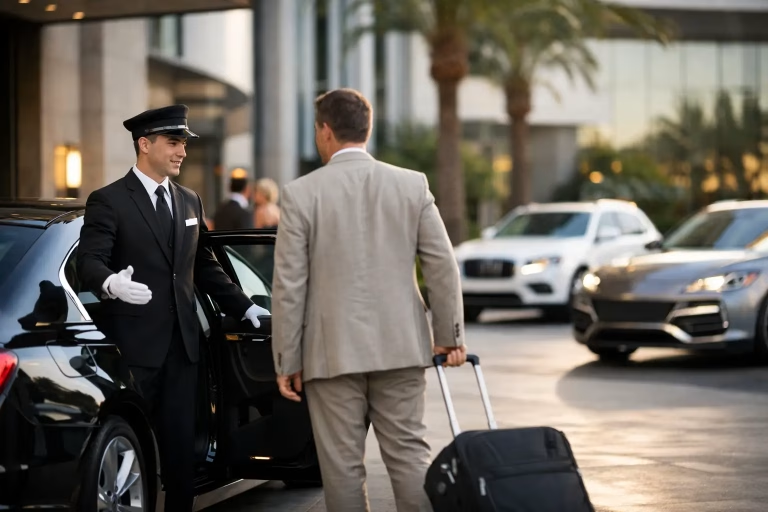
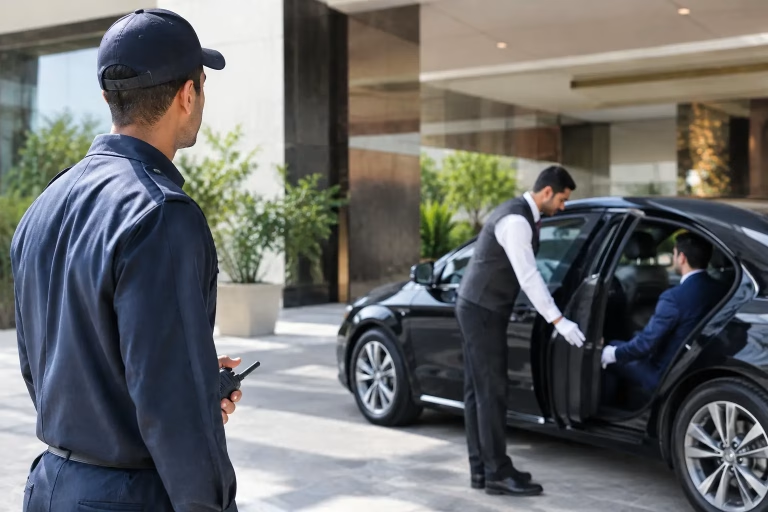
A professional valet team manages this pressure at the point of arrival. The team receives each vehicle, guides the guest toward the entrance, records the vehicle information accurately, and moves the car according to a planned parking sequence. The result is a calmer front door, more predictable traffic flow, and an arrival experience aligned with the restaurant’s positioning.
What Professional Valet Service Actually Includes
A restaurant does not need more people standing at its entrance. It needs a managed operation with clear responsibilities, trained personnel, and a plan built around the site’s real constraints. This distinction matters when evaluating a provider.
A complete valet operation begins before the first vehicle arrives. The provider assesses the entrance layout, curb access, pedestrian paths, nearby roads, available parking areas, peak arrival patterns, and potential bottlenecks. From there, the team establishes where vehicles stop, where they queue, how keys are controlled, and how cars are retrieved without creating disorder at the curb.
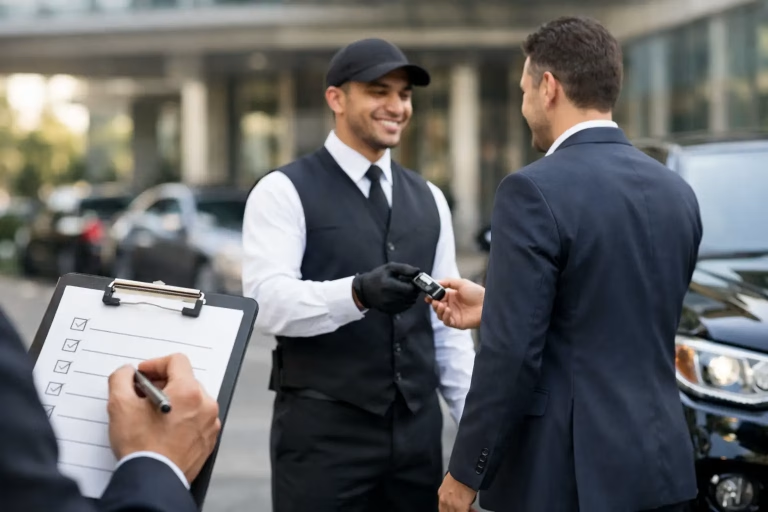
At service time, trained attendants do more than drive. They greet guests professionally, conduct a quick visible vehicle check when required, issue or register a ticket, communicate with the parking team, and maintain a controlled handoff from vehicle to restaurant entrance. Supervisors monitor the pace of arrivals and retrievals, adjust staffing during surges, and resolve exceptions before they become visible to guests.
For upscale restaurants, appearance and conduct are part of the service standard. Uniformed personnel, respectful communication, discreet handling of guest preferences, and disciplined key custody all contribute to confidence. The valet team represents the restaurant at a highly visible moment, so professionalism cannot be treated as an optional extra.
فاليه للمطاعم الفاخرة Is a Capacity Strategy
Parking capacity is often discussed as a fixed number of spaces. In practice, usable capacity depends on how effectively vehicles move through the site. Poorly coordinated arrivals can make a sufficient lot feel full, while an organized operation can reduce wasted space, prevent blocked lanes, and improve the turnover of accessible parking areas.
This is where valet becomes a practical capacity strategy. Attendants can park vehicles in a planned order, use available space more efficiently, and separate short-stay or priority vehicles when the layout allows. They can also control the arrival lane so that guests do not compete for the same curbside space.
The value is strongest when the restaurant faces recurring constraints, such as limited frontage, shared parking, a narrow entrance, or a high concentration of reservations within a short window. It can also be valuable for restaurants with ample parking but a high service expectation. In that case, the goal is less about adding spaces and more about removing effort from the guest’s arrival.
That said, valet is not a substitute for poor site planning. If the entrance has no safe stopping zone or the lot is genuinely undersized for the restaurant’s demand, the operating plan must address those conditions honestly. A reliable provider will recommend staging procedures, traffic coordination, or adjusted service coverage rather than promise results the location cannot support.
Designing the Service Around Restaurant Peak Hours
Restaurant demand rarely stays constant throughout the day. Lunch may bring short, concentrated arrivals. Dinner can create several waves tied to reservation times. Late-night service may shift the challenge from arrivals to fast, simultaneous vehicle retrievals. Private events add another layer, particularly when groups arrive by multiple cars at once.
The right valet plan reflects these patterns. Staffing should be based on expected vehicle volume, distance to parking areas, service windows, and the required retrieval time. A restaurant with a compact lot near the entrance needs a different model from one using off-site or overflow parking. A team that is sufficient at 6:30 p.m. may be inadequate at 8:30 p.m. when most tables turn over.
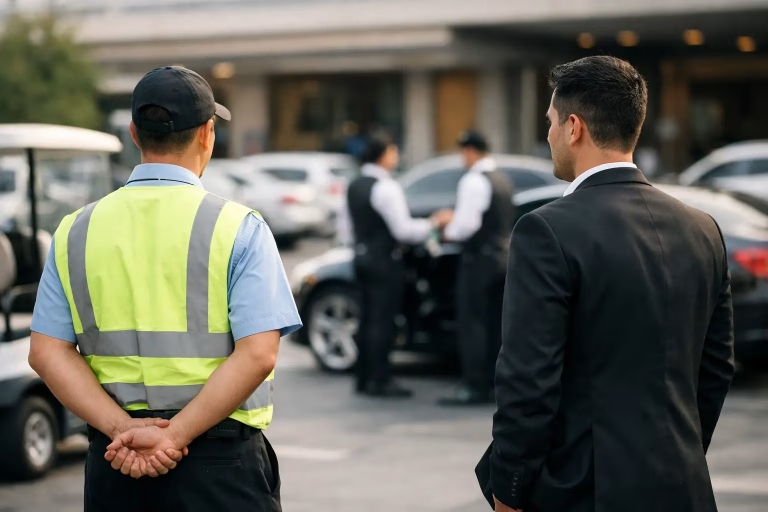
A strong plan also defines communication between valet attendants, the host team, security, and restaurant management. If a VIP guest, accessibility requirement, large group, or private event changes the flow, the response should be coordinated rather than improvised. Clear roles protect the guest experience and keep restaurant employees focused on dining service.
Safety, Insurance, and Accountability Build Trust
Guests hand over a valuable personal asset when they use valet service. That transfer requires trust, and trust comes from disciplined procedures rather than a friendly greeting alone. Restaurants should expect their valet partner to have trained drivers, controlled key handling, documented processes, and appropriate insurance coverage for vehicles while under the service provider’s care.
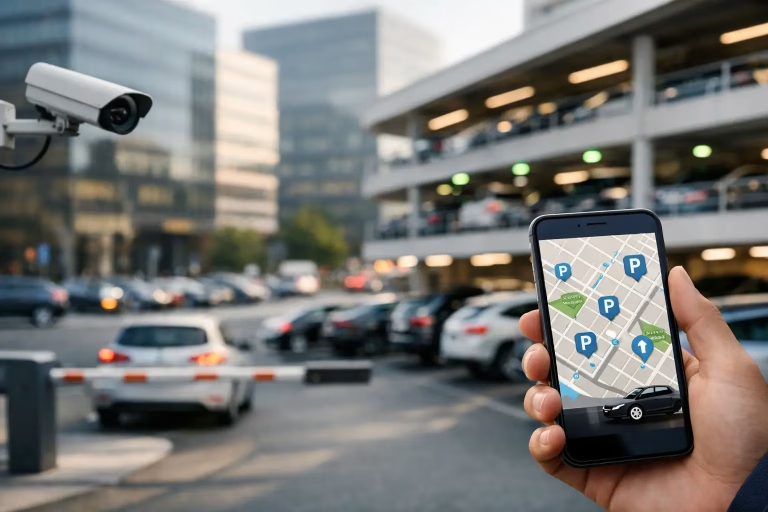
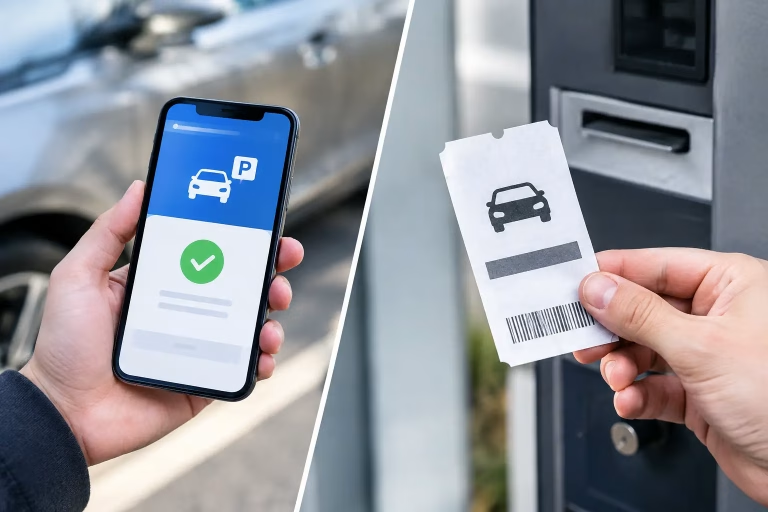
Vehicle identification and ticketing systems reduce avoidable errors. They create a traceable record from acceptance through retrieval, helping attendants locate vehicles quickly and giving managers visibility when questions arise. Digital tools can further support accurate records and faster communication, but the technology must serve the operation. A complicated system that slows the curbside handoff is not an improvement.
Safety also includes the environment around the restaurant. Attendants should manage pedestrian crossings carefully, keep fire lanes and access points clear, follow site-specific rules, and avoid creating congestion on public roads. In busy hospitality districts across Saudi Arabia, these details can affect both guest satisfaction and the restaurant’s relationship with neighboring venues.
How to Evaluate a Valet Partner
The most useful question is not, “How many attendants can you provide?” It is, “How will you operate this specific entrance under pressure?” A capable provider should be ready to discuss the site, guest profile, peak periods, vehicle volume, parking distance, and service expectations before proposing a staffing model.
Look for evidence of operational ownership. This includes a written plan for vehicle flow, trained and supervised teams, consistent uniforms, ticketing or digital tracking procedures, insurance clarity, and a process for incident reporting. Ask how the provider handles a sudden rush, a missing ticket, a guest requesting immediate retrieval, or a parking area reaching capacity. The answers reveal whether the service is designed for real conditions or only for normal days.
Customization is also essential. A chef-led destination restaurant, a hotel restaurant, and a venue hosting frequent celebrations may all be described as upscale, but they do not have the same arrival patterns. Waqifli approaches valet as a tailored hospitality operation, aligning staffing, traffic procedures, and guest-facing standards with the needs of the individual venue.
The Standard Guests Remember
Guests may not remember the ticket number or the route their car took to the parking area. They will remember whether they felt expected, whether the entrance felt controlled, and whether their car returned promptly and in good condition. Those impressions influence reviews, repeat visits, and the willingness to recommend the restaurant for an important occasion.
For a premium restaurant, the strongest valet service is almost invisible in the best sense: calm at the curb, attentive in the handoff, precise in the parking process, and ready when the guest departs. Treat the arrival as part of the dining room, and it can become one of the quietest but most effective expressions of the restaurant’s hospitality.