كيفية تطبيق استلام سيارات رقمي in Valet Operations
A guest should not have to wonder whether their vehicle request was received, where the car is parked, or how long it will take to arrive. For hotels, restaurants, hospitals, corporate facilities, and event venues, that uncertainty can quickly become a visible service failure. The concept behind كيفية تطبيق استلام سيارات رقمي is straightforward: replace disconnected paper tickets, radio calls, and manual searching with a controlled digital process that makes each vehicle request traceable from arrival to handoff.
The value is not technology for its own sake. Digital vehicle retrieval gives the operations team better command of vehicle flow while giving guests a calmer, more polished departure experience. When designed around the realities of the site, it supports the standards of hospitality, safety, and accountability that decision-makers expect from a professional valet operation.
Why digital vehicle retrieval changes the guest experience
Traditional valet service can work well during quiet periods. The pressure appears when several guests depart at once, an event program ends, or a restaurant reaches its evening peak. Handwritten ticket numbers may be unclear, radio messages can be missed, and attendants may spend valuable minutes locating the right vehicle. The guest sees only the delay, not the cause behind it.
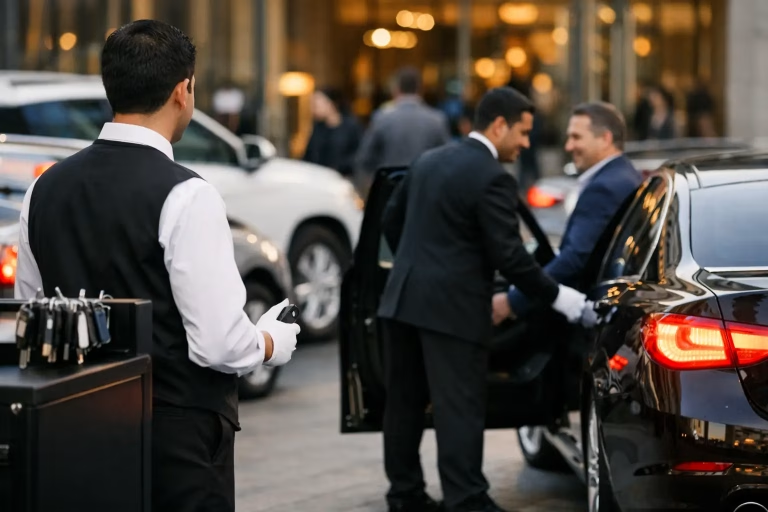
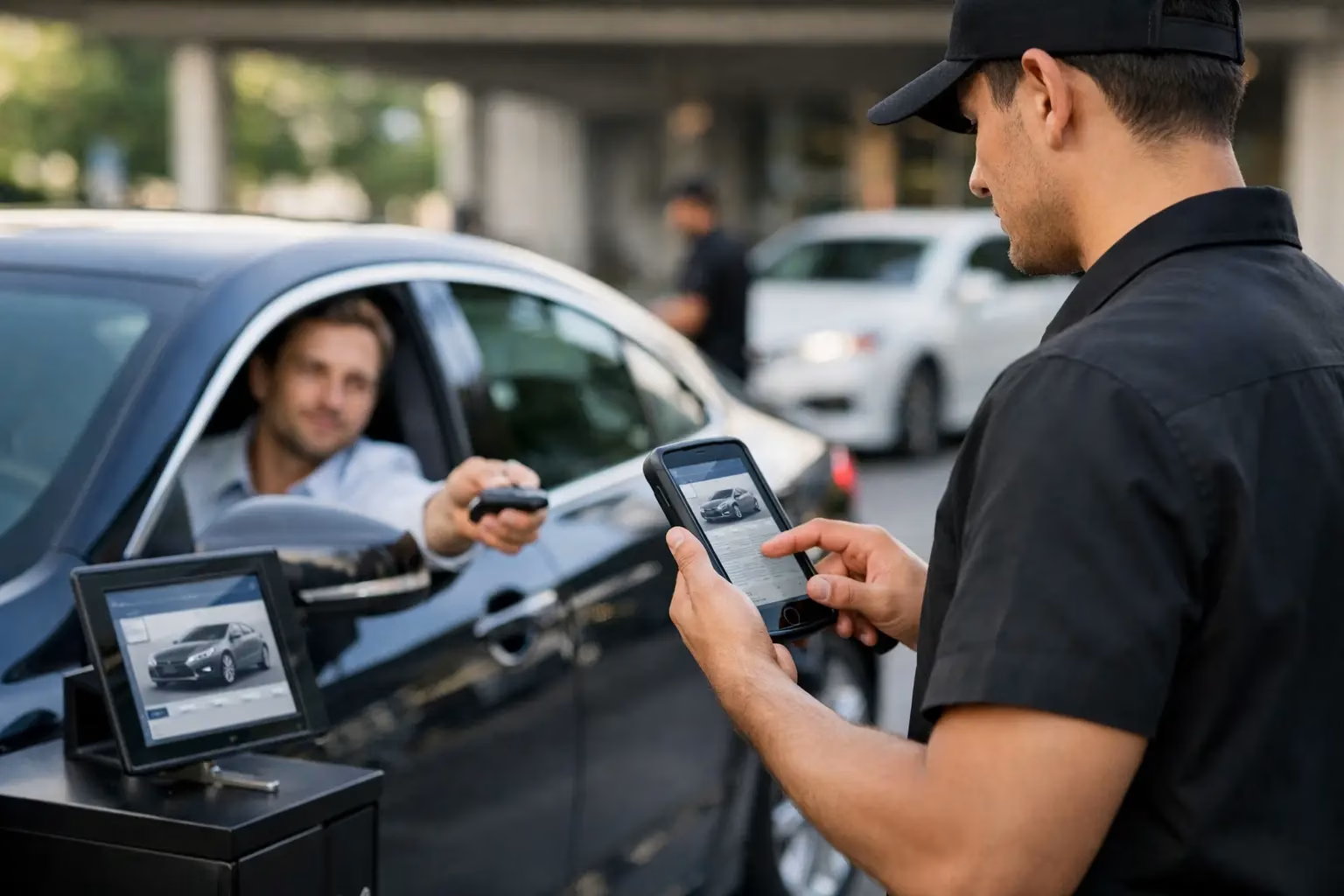
A digital retrieval process creates a shared, current record of every vehicle. The valet team can record the vehicle details, parking location, arrival time, and any relevant notes at check-in. When the guest requests the car, the request reaches the dispatch point or assigned attendant immediately. The team can prioritize the request, confirm progress, and prepare the vehicle for a courteous handoff.
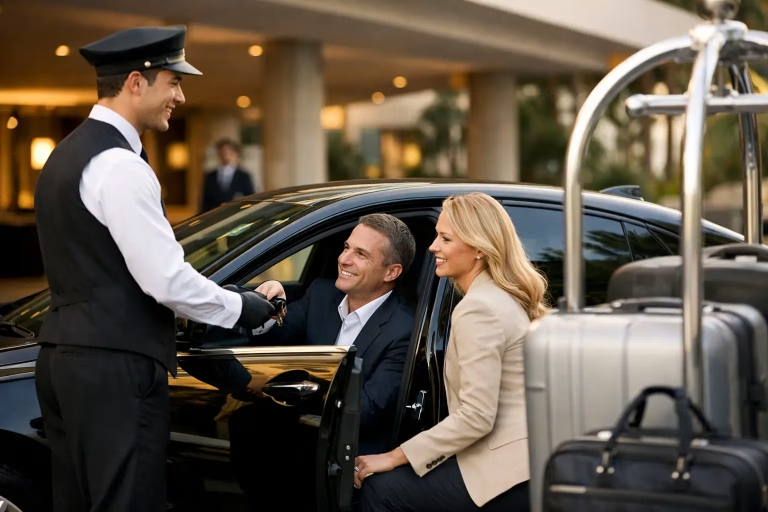
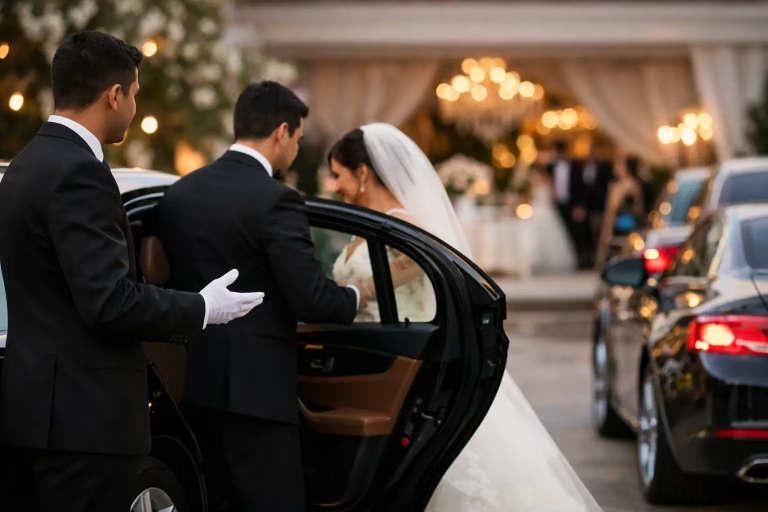
This matters commercially because the final interaction often shapes the guest’s lasting impression. A well-managed departure signals that the venue respects the guest’s time. For a luxury hotel or fine-dining restaurant, it reinforces the service promise. For a hospital, it can reduce stress for patients and visitors who need to leave promptly. For a conference or wedding, it prevents the parking exit from becoming the least organized moment of the event.
كيفية تطبيق استلام سيارات رقمي: start with the operating model
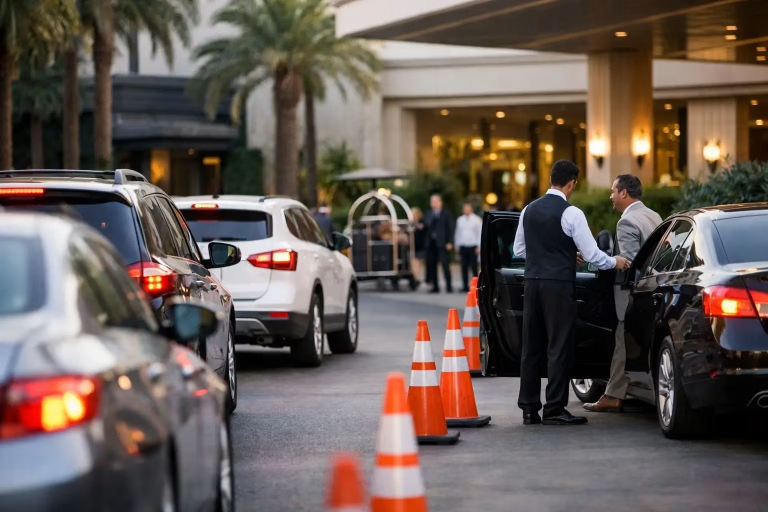
The strongest digital system cannot compensate for an unclear parking plan. Before selecting a ticketing platform or guest-facing request method, define how vehicles move through the site. Identify the drop-off lane, staging area, parking zones, pedestrian paths, keys station, dispatch point, and return lane. The process should work during normal traffic and under peak demand.
Start by mapping the guest journey from curbside arrival to vehicle return. At check-in, the attendant should capture only the information required to identify and protect the vehicle: license plate, make or model, color, guest reference, and parking location. The system should also record which team member received the vehicle and the time of custody. If the site policy requires condition notes or photos, these should be completed consistently rather than only when a concern arises.
Next, establish parking zones that reflect operational reality. A large off-site lot, a multilevel garage, and a compact hotel forecourt require different location coding. A location label such as “Zone C, Row 4, Bay 12” is more useful than a vague note like “lower parking.” The goal is for any trained attendant to find the vehicle without relying on one employee’s memory.
At the retrieval stage, requests should enter one queue, regardless of whether they originate from a digital ticket, a front desk request, a host stand, or an event coordinator. A dispatcher or designated lead can then assign requests based on vehicle location, guest priority, and available attendants. This prevents multiple staff members from searching for the same car while another request remains unassigned.
Choose the right request method for the venue
There is no single guest request method that suits every property. The right choice depends on guest behavior, service level, available staffing, and the physical distance between parking and pickup.
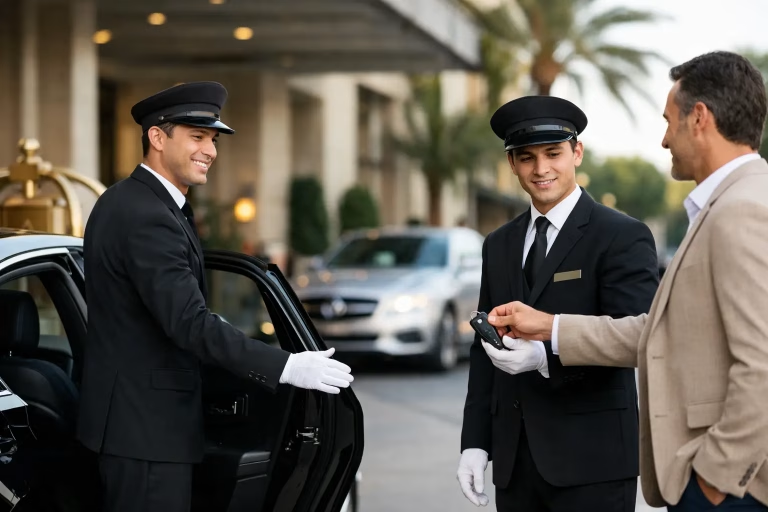
For a hotel, guests may request their vehicle through a digital ticket reference or by contacting the front desk, allowing the valet team to prepare the car before the guest reaches the entrance. At a restaurant, a simple request process at the host stand may be more appropriate because guests are already checking out in person. At a major event, a QR-enabled ticket or guest messaging workflow can reduce congestion when many attendees leave within a short window.
The trade-off is worth considering. A fully self-service request option can reduce manual steps, but some guests will still prefer assistance. High-end hospitality should not force guests to use a phone when a concierge or valet attendant can handle the request gracefully. The best model combines digital visibility for the operations team with flexible service for the guest.
Build accountability into every handoff
Vehicle custody is a matter of trust. A digital record should make it clear when a vehicle was received, where it was parked, who moved it, when it was requested, and when it was returned. This documentation supports daily operations, but it also provides vital clarity if a guest raises a question about timing, vehicle condition, or key handling.
Access controls matter as much as the software interface. Only authorized team members should be able to update vehicle status or retrieve keys. Keys should be stored in a controlled location, with a clear process for transfer between shifts. Devices used by attendants must be charged, protected, and available at the start of each service period. A digital process becomes unreliable if staff members revert to personal notes because the operating equipment is not ready.
Clear status labels also prevent confusion. For example, a vehicle can move from received, to parked, to requested, to in transit, to ready for pickup, and finally released. These updates allow supervisors to see where delays occur. If cars frequently remain “requested” for too long, the issue may be staffing, parking distance, dispatch practices, or an overcrowded staging area. The system should reveal the operational problem, not simply record it.
Train the team for service, not just screens
Digital adoption succeeds when attendants understand why each step protects the guest experience. Training should cover accurate data entry, location codes, condition reporting, key control, request prioritization, and respectful guest communication. It should also include practical peak-period drills, since the team needs to perform under pressure rather than only in a quiet demonstration.
Attendants must know what to say when a request will take longer than expected. Silence creates frustration. A concise update, delivered with ownership, protects confidence: the vehicle has been located, the team is bringing it forward, and the guest will be assisted at the pickup point. The system provides the information, but professional behavior turns that information into hospitality.
Supervisors should review exceptions at the end of each shift. These may include duplicate records, incomplete parking locations, extended retrieval times, missing status updates, or guest complaints. The purpose is not to penalize individual staff for every error. It is to identify patterns before they affect the venue’s reputation.
Measure performance where it affects the business
A digital valet program should produce data that helps management make better operational decisions. Average retrieval time is useful, but it should be reviewed alongside peak-period performance, the number of requests handled per hour, queue length, and the percentage of records completed correctly. A fast average can hide a poor experience for guests leaving at the busiest time.
For venues with recurring events, the data can guide staffing plans and parking allocation. If a specific exit period consistently produces delays, the operation may need more runners, a closer staging area, or staggered guest departure messaging. If a parking zone repeatedly slows retrieval, its layout or labeling may need revision.
Wagifli approaches digital valet service as part of the venue’s operating identity, not as a separate technical add-on. The right process should match the site’s layout, guest profile, traffic pattern, and service expectations while maintaining trained staffing, vehicle protection, and clear accountability.
Avoid common implementation mistakes
The most common mistake is digitizing a weak manual process without redesigning it. If parking locations are inconsistent, key control is informal, or dispatch authority is unclear, a digital ticket will only document confusion faster. Start with the operating plan, then configure the technology around it.
Another mistake is collecting too much information at curbside. Arrival should feel welcoming and efficient, especially when vehicles are stacking behind one another. Capture the essential record quickly, then reserve detailed procedures for situations where they are genuinely required.
Finally, do not treat the launch as a one-time installation. The first weeks should include close supervision, daily review of retrieval data, and adjustments to staffing and parking zones. A system earns trust when it remains dependable on a busy Friday night, during a hotel check-out rush, or as a large event concludes.
A digital vehicle retrieval process is most effective when guests barely notice the technology at all. They simply experience a warm welcome, a secure handoff, and a vehicle ready when they are. That quiet confidence is the standard worth designing for.