Digital Valet Software Review for Busy Venues
The first minutes of a guest’s visit can be shaped by a line of vehicles, a missing ticket, or a prompt welcome and an organized handoff. A useful digital valet software review must look beyond an attractive app screen. For hotels, hospitals, restaurants, corporate facilities, and event venues, the right platform should support a disciplined arrival operation when traffic is high, staff are moving quickly, and every vehicle is under the venue’s care.
Digital tools can improve the valet experience, but they do not replace operating standards. The strongest result comes from matching the software to trained staff, a clear traffic plan, defined vehicle custody procedures, and the character of the property. That is where the technology begins to protect the guest experience rather than add another layer of complexity.
What Digital Valet Software Should Actually Improve
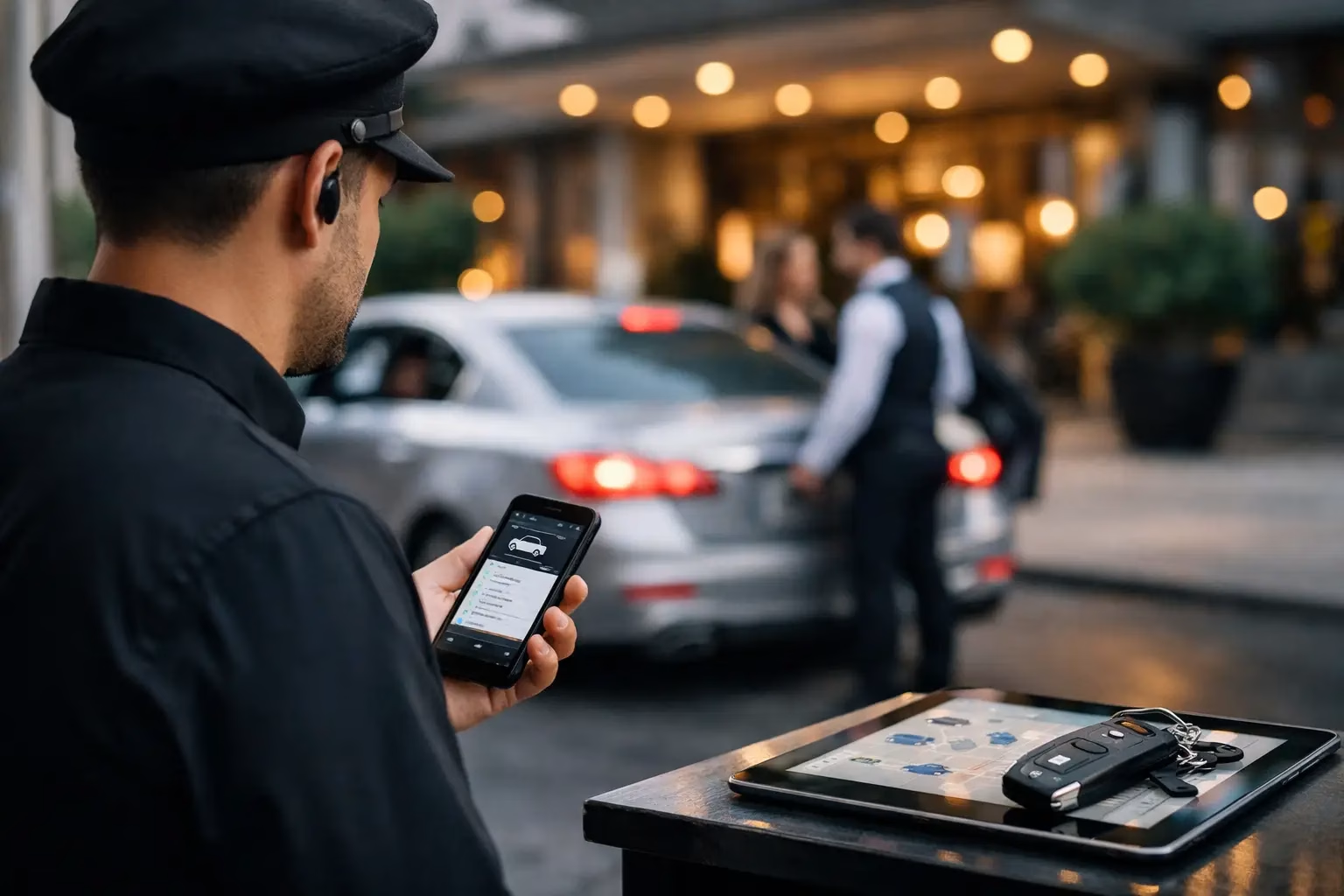
A valet platform should make the vehicle journey visible from arrival to retrieval. At check-in, the attendant captures the guest’s details, vehicle information, and parking location. The system then creates a digital record that can be tied to an SMS notification, QR code, or digital claim process. When the guest requests the vehicle, the team receives the request early enough to prepare the car before the guest reaches the curb.
That sounds straightforward, but the operational value is significant. A clear digital record reduces reliance on handwritten tickets, helps attendants locate vehicles quickly, and gives supervisors a better view of volume and wait times. For a busy restaurant during peak dinner service or a wedding venue handling hundreds of arrivals in a narrow window, this visibility can prevent the entrance from becoming the bottleneck.
The technology should also support a more polished guest interaction. Guests should not need to repeat vehicle details, search through paper tickets, or wait without knowing whether their request has been received. A simple confirmation and realistic status communication can make the service feel attentive and controlled.
Digital Valet Software Review: The Features That Matter
Not every feature deserves equal weight. A venue should evaluate the functions that directly affect speed, accountability, safety, and management control.
Fast, accurate check-in and retrieval
The attendant interface must be quick enough to use curbside without slowing the arrival line. Look for a clean workflow that captures the driver name, phone number, license plate, vehicle description, and any relevant notes. Plate lookup and repeat-guest profiles can save time, but only if the team can use them without interrupting the welcome.
Retrieval is the more visible test. The platform should immediately alert the right team members and clearly identify where the vehicle is parked, who moved it last, and when the request was made. If the software adds several steps before a car can be requested, it may work against service during rush periods.
Live operational visibility
Managers need more than a final daily total. They need to see how many cars are checked in, how many are being retrieved, average turnaround time, parking areas nearing capacity, and periods when the arrival lane is under pressure.
This is especially valuable at large properties with multiple parking zones or off-site overflow. Without live visibility, supervisors often rely on radio calls and assumptions. With it, they can move staff before wait times rise, redirect arrivals, and make better use of available spaces.
Vehicle documentation and chain of custody
A quality system should document the condition of each vehicle at intake, including photos when the operating environment calls for them. The record should note the time, attendant, vehicle location, and handoff activity. This is not about making every arrival feel procedural. It is about creating dependable documentation when a question arises.
For premium hotels, healthcare facilities, and private events, vehicle custody is part of the trust placed in the valet operator. Digital records help the venue and its service partner respond professionally to concerns while reinforcing disciplined handling from the beginning.
Guest communication that respects the occasion
Text notifications, digital receipts, and contactless requests can reduce congestion at the valet stand. Yet communication should fit the venue. A hospital visitor may value a short, direct notification. A luxury hospitality guest may expect discreet, refined communication. An event guest may need simple instructions that work even when cellular networks are busy.
The best software provides configurable messages and branding without turning every guest interaction into a marketing message. The purpose is clarity: confirm receipt, set expectations, and make pickup easier.
Reporting that informs decisions
Daily reports should answer practical questions: When are arrivals highest? How long do guests wait? Which parking areas fill first? How many vehicles are handled per shift? Are there repeated exceptions or delayed retrievals?
Over time, this data helps a property plan staffing, curb space, overflow arrangements, and event schedules. A report that only counts parked cars has limited value. The better platform helps management understand where service quality is being won or lost.
The Trade-Offs Behind the Feature List
More software capability is not always better. A highly configurable platform can be valuable for a major hotel or mixed-use destination, but it may be excessive for a restaurant with a compact team and a single parking area. Conversely, a basic digital ticketing tool may be sufficient for low-volume service but fall short at a conference center with multiple entrances, rotating teams, and high guest expectations.
There is also a trade-off between convenience and privacy. Collecting guest phone numbers enables retrieval notifications, but the venue should understand how data is stored, who can access it, and how long it is retained. The software provider should offer clear controls for permissions, audit trails, and data handling. In Saudi Arabia, where hospitality standards and data responsibility both matter, this should be part of the commercial and operational review rather than an afterthought.
Hardware requirements deserve attention as well. Tablets, mobile devices, printers, connectivity, battery management, and backup procedures influence whether the system remains reliable outdoors and during peak demand. A platform that performs well in a demonstration but fails when Wi-Fi coverage is inconsistent will create pressure at the curb.
Questions to Ask Before Selecting a Platform
Before committing, ask the provider to demonstrate the exact workflows your team will use. Do not settle for a generic presentation. Have them show a guest arriving without a reservation, a vehicle being moved to overflow parking, a lost claim reference, a peak-period retrieval, and a manager reviewing an incident record.
You should also ask how quickly new attendants can be trained, what happens if the internet connection drops, whether the system supports multiple entrances, and how it handles staff permissions. A supervisor should have access to management controls without every user being able to edit sensitive vehicle or guest records.
Integration can matter, but only when it serves a real purpose. Hotels may benefit from alignment with guest-service systems. Event organizers may need reporting separated by function or guest category. Corporate facilities may prioritize visitor access records. Avoid paying for integrations that will not be used consistently.
Finally, evaluate the support model. Valet operations often run outside standard office hours, including evenings, weekends, and major events. If a technical issue occurs during a fully booked dinner service or a high-profile wedding, the venue needs a defined response path and a practical fallback procedure.
Software Is Only as Strong as the Operating Model
Digital valet software is most effective when it supports an established operating plan. The plan should define arrival lanes, guest greeting standards, vehicle inspection expectations, parking zones, key control, retrieval staging, escalation procedures, and peak-period staffing. Software can record and coordinate these activities, but it cannot compensate for unclear roles or insufficient capacity.
That is why the evaluation should include the service partner, not just the platform. An experienced valet operator can configure workflows around the physical layout of the site, train teams to use the tools with confidence, and adapt the process when guest traffic changes. At Wagifli, the technology is treated as part of the service operation: a way to improve speed, accountability, and the quality of the welcome while trained teams remain focused on the guest.
For seasonal events, the ideal solution may be a lighter setup designed for rapid deployment. For hospitals and hotels, the priority may be consistency across every shift and a stronger record of custody. For restaurants, the focus may be quick turnover and preserving curbside order during short, intense peaks. The right answer depends on the property’s traffic pattern, physical layout, service promise, and risk profile.
A Better Standard for the Arrival Experience
The best digital valet system does not call attention to itself. Guests notice the result: a courteous greeting, a confident handoff, clear communication, and a vehicle returned when expected. Management notices fewer manual errors, better visibility, and a team that can handle demand without sacrificing the tone of the property.
When reviewing software, choose the platform that makes those moments easier for staff to deliver under real operating pressure. That is the standard that protects both the vehicle and the reputation of the venue.