How Digital Valet Ticketing Works for Hotels
A guest should not have to search for a paper stub while standing outside a busy hotel, hospital, or event venue. They should be able to request their vehicle with a few taps, receive a clear confirmation, and find it ready at the pickup point. That is the practical value of understanding how digital valet ticketing works: it replaces a fragile paper process with a controlled service workflow that protects the guest experience and gives the property team better visibility.
For decision-makers, digital ticketing is not simply a technology upgrade. It is an operational tool for managing arrival volume, reducing avoidable delays, documenting vehicle custody, and maintaining a polished first and last impression.
How Digital Valet Ticketing Works From Arrival to Retrieval
Digital valet ticketing creates a unique electronic record for every vehicle handed to the valet team. The record is usually linked to the guest through a text message, QR code, web-based ticket, or another secure identifier. Instead of receiving a paper ticket that can be lost, damaged, or handed to the wrong person, the guest receives a digital reference they can use when it is time to leave.
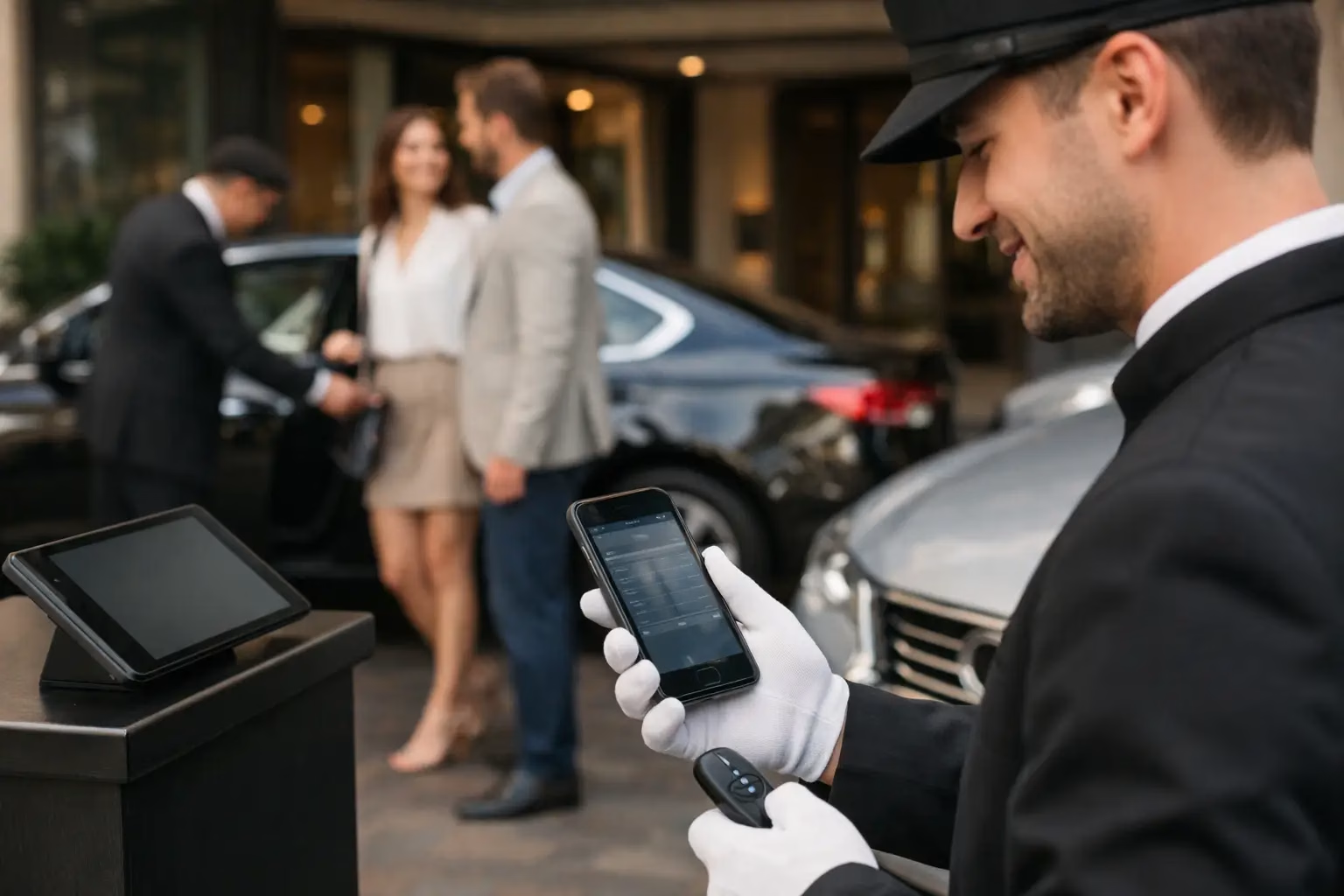
The process begins at the arrival lane. A trained valet greets the guest, confirms the required details, and enters the vehicle information into the ticketing system using a mobile device. This may include the license plate, vehicle make and color, arrival time, parking location, and any relevant notes about the vehicle. The system then generates a digital ticket and sends it to the guest’s phone or displays it as a QR code.
Once the vehicle is parked, the attendant updates its status and location. When the guest requests the vehicle, the request appears immediately to the valet operation. A dispatcher, supervisor, or available attendant can assign the retrieval task, monitor the vehicle’s progress, and confirm when it reaches the handoff point. The ticket is closed only after the vehicle has been returned.
This creates a clear chain of custody from the moment keys are received until the guest drives away.
Check-in captures the details that matter
A well-configured digital ticket does more than record a plate number. It gives the valet team a consistent intake process, particularly when several vehicles arrive at once. Depending on the property’s requirements, the attendant can record parking preferences, expected departure time, guest name, room or event reference, vehicle condition notes, and special instructions.
For a hotel, this can help identify guests who are checking in, dining, attending a function, or returning later in the evening. For a hospital, the process may support priority handling for patients and visitors with mobility needs. At a wedding or conference, it helps the team manage a concentrated rush of arrivals without relying on memory or handwritten shorthand.
The quality of this step depends on the team behind the device. Technology standardizes information, but professional attendants still need to communicate clearly, handle keys carefully, and ensure that records are accurate before the vehicle enters the parking area.
Parking locations become visible, not assumed
In a paper-ticket operation, a vehicle’s location may live in one person’s memory, on a handwritten note, or in a system that is not updated consistently. This becomes a liability when the parking area is large, off-site, shared with other tenants, or subject to frequent changes during peak periods.
Digital ticketing allows the valet team to log a parking zone, row, level, or designated holding area. When a retrieval request arrives, the assigned attendant has a better starting point and does not need to search through the lot. Supervisors can also see which vehicles are parked, in transit, ready for pickup, or awaiting guest confirmation.
That visibility improves decision-making during high-volume periods. If an event ends at the same time as restaurant service or hotel check-out, the operation can prioritize vehicles based on request time, guest needs, and available staff rather than responding to the loudest request first.
Vehicle requests can start before the guest reaches the curb
The guest-facing side of digital ticketing is often what people notice first. A guest may receive a text message with a secure retrieval option, scan a QR code, or use a digital ticket page to request the vehicle. In some operations, a concierge or front desk colleague can submit the request on the guest’s behalf.
The practical advantage is time. A guest can request their vehicle while leaving a guest room, finishing a meal, or walking through a venue lobby. The valet team receives advance notice, which gives attendants time to retrieve the vehicle and stage it appropriately.
The expected result is not that every car appears instantly. Retrieval time still depends on parking distance, traffic conditions, weather, security procedures, and the number of simultaneous requests. What digital ticketing does is make the request visible sooner and allow the team to manage the queue with greater discipline.
Why Digital Valet Ticketing Matters to Property Operations
The value of a digital system is measured in more than reduced paper use. It supports a better-controlled operation at moments when a property’s reputation is most exposed: the curbside arrival, the post-event departure rush, and the guest’s final interaction with staff.
Better accountability for vehicles and keys
Every status change can be time-stamped, creating an operational record of when the vehicle arrived, who accepted it, when it was parked, when retrieval was requested, and when it was returned. This is useful for service review, shift handovers, and incident investigation.
A clear digital trail also strengthens accountability around keys. Where key storage and transfer are managed through defined procedures, the team can reduce confusion during shift changes and busy handoff periods. The system does not replace secure key management, insurance coverage, or careful vehicle handling, but it supports all three by making responsibility easier to trace.
More predictable traffic flow
Valet service is closely tied to curb management. If guests wait too long to hand over vehicles or retrieve them, queues can spill into driveways and disrupt the entire arrival experience. Digital ticketing gives supervisors current information about pending requests and active vehicle movements, helping them direct staff where pressure is building.
For properties with limited curb space, this matters as much as parking capacity. A well-run operation can move vehicles from arrival to parking efficiently, reserve staging space for imminent retrievals, and prevent the pickup area from becoming crowded with vehicles that are not yet needed.
Stronger service consistency across shifts
A professional valet operation should not depend on one experienced employee knowing where every vehicle is parked. Digital workflows make the service repeatable by giving each team member the same structure for check-in, parking, retrieval, and handoff.
This is especially valuable for hotels and venues that operate long hours or experience seasonal demand. Supervisors can identify recurring bottlenecks, review average retrieval times, and adjust staffing plans based on actual vehicle volume. Over time, data from the operation can inform decisions about parking layouts, overflow plans, arrival lane design, and event scheduling.
What a Digital Ticketing System Does Not Solve on Its Own
Digital valet ticketing is highly effective when it is paired with sound operating procedures. A property can install the best platform available and still create poor guest experiences if there are too few attendants, unclear curbside rules, inadequate parking capacity, or no escalation plan for peak demand.
It also requires a thoughtful approach to guest access. Not every guest will want to use a QR code or receive a text message, and not every venue has equal mobile connectivity at the curb. A capable valet provider should maintain an alternative process for guests who need personal assistance or prefer a different method, without creating a separate and confusing workflow.
Privacy also deserves attention. The system should collect only the information needed to operate the service, limit access to authorized personnel, and handle guest and vehicle data according to the property’s policies. For hospitals, corporate sites, and VIP events, these controls may require additional planning.
Choosing the Right Setup for Your Property
The right digital valet ticketing model depends on the operating environment. A luxury hotel may prioritize branded guest communication, room-based requests, and concierge coordination. A restaurant may need a fast, simple system that keeps the entrance clear during short dining peaks. A hospital may require staff protocols that support accessibility, patient privacy, and urgent vehicle retrieval.
For large events, the essential issue is often capacity. The ticketing platform should support rapid intake, multiple parking zones, real-time dispatch, and a staffed command structure that can handle hundreds of requests in a compressed departure window. The platform supports the operation, but the service plan determines whether the experience feels organized.
At Wagifli, digital ticketing is treated as part of the wider valet operating plan – alongside trained teams, vehicle safety procedures, traffic organization, capacity management, and a hospitality standard suited to the venue. That combination matters because guests do not separate the technology from the service. They remember whether the arrival felt calm, whether their vehicle was handled with care, and whether departure was handled with confidence.
The most useful question is not whether a property should replace paper tickets. It is whether its arrival and departure experience is designed to give guests the same level of care the property promises everywhere else.