
Valet Parking Saudi Arabia for Better Guest Arrivals
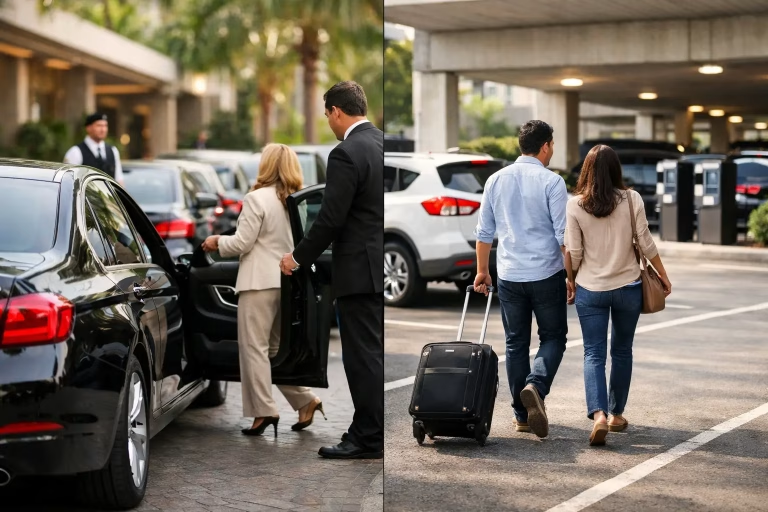
A guest’s opinion of a venue often begins before they reach the lobby, reception desk, or dining table. In high-traffic properties, valet parking Saudi Arabia is not simply a convenience at the curb. It is an operational service that shapes arrival flow, protects the guest experience, and reflects the standards of the business behind the entrance.
For hotels, hospitals, restaurants, corporate offices, and event venues, the challenge is rarely just finding spaces. It is managing several moving priorities at once: a welcoming greeting, safe vehicle handling, clear traffic movement, controlled parking capacity, and prompt vehicle retrieval. When those details are managed professionally, the arrival feels calm even when demand is high.
Why valet parking affects more than the entrance
The entrance is a highly visible part of any guest-facing operation. A line of vehicles blocking the driveway, uncertain guests looking for parking, or an unattended drop-off area can quickly weaken an otherwise polished experience. By contrast, a trained valet team gives visitors an immediate sense that the property is organized, prepared, and attentive.
That impact extends beyond appearance. Proper valet operations reduce unnecessary circulation around a site, keep fire lanes and entrances clear, and help guests reach their destination without the frustration of searching for a space. For a restaurant, that may mean an on-time reservation begins without stress. For a hospital, it can mean easier access for patients, families, and visitors during an already difficult moment.
A reliable service also protects internal teams. Front desk staff, security personnel, and event coordinators should not have to resolve parking congestion while handling their primary responsibilities. A dedicated parking partner takes ownership of the curbside operation and creates a clearer handoff between vehicle arrival and guest welcome.
What professional valet parking in Saudi Arabia should include
Providing attendants is only one part of a credible valet operation. The real value comes from a defined operating plan that fits the site, the expected volume, and the profile of the guests.
A trained team with clear service standards
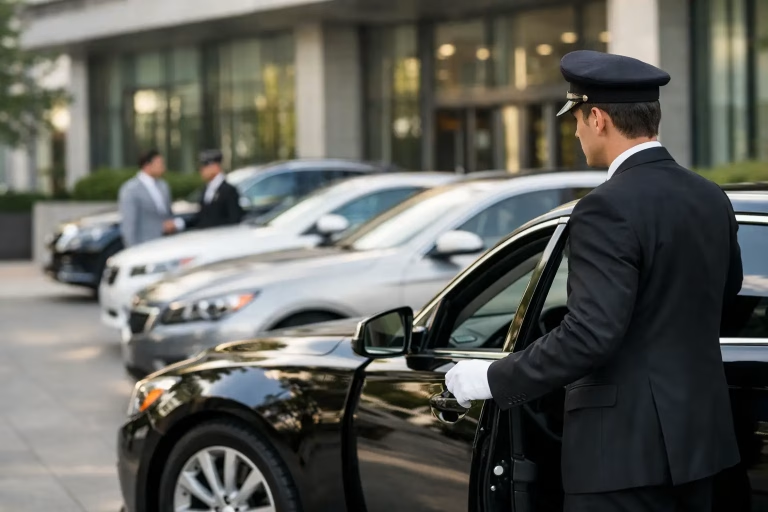
Valet attendants represent the venue from the first interaction. They need more than driving ability. They should be trained in guest greeting, vehicle receiving procedures, safe maneuvering, communication under pressure, and professional conduct. Presentation matters, but discipline matters more. A courteous team that follows consistent procedures creates trust from the first handover of the keys.
Training is especially critical during peak periods. A team must know who directs traffic, who receives vehicles, who parks, who manages retrieval requests, and who communicates with the venue’s representative. Without defined roles, even a well-staffed entrance can become disorganized quickly.
A site-specific traffic and capacity plan
No two properties have the same parking challenge. A hotel may need separate handling for guests, restaurant visitors, VIP arrivals, and service vehicles. A wedding venue may experience a sharp rush over a short period, followed by equally concentrated departures. A hospital may require priority access for patients and family members throughout the day.
A professional provider reviews the approach roads, entry and exit points, available parking zones, walking distances, peak-hour demand, and safety restrictions before operations begin. This planning determines the appropriate team size, vehicle staging method, signage, and escalation procedures.
Capacity management is central to the plan. Valet service cannot create parking spaces that do not exist, but it can use available spaces more intelligently. By directing vehicles to designated zones, monitoring occupancy, and adjusting the flow as demand changes, the operation helps prevent a full lot from becoming an entrance problem.
Ticketing and digital control
Fast service depends on accurate vehicle identification. A structured ticketing process reduces confusion, supports faster retrieval, and gives both the guest and the operator a clear record of the vehicle handover.
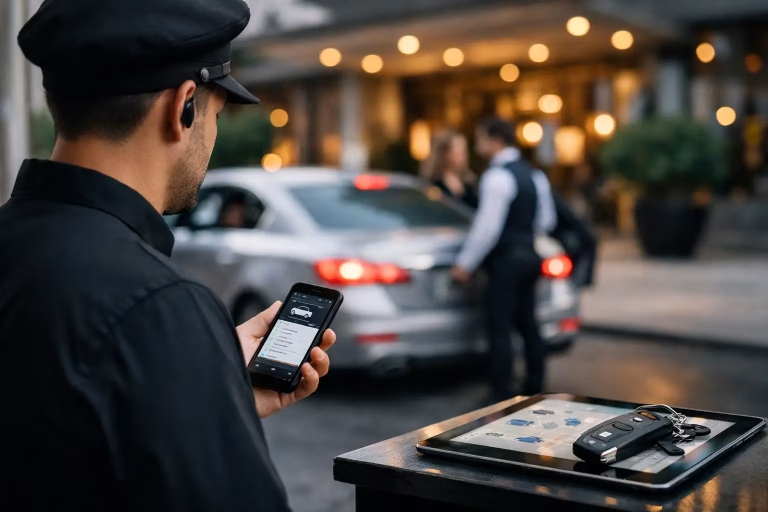
Digital tools can add further control, particularly in larger sites and busy events. They help document vehicle details, coordinate retrieval requests, monitor operational activity, and reduce manual errors. Technology should support hospitality, not replace it. Guests still expect a professional greeting and a prompt response, while operators need the visibility to make informed decisions during busy periods.
Safety and insurance coverage
Vehicle safety is not a minor detail. It is the foundation of guest confidence. Clear receiving procedures, documented vehicle condition when appropriate, controlled key handling, trained drivers, and secure parking areas all contribute to responsible service.
Decision-makers should also confirm the provider’s insurance arrangements and accountability procedures. The right partner is prepared to explain how vehicles are protected while under its care, how incidents are reported, and who is responsible for resolution. This clarity is essential for protecting the venue’s reputation as well as the guest’s property.
The operational value across different venues
The best valet model depends on the environment. A standard approach may work for a low-volume site, but high-visibility properties benefit from a service designed around their real operating conditions.
Hotels and hospitality destinations
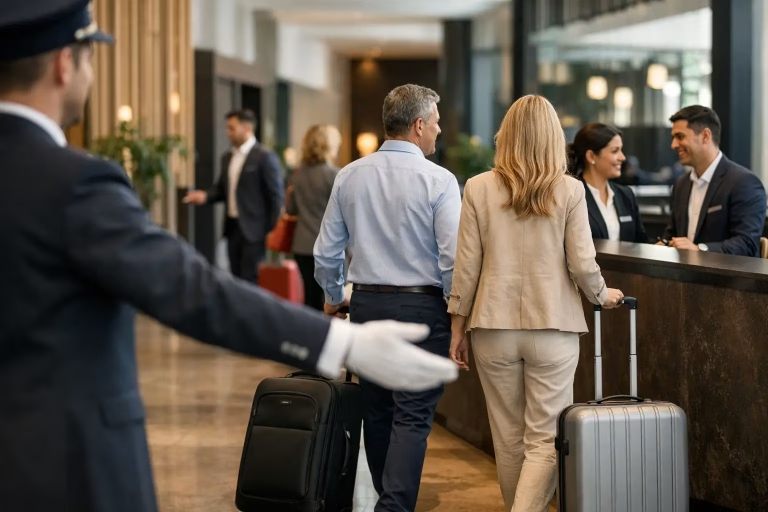
Hotel arrivals can occur around the clock, with pressure rising during check-in, dining hours, conferences, and weekend occupancy peaks. Guests may arrive with luggage, children, business equipment, or a tight schedule. The valet team must coordinate with bell service, reception, and security while preserving a composed welcome.
For luxury and business hospitality, the details are particularly visible: proper vehicle positioning, timely door assistance, organized queues, and fast retrieval. The service should feel attentive without becoming intrusive.
Restaurants and lifestyle venues
For restaurants, the arrival window is often compressed. Several reservations may reach the property within minutes, especially on weekends or during seasonal dining peaks. If the driveway fills, guests can become frustrated before the host has the opportunity to welcome them.
A valet plan for a restaurant must move vehicles quickly while keeping the entrance attractive and accessible. It also needs to account for ride-share drop-offs, delivery traffic, and late-evening departures. The goal is not merely to park cars. It is to preserve the pace and tone of the dining experience.
Hospitals and healthcare facilities
Healthcare parking demands a more sensitive approach. Visitors may be unfamiliar with the property, concerned about a family member, or assisting someone with limited mobility. Clear direction and patient service matter as much as speed.
Valet support can reduce pressure at busy entrances and improve access for patients who need it most. However, the provider must work within strict site rules, emergency access requirements, and privacy expectations. This is an environment where calm communication and reliable procedures carry real weight.
Events, conferences, and private celebrations
Events create intense but predictable pressure. A conference may release hundreds of attendees at the same time. A wedding may have a large arrival wave before the ceremony and a second rush at departure. Without a traffic plan, congestion can spread beyond the venue entrance and affect the entire guest experience.
The answer is preparation: estimated vehicle volume, arrival schedules, overflow parking arrangements, guest communication, staging areas, and a team sized for the peak rather than the average. For high-profile events in Jeddah, Makkah, Madina, or elsewhere in the Kingdom, professional valet coordination also gives organizers one accountable operating team at the point where guests first arrive.
How to evaluate a valet parking partner
The lowest quoted rate is not always the lowest operational cost. An under-resourced service can lead to delays, vehicle handling concerns, guest complaints, and pressure on the venue’s own employees. The better question is whether the provider can manage the site responsibly during its busiest moments.
Ask how the team will be staffed by shift and by peak period. Request a clear explanation of the vehicle receiving process, key control, insurance coverage, incident response, and parking capacity plan. It is also useful to understand how the provider communicates with your on-site manager when conditions change unexpectedly.
Look for a partner that begins with an operational assessment rather than a generic promise. A credible proposal should reflect your entry layout, parking inventory, guest volume, service hours, and brand expectations. It should also leave room to adjust staffing for major events, holiday periods, or seasonal demand.
A service that becomes part of your hospitality standard
Valet parking is often treated as an external function, yet guests experience it as part of the venue itself. They do not separate the attendant from the hotel, restaurant, hospital, or event they came to visit. Every greeting, delay, and vehicle handover contributes to their perception of the property.
That is why a disciplined valet operation deserves the same attention as reception, security, and guest relations. Companies such as Wagifli approach parking as a managed hospitality touchpoint: trained teams, tailored site plans, controlled vehicle handling, and tools that support faster service when demand rises.
The right valet service leaves guests with something valuable before they even step inside: the confidence that their arrival has been handled with care.